



The strategy of bulk buying is a foundational pillar of profitability for countless businesses, from burgeoning e-commerce startups to established wholesale distributors. The principle is simple and powerful: purchasing bulk products directly from manufacturers, often in countries like China, dramatically lowers the per-unit cost, creating the margin necessary for competitive pricing and healthy growth. However, the allure of low-cost sourcing often obscures the immense complexity that lies between the factory floor and the customer’s doorstep. This intricate, often perilous journey is the domain of global logistics management, a discipline that is arguably more critical to the success of bulk buying than the initial price negotiation.
Effective logistics is not merely about moving boxes from Point A to Point B; it is a strategic function that involves a complex interplay of freight management, customs compliance, risk mitigation, and inventory control. A poorly executed logistics strategy can erode all the savings achieved through bulk purchasing, leading to crippling delays, unforeseen costs, damaged goods, and catastrophic stockouts. Conversely, a mastery of global logistics management transforms the supply chain from a source of risk into a powerful competitive advantage. It ensures that the right products arrive at the right place, at the right time, and at the right cost. This guide will provide a deep dive into the critical components of managing logistics for bulk buying, offering a comprehensive framework for importers to build a resilient, efficient, and profitable global supply chain, with a keen focus on the crucial supplier management process that underpins it all.

The most common mistake in bulk buying is treating logistics as an afterthought. Importers, laser-focused on product specifications and price, often defer logistical planning until the goods are manufactured and ready to ship. This is a recipe for disaster. A robust global logistics management strategy begins long before a purchase order is signed; it is woven into the very fabric of the supplier management process. The logistical capabilities of a supplier are as important as their manufacturing prowess.
When you are sourcing suppliers for bulk products, your evaluation criteria must extend far beyond their ability to make the item. You are not just buying a product; you are buying a product delivered to your country. Therefore, the supplier’s experience and competence in export logistics are paramount.
Key Logistical Questions to Ask Potential Suppliers:
* Export Experience: Which countries do you primarily export to? Are you familiar with the import regulations and documentation requirements for our target market? A supplier who has never shipped to your country will be learning on your time and at your expense.
* Incoterms Familiarity: Which Incoterms are you most comfortable working with? Their answer can reveal their level of sophistication. A supplier who only offers EXW (Ex Works) may be shifting all logistical burdens and risks onto you. A supplier proficient in FOB (Free On Board) is typically more experienced and capable.
* Packaging Expertise: How will our bulk products be packaged for export? Can you provide details on carton thickness, palletization methods, and container loading plans? Improper packaging is a leading cause of product damage during the long and arduous journey of sea freight.
* Proximity to Ports: How far is your factory from the nearest major seaport or airport? This distance, known as the “drayage,” can significantly impact both cost and lead time. A factory located deep inland will incur higher domestic transportation costs.
* Documentation Team: Do you have a dedicated team or individual responsible for preparing export documentation? Errors on the Commercial Invoice, Packing List, or Bill of Lading are a primary cause of customs delays.
A supplier’s inability to answer these questions confidently and in detail is a major red flag. It suggests that you will be forced to manage every logistical detail, a daunting task for even experienced importers. The ideal partner is one who views logistics as a shared responsibility. A well-defined supplier relationship management strategy explicitly includes logistical performance as a key performance indicator (KPI).
The supplier management process is a continuous cycle of identifying, evaluating, collaborating with, and monitoring suppliers. Each stage has a critical logistical dimension.
Identification: When searching for suppliers on B2B platforms or through sourcing agents, use logistical keywords in your search. Look for terms like “FOB,” “export,” and the names of major ports (e.g., “Shenzhen,” “Ningbo”).
Evaluation: As detailed above, your factory audit and vetting process must include a thorough assessment of the supplier’s logistical capabilities. This is a core component of our professional sourcing services.
Negotiation & Contracting: The purchase contract must explicitly state all logistical requirements, including the agreed-upon Incoterm, the “ship-by” date, detailed packaging specifications, and the required documentation.
Collaboration: Maintain open communication with your supplier throughout the production process. Get regular updates on the production schedule so you can coordinate with your freight forwarder and plan for the cargo’s arrival.
Performance Monitoring: Track your supplier’s logistical performance. Were the goods ready on time? Was the documentation accurate? Was the packaging adequate? This data should be used in your supplier performance reviews to drive continuous improvement.
By embedding logistics into the core of your supplier management process, you create a proactive, rather than reactive, supply chain.
The physical transportation of goods is the heart of global logistics management. For bulk buying, where quantities are large and margins are key, choosing the right freight method is a decision with significant financial implications.
For over 90% of international trade, ocean freight is the method of choice, and for bulk products, it is almost always the default option due to its enormous capacity and cost-effectiveness.
FCL shipping means you are renting an entire shipping container for your exclusive use. The standard container sizes are 20-foot, 40-foot, and 40-foot High Cube.
* When to Use FCL: FCL is the ideal choice when your order volume is large enough to fill most of a container. Even if you don’t fill it completely, FCL can be more cost-effective than LCL if your volume exceeds a certain threshold (typically around 15-20 cubic meters).
* Advantages for Bulk Buying:
- Security: Your goods are sealed in a container at the factory and are not opened until they reach you. This significantly reduces the risk of damage, contamination, and theft compared to LCL.
- Speed (Relative to LCL): FCL shipments move directly from the port of origin to the port of destination without being consolidated or deconsolidated. This results in faster transit times and less handling.
- Cost-Effective for Volume: The cost per cubic meter for FCL is much lower than for LCL, making it the economical choice for true bulk shipments.
LCL shipping is used when your order volume is not large enough to justify a full container. Your goods are consolidated with shipments from other importers to fill a container.
* When to Use LCL: LCL is suitable for smaller businesses, test orders, or for importers who need to ship smaller quantities more frequently.
* Disadvantages for Bulk Buying:
- Higher Cost Per Unit: The price per cubic meter for LCL is significantly higher than for FCL.
- Increased Risk of Damage: Your goods are handled multiple times during the consolidation and deconsolidation process, increasing the risk of damage. They are also co-loaded with unknown goods, which could potentially damage your products (e.g., heavy items crushing lighter ones, liquids leaking).
- Longer Transit Times: The consolidation process at the origin and the deconsolidation process at the destination add significant time to the overall journey. LCL shipments are also more prone to customs delays.
For any serious importer, understanding the difference between FCL and LCL is fundamental to making sound logistical decisions.
Air freight is the fastest way to move goods internationally, with transit times measured in days rather than weeks. However, this speed comes at a premium.
* When to Use Air Freight for Bulk Orders:
- High-Value, Low-Volume Goods: For products like electronics or jewelry, the high value of the goods can justify the higher shipping cost.
- Urgent Shipments: If you are facing a stockout or need to meet a critical deadline for a product launch, air freight can be a lifesaver.
- Samples and Prototypes: Air freight is the standard for shipping pre-production samples for approval.
* Why It’s Not the Norm for Bulk Products: The cost of air freight is typically 5 to 10 times higher than ocean freight. For most bulk products, using air freight would completely eliminate any profit margin. The decision of why sea freight is cheaper than air freight is a simple matter of economics for most bulk importers.
Incoterms (International Commercial Terms) are a set of globally recognized rules published by the International Chamber of Commerce (ICC). They define the responsibilities of the seller and the buyer for the delivery of goods. A misunderstanding of Incoterms can lead to unexpected costs and legal disputes. For effective global logistics management, fluency in Incoterms is non-negotiable.
Incoterms clarify three crucial points in a shipping transaction:
1. The Point of Delivery: Where the seller’s responsibility for the goods ends and the buyer’s begins.
2. The Transfer of Risk: The exact moment when the risk of loss or damage to the goods transfers from the seller to the buyer.
3. The Allocation of Costs: Which party is responsible for paying for each part of the transportation journey (e.g., domestic transport, export customs, main freight, import customs).
While there are 11 official Incoterms, importers primarily deal with a few key ones.
How it Works: The seller’s only responsibility is to make the goods available at their own premises (the “factory gate”). The buyer is responsible for everything else: loading the goods onto a truck, all transportation, export customs, main freight, import customs, and final delivery.
- Pros: Gives the buyer complete control over the entire logistics chain and potentially the lowest product price.
- Cons: Places the maximum risk and responsibility on the buyer. The buyer is even responsible for the export customs clearance in the seller’s country, which can be extremely difficult for a foreign entity. EXW should generally be avoided by inexperienced importers.
How it Works: The seller is responsible for all costs and risks until the goods are loaded “on board” the vessel nominated by the buyer at the named port of shipment. Once the goods cross the ship’s rail, the risk and responsibility for all subsequent costs transfer to the buyer.
- Pros: FOB is the most popular Incoterm for bulk buying from China for good reason. It offers a great balance of cost and control. The buyer controls the most expensive part of the journey (the main ocean freight) and can choose their own freight forwarder, ensuring competitive pricing and better visibility. The supplier handles the local logistics in their own country, which they are best equipped to do.
- Cons: The buyer is responsible for arranging and paying for the main freight and insurance.
The debate over FOB vs. EXW almost always concludes with FOB being the superior choice for most importers.
How it Works: The seller arranges and pays for the cost, insurance, and freight to transport the goods to the named port of destination. However, the risk of loss or damage transfers from the seller to the buyer much earlier, as soon as the goods are loaded on board the vessel at the origin port (similar to FOB).
- Pros: Appears convenient for the buyer, as the seller handles the main freight booking.
- Cons: This convenience is an illusion. The buyer has no control over the freight forwarder or shipping line used, and the seller’s choice is often not the cheapest or most reliable. The insurance purchased by the seller is typically the minimum possible coverage. Furthermore, importers are often hit with unexpectedly high destination charges (like terminal handling charges) because the seller’s forwarder has no incentive to provide competitive rates for the buyer’s end of the journey. CIF should be approached with extreme caution.
Getting your bulk products from the origin port to the destination port is only half the battle. The final, and often most frustrating, hurdle is clearing customs. A single error in documentation or compliance can leave your container stuck at the port for weeks, racking up demurrage and storage fees that can quickly spiral out of control.
Customs clearance is the process by which a country’s customs authority reviews an incoming shipment to ensure it complies with all relevant laws and regulations and that the correct duties and taxes are paid.
Key Steps:
1. Entry Filing: Your customs broker (often arranged by your freight forwarder) submits the required documentation to the customs authority.
2. Inspection/Examination: Customs may decide to physically inspect the cargo to verify its contents, quantity, and value against the submitted documents.
3. Duty & Tax Payment: Your broker calculates the duties and taxes owed based on the product’s HS code and value, and you must pay them before the goods can be released.
4. Release: Once customs is satisfied, they will release the cargo for pickup.
Accuracy and consistency across all documents are absolutely critical.
* Commercial Invoice: This is the bill for the goods from the seller to the buyer. It must include a detailed description of the products, their value, the quantity, and the Incoterm of the sale.
* Packing List: This document details the contents of each individual carton, including weights, dimensions, and quantities. It is used by customs to identify and inspect specific items if needed.
* Bill of Lading (B/L) or Air Waybill (AWB): This is the contract between the owner of the goods and the carrier. It serves as a receipt for the goods and a document of title. For ocean freight, the original B/L is often required to take possession of the cargo.
* Certificate of Origin (CO): This document certifies the country where the goods were manufactured. It is often required to claim preferential tariff rates under free trade agreements.
Any discrepancy between these documents can trigger a customs hold and a full cargo examination.
The HS code is an internationally standardized system of names and numbers to classify traded products. Every product has a specific HS code.
* Why it’s Crucial: The HS code is used by customs authorities worldwide to determine the correct import duty rate for a product. Using the wrong HS code can lead to either overpaying or underpaying duties. Underpaying can result in significant fines and penalties if discovered during a customs audit.
* Responsibility: While your supplier may suggest an HS code, the ultimate responsibility for using the correct code lies with you, the importer. It is wise to consult with your customs broker to verify the correct HS code for your products before you ship. The complexities of tariffs, especially under changing political climates, make professional guidance essential. For those importing to the US, understanding how to import under new tariff policies is a critical area of research.
The journey of global logistics management does not end when your container is released from the port. For wholesale distributors and other businesses dealing in bulk products, the “final mile” — getting the goods into a warehouse and managing the inventory — is a critical operational component.
“De-stuffing” is the process of unloading the container. This needs to be planned carefully.
* Live Unload vs. Drop and Pick: You can have a trucker wait while you unload the container (a “live unload,” which usually allows 2 hours free), or you can have them drop the container at your facility and pick it up a day or two later (a “drop and pick,” which is more expensive but more flexible).
* Immediate Inspection: As you unload, you should conduct a receiving inspection. Check for any obvious damage to the cartons that may have occurred during transit. Select a sample of cartons to open and spot-check the products inside to ensure they match what you ordered and that no damage occurred.
Managing a large volume of inventory requires a systematic approach.
* Warehouse Layout: Your warehouse should be organized for efficiency. Use a clear labeling system for racks and aisles. Store your fastest-moving products in the most accessible locations.
* Inventory Management Systems (IMS): A software system is essential for tracking large quantities of stock. An IMS can track inventory levels in real-time, manage stock locations, and generate reports to help with forecasting.
- FIFO vs. LIFO: These are two common methods for managing inventory flow.
- FIFO (First-In, First-Out): Assumes that the first goods you received are the first ones you sell. This is the most common method and is essential for products with an expiry date or those that can become obsolete (like electronics).
- LIFO (Last-In, First-Out): Assumes that the most recently received goods are the first ones you sell. This is less common in practice. Understanding the advantages and disadvantages of LIFO and FIFO is key to sound financial and operational management.
For many businesses, managing their own warehouse is not a core competency. A 3PL provider can handle all aspects of warehousing, fulfillment, and distribution.
* Services Offered: A 3PL can provide a wide range of services, including warehousing, picking and packing orders, managing returns, and arranging final delivery to customers.
* Benefits for Bulk Importers: Using a 3PL allows you to leverage their expertise, infrastructure, and technology without a massive capital investment. It provides scalability, allowing you to increase or decrease your warehouse space as your business needs change.
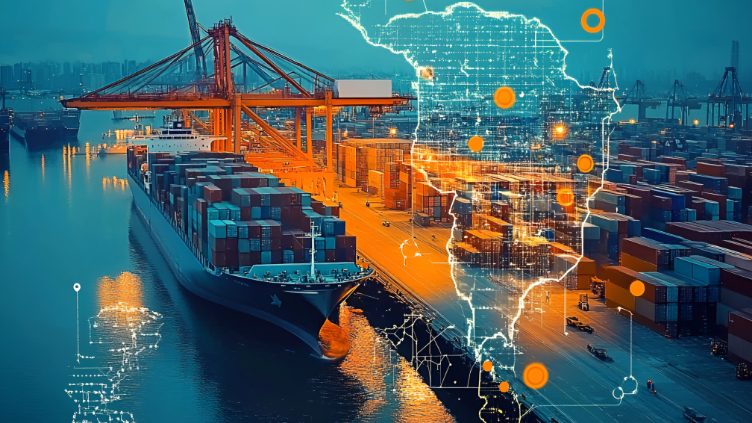
A successful global logistics management program is, at its core, a risk management program. The number of potential failure points in a global supply chain is vast. Proactive risk mitigation is essential to protect your investment.
Delays: Port congestion, customs holds, vessel breakdowns, and bad weather can all lead to significant delays.
Damage: Improper packaging, rough handling during transit, and shifting cargo at sea can lead to product damage.
Lost Cargo: While rare, containers can be lost at sea or misrouted.
Theft: Cargo theft is a risk both at ports and during inland transit.
Cost Volatility: Freight rates can fluctuate wildly based on supply, demand, and fuel prices.
Cargo Insurance: This is non-negotiable. Do not rely on the carrier’s minimal liability. Purchase a comprehensive, all-risk cargo insurance policy that covers the full value of your goods from the moment they leave the supplier until they arrive at your warehouse.
Work with Reputable Partners: Your choice of supplier, freight forwarder, and customs broker is your first line of defense. Experienced and professional partners are better equipped to anticipate and resolve issues.
Build in Buffer Time: Do not plan your inventory based on the best-case-scenario transit time. Add a buffer of 2-3 weeks to your lead time to account for potential delays.
Maintain Buffer Stock: Holding a certain amount of safety stock can help you weather unexpected supply chain disruptions without stocking out.
Visibility and Tracking: Use the tracking tools provided by your freight forwarder to monitor your shipment’s progress. This visibility allows you to react quickly if a problem arises.
A holistic view of risk management in sourcing must encompass the entire journey, from factory audit to final delivery.
For businesses engaged in bulk buying, global logistics management is far more than a back-office function. It is a strategic weapon that, when wielded effectively, creates a formidable competitive advantage. It is the complex engine that powers the simple promise of sourcing bulk products profitably from across the globe. From the initial integration of logistics into the supplier management process to the final details of warehouse management, every step requires diligence, expertise, and foresight.
Mastering the intricacies of freight, the language of Incoterms, the demands of customs, and the principles of risk management is what separates thriving wholesale distributors from those who are perpetually bogged down by delays, surprise costs, and inventory chaos. The journey is complex, but it is not one you have to take alone. By partnering with experienced suppliers, expert freight forwarders, and dedicated sourcing professionals, you can build a supply chain that is not a source of stress, but a source of strength.
 English