



What if your biggest growth opportunity is not in sales, but in the way your supply chain is designed, managed, and improved every day? For many organizations, performance gains come from hidden operational choices: how demand is forecast, how inventory is positioned, how suppliers are evaluated, and how disruptions are handled before they become expensive problems.
This guide approaches supply chain management as a practical system, not a buzzword. A modern supply chain connects planning, sourcing, production, logistics, and customer delivery into one coordinated flow. When these pieces work in isolation, teams react to problems late. When they are integrated, leaders can make faster decisions, reduce avoidable risk, and build a more reliable supply chain that supports both margin and service goals.
The stakes are high because supply chains now face constant pressure from changing demand, transportation volatility, product complexity, and tighter customer expectations. Businesses are also balancing global reach with resilience, especially when evaluating China supply chains and broader supply chain in China strategies as part of regional or multi-country sourcing models. The goal is not to chase a single perfect network. It is to build trusted supply chains that can adapt without losing control of cost, quality, or lead time.
To keep this article useful for informational research, we will focus on core decisions that shape long-term success:
How to align supply chain strategy with business priorities and customer service targets.
How to structure planning, procurement, operations, and distribution for clearer accountability.
How to strengthen visibility, risk management, and performance measurement across supply chains.
How to evaluate technology and process design to support a reliable supply chain over time.
How to apply these principles in global operating environments, including supply chains in China, without overcomplicating execution.
Throughout the guide, you will see a consistent theme: strong outcomes come from disciplined systems, not isolated fixes. Whether you work with an internal team, a supply chain company, or a specialized supply chain service partner, the fundamentals remain the same. Clear governance, accurate information, and repeatable processes are what turn complexity into control.
In the sections ahead, we will break down the building blocks of effective supply chain management and show how they connect into a complete framework for execution.
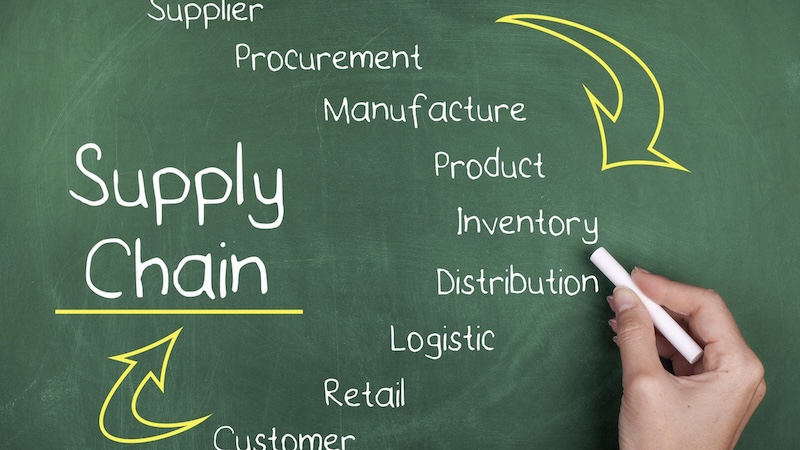
The introduction established why operations discipline separates growing companies from fragile ones. Building on that foundation, this section clarifies what supply chain management means in practice and why it directly affects cost, speed, quality, and resilience.
A supply chain is the end-to-end network that moves a product from raw materials to the final customer, including sourcing, production, transport, warehousing, and returns. Supply chain management (SCM) is the coordinated planning and control of that network so each step works toward shared business goals.
In simple terms, the supply chain is the system, while SCM is how you run it. This distinction matters because many teams focus on isolated tasks instead of total flow. An integrated supply chain management system helps connect demand planning, supplier coordination, logistics, and inventory decisions so trade-offs are made intentionally, not reactively.
Effective SCM turns operations into a strategic advantage, not just a back-office function. When execution is consistent, companies can reduce avoidable stockouts, shorten lead times, improve on-time delivery, and protect margins through better inventory and procurement decisions.
It also strengthens risk control. A reliable supply chain gives leadership clearer visibility into bottlenecks and alternatives before disruption escalates. That is especially relevant for firms evaluating supply chain in China or diversifying China supply chains, where timing, compliance, and supplier communication can quickly affect customer commitments.
For growth-stage companies, trusted supply chains support expansion into new channels without sacrificing service levels. In practical terms, strong SCM improves customer experience while preserving cash flow, which is why it remains central to long-term competitiveness.
Modern supply chains are cross-functional by design. Performance depends on aligned decisions across internal teams and external partners, rather than one department optimizing in isolation.
Key stakeholders typically include:
Procurement and sourcing teams that select suppliers, negotiate terms, and manage supplier performance.
Operations and production leaders who balance capacity, quality, and schedule reliability.
Logistics and distribution teams responsible for transport modes, warehousing, and delivery execution.
Finance and planning teams that manage working capital, forecasting assumptions, and profitability trade-offs.
Technology and data owners who maintain systems, visibility, and workflow integration across the supply chain.
When these groups share common metrics and governance, a supply chain company can move from firefighting to proactive management. That alignment is the core of trusted supply chains and a critical step toward scalable, resilient performance.
After defining supply chain roles and business impact, the practical question is execution. Strong results come from running each stage as a connected system, not as separate teams. In this section, we focus on three foundational stages that shape cost, resilience, and customer service in any supply chain, including complex networks such as supply chain in China.
Planning translates strategy into daily decisions about inventory, capacity, and timing. Demand forecasting is not only a sales estimate. It is a cross-functional process that combines historical orders, seasonality, promotions, lead times, and current market signals. For leaders managing supply chains in China and other global regions, forecast quality directly affects cash flow and service levels because transport variability can amplify small planning errors.
What matters most is discipline: one forecast baseline, clear ownership, and frequent review cycles. A reliable supply chain usually depends on scenario planning as well. Teams should model best case, likely case, and constrained supply case, then pre-define responses. In an integrated supply chain management system, this planning data feeds sourcing and production decisions in near real time.
Sourcing converts demand plans into dependable inbound supply. The goal is not the lowest unit price alone. It is securing the right mix of cost, quality, lead time, compliance, and risk coverage. Trusted supply chains are built when procurement, quality, and operations evaluate suppliers against shared criteria and monitor performance continuously.
A practical supplier management framework includes:
Segment suppliers by criticality and spend.
Set measurable service expectations for quality and delivery.
Use dual-sourcing or backup options for high-risk inputs.
Review supplier risk signals regularly and document actions.
For any supply chain company or internal procurement team, this approach supports continuity during disruptions and reduces avoidable expediting costs. It also improves collaboration with supply chain service partners by setting clear accountability.
Production control turns plans and purchase commitments into finished output that meets customer promise dates. Effective control balances throughput, labor, machine capacity, and work-in-process inventory. If planning is accurate and sourcing is stable, production can run with fewer changeovers, less waste, and more predictable cycle times.
In practice, managers should align master production schedules with real supplier lead times and shop-floor constraints, then track exceptions daily. Early warning signals such as material shortages, scrap spikes, or unplanned downtime should trigger rapid corrective actions. This is where integrated supply and execution visibility matter most. An integrated supply chain management system connects demand, procurement, and manufacturing data, helping teams protect margins while maintaining a reliable supply chain and consistent customer delivery.
After planning, sourcing, and production controls are in place, strategy determines whether execution stays stable under pressure. This is where supply chain leadership shifts from managing transactions to designing resilient systems that protect service levels, margins, and customer trust.
A reliable supply chain is built through visibility, accountability, and repeatable operating standards across partners. Teams should map critical nodes, define owner responsibilities, and agree on shared performance definitions for lead time, quality, and fulfillment consistency. Without these foundations, trusted supply chains become dependent on individual relationships rather than durable processes.
In practice, reliability improves when companies combine process discipline with risk-aware sourcing. For example, dual sourcing for high-impact components, periodic supplier audits, and clear escalation paths reduce disruption exposure without slowing daily operations. This is especially important when managing supply chains in China, where lead-time variability, capacity shifts, and communication cadence can affect execution if expectations are not documented in detail.
An integrated supply chain management system supports this effort by connecting planning, procurement, production, and logistics data in one operational view. That unified model helps teams detect exceptions earlier, coordinate corrective actions faster, and maintain trust with customers and internal stakeholders.
Cost optimization in supply chain management is not only about lowering unit prices. Strong operators evaluate total landed cost, including transport mode, inventory carrying costs, defect rates, and delay risk. A cheaper quote can become expensive when rework, stockouts, or rush freight are added to the final outcome.
Useful pricing models align incentives between buyers and suppliers while preserving flexibility:
Fixed pricing with review windows: Stable for predictable demand, with scheduled resets tied to input changes.
Volume-tier pricing: Rewards committed forecasts while requiring realistic demand planning.
Index-linked pricing: Adjusts to agreed commodity movements, reducing renegotiation friction.
Should-cost collaboration: Breaks down cost drivers jointly to identify waste and redesign opportunities.
For businesses selecting a supply chain company or evaluating a supply chain service model, the key is governance. Contracts should define service levels, exception handling, and data-sharing rules, not just prices. When pricing logic and operational accountability are integrated, companies build trusted supply chains that remain competitive through demand swings, supplier changes, and regional complexity.
Reliable operations and smart pricing decisions depend on clear, timely information. Technology now turns those priorities into daily execution by connecting purchasing, suppliers, and logistics in one workflow.
Procurement and sourcing platforms help teams manage supplier discovery, RFQs, quote comparison, purchase approvals, and contract records in a single environment. For a modern supply chain, the main benefit is control: standardized processes reduce off-contract buying, while approval routing improves policy compliance. These tools also create a reusable audit trail, which supports stronger supplier risk reviews and cleaner handoffs to finance.
When evaluating a platform, focus on practical fit before feature volume:
Integration with your ERP, inventory, and transportation tools
Multi-step approval rules by spend, category, or region
Supplier onboarding workflows and document tracking
Reporting for total landed cost, lead time, and exceptions
For companies managing supply chains in China or broader global procurement, localized supplier onboarding and clear trade documentation fields are especially useful.
Digital supply chain marketplaces can accelerate sourcing by giving buyers access to pre-vetted categories, pricing visibility, and shorter supplier search cycles. They are useful when speed matters, especially for non-strategic items or backup sourcing during disruption. In trusted supply chains, marketplaces can complement existing supplier relationships rather than replace them.
Still, marketplaces require governance. Teams should define which categories are marketplace-eligible, set qualification criteria, and keep quality checks aligned with internal standards. A reliable supply chain is not built by lowest price alone; it depends on fulfillment consistency, communication quality, and operational resilience. Marketplace data should feed your wider planning process so emergency buys do not fragment your sourcing strategy.
Vendor comparison tools support better decisions by scoring suppliers across cost, quality, lead time, capacity, and risk signals. The strongest setups combine quantitative metrics with operational context, such as defect trends, response speed, and corrective action history. This gives procurement leaders a clearer view of trade-offs, not just a ranked list.
To keep results credible, use a weighted scorecard aligned to business goals and review it quarterly. For example, if customer service levels are tightening, increase weighting on on-time delivery and recovery performance. Many teams place this scorecard inside an integrated supply chain management system so sourcing, planning, and logistics teams work from the same supplier profile. That shared visibility helps scale trusted supply chains while reducing avoidable cost leakage.
Digital procurement and comparison tools are useful, but leaders still need proof from operations. Real-world case studies show how a supply chain performs when demand shifts, lead times tighten, or quality issues appear across tiers.
The best supply chain company profiles are less about size and more about operating discipline. Strong performers align planning, sourcing, production, logistics, and returns inside one decision framework rather than isolated teams. They also build a reliable supply chain by pairing supplier diversification with clear service-level expectations, quality checkpoints, and escalation rules.
In practice, trusted supply chains are built on repeatable routines: demand sensing, inventory visibility, and fast exception handling. Many top organizations use an integrated supply chain management system so procurement, operations, and finance work from the same data. For mid-market teams, the lesson is practical: map critical nodes, define ownership at each handoff, and review supplier risk monthly, not only during disruptions.
For many importers, supply chain in China remains central to cost, capacity, and product variety. The opportunity is significant, but performance depends on execution quality across sourcing, factory management, quality control, and freight coordination. Companies that succeed treat China supply chains as managed ecosystems, not one-time transactions.
Effective supply chains in China usually include on-the-ground verification, pre-production alignment, in-process checks, and shipment-level documentation control. A dependable supply chain service partner can reduce communication gaps, shorten corrective-action cycles, and improve delivery predictability. The key is integration: supplier onboarding, production milestones, and logistics updates should feed one operating cadence so teams can act early when delays or specification risks surface.
No single template fits every sector, so case studies are most useful when tied to business model and risk profile. Retail-focused supply chains often emphasize speed, seasonal planning, and reverse logistics. Industrial and B2B environments prioritize forecast stability, component traceability, and long-cycle supplier collaboration. Regulated categories add stricter documentation and change-control requirements.
A practical approach is to design by constraint, then scale by process maturity:
Define service promise by segment, including lead time and fill-rate targets.
Classify items by demand variability and criticality to set inventory policy.
Assign dual-source or backup capacity for high-impact components.
Standardize quality gates from purchase order through final delivery.
Connect planning, sourcing, and fulfillment through integrated supply workflows.
These models help teams translate examples into decisions that support growth, margin protection, and customer reliability.
The strongest case studies from the previous section share one pattern: they design for disruption before disruption happens. Whether you are managing global production or evaluating a supply chain in China, long-term success depends on making risk management a daily operating discipline, not a periodic audit.
A practical approach starts with risk visibility across suppliers, logistics, inventory, and demand signals. In most supply chains, failures are connected: a quality issue can become a transport delay, then a customer service problem, then a margin problem. Mapping these dependencies helps teams prioritize what can actually break business outcomes.
For most operators, the most useful framework is to classify risk into clear buckets and assign owners:
Supply risk: single-source exposure, financial instability, inconsistent quality, and long lead-time volatility.
Operational risk: planning errors, poor data governance, process bottlenecks, and weak cross-functional handoffs.
External risk: geopolitical shifts, weather events, labor interruptions, and sudden policy changes.
Digital risk: cyber incidents, system downtime, and fragmented tools that block end-to-end visibility.
To move from theory to action, build a risk playbook tied to business impact. Define trigger points, escalation paths, and fallback options by product family, lane, and customer tier. This is where an integrated supply chain management system becomes a strategic advantage: procurement, production, transport, and inventory data stay connected, so teams can respond quickly instead of reconciling disconnected reports.
Future-ready teams are also shifting from reactive management to scenario-based planning. Rather than betting on a single forecast, they model multiple demand and supply conditions, then pre-approve responses. This supports a more reliable supply chain because decisions are made before pressure peaks.
Key trends shaping trusted supply chains over the next few years include:
Multi-tier transparency: Companies are extending visibility beyond direct suppliers to lower-tier dependencies that often carry hidden risk.
Resilience by design: Safety stock, dual sourcing, and nearshoring decisions are being optimized by product criticality, not broad policy.
Automation with governance: AI-assisted planning is expanding, but high-performing teams pair automation with clear decision rights and exception controls.
Sustainability and compliance integration: Environmental and ethical requirements are moving into core planning, contract terms, and supplier scorecards.
Collaborative operating models: Brands, partners, and a trusted supply chain company increasingly share selected data to improve speed and continuity.
For leaders managing China supply chains or broader regional networks, the goal is balance, not over-correction. Avoid replacing efficiency with rigidity. Instead, combine cost discipline with optionality: qualified backup suppliers, flexible routing, and integrated decision-making. That combination is what turns risk management into competitive strength and keeps supply chains dependable as markets evolve.
As risk planning and future-readiness move from theory to daily operations, the core lesson is consistency. Strong supply chain performance comes from repeatable decisions, clear ownership, and systems that connect planning, sourcing, production, and delivery.
Design for end-to-end visibility, not isolated efficiency. A resilient supply chain works when teams share the same demand, inventory, and supplier signals. Aligning data and decisions across functions helps prevent local optimizations that create downstream delays.
Build a reliable supply chain through governance and process discipline. Technology matters, but operating standards matter more. Define who makes which decisions, when exceptions escalate, and how performance is reviewed, so supply chains remain stable during routine shifts and unexpected disruptions.
Treat supplier strategy as a risk and continuity lever. Trusted supply chains are built by balancing cost, capacity, quality, and lead-time reliability across the supplier base. The goal is not maximum complexity but practical optionality that protects service levels.
Use regional strategy selectively, including supply chain in China where it fits category needs. For many companies, China supply chains remain valuable for scale and manufacturing depth, while broader network design can reduce concentration risk. Effective supply chains in China perform best when integrated into one global operating model.
Measure what supports execution, then improve in cycles. Focus KPI reviews on service, lead times, inventory health, and exception recovery speed, and tie each metric to an owner. This keeps strategy grounded in operational reality and supports continuous improvement without constant organizational resets.
Taken together, these points define what successful supply chain management looks like in practice: connected systems, disciplined execution, balanced sourcing, and adaptive planning that stays practical under pressure.
Q1: What does supply chain mean?
Supply chain refers to the complete system that connects planning, sourcing, production, logistics, and customer delivery into one coordinated flow. It encompasses all activities involved in moving products from raw materials to the end customer. A modern supply chain integrates demand forecasting, inventory positioning, supplier management, and disruption handling to create operational efficiency. When properly managed, it enables organizations to make faster decisions, reduce risk, and build reliability that supports both profit margins and customer service goals.
Q2: What are the 5 stages of supply chain?
The five core stages of supply chain management include: planning (demand forecasting and strategy), sourcing (supplier selection and procurement), production (manufacturing and quality control), logistics (transportation and warehousing), and delivery (customer fulfillment and returns). These stages work as an integrated system rather than isolated functions. When connected effectively, they enable better visibility, faster response to disruptions, and improved coordination across the entire supply chain. Organizations that align these stages can reduce costs while maintaining service levels.
Q3: How does supply chain integration improve performance?
Supply chain integration connects previously isolated functions into a unified system where information flows seamlessly between planning, sourcing, production, and logistics. This coordination allows teams to identify and address problems before they become expensive disruptions. Integrated supply chains provide better visibility into operations, enable data-driven decision making, and reduce reaction time to market changes. The result is improved operational efficiency, lower costs, reduced risk, and enhanced ability to meet customer demands reliably while protecting profit margins.
Q4: What are the biggest challenges facing supply chains today?
Modern supply chains face constant pressure from several key challenges: unpredictable demand patterns, transportation volatility, supplier reliability issues, and increasing complexity in global operations. Organizations must balance cost efficiency with resilience while managing inventory effectively. Supply chain disruptions can quickly impact both service levels and profitability. Success requires moving beyond reactive problem-solving to proactive risk management, better forecasting methods, strategic supplier evaluation, and building operational flexibility that can adapt to changing market conditions and unexpected disruptions.
A successful strategy comes from turning those answers into clear operating choices across planning, sourcing, logistics, and risk control.
In practice, strong supply chain management is less about one perfect model and more about disciplined coordination. Teams that build a reliable supply chain define ownership, standardize core workflows, and review performance often enough to correct issues before they spread. That approach helps organizations adapt when demand shifts, transport capacity tightens, or supplier performance changes.
For many companies, the largest gains come from integration. When procurement, inventory, production, and fulfillment use the same priorities and data, decisions improve across the full supply chain. This is especially important for firms managing a supply chain in China or working across multiple regions, where lead times, communication cadence, and compliance expectations can vary by partner and lane.
As you finalize your roadmap, prioritize choices that strengthen resilience without adding unnecessary complexity:
Define service levels and risk tolerance first, then align cost targets to those boundaries.
Segment suppliers and routes by criticality, so mitigation plans match business impact.
Build a practical control tower view with a small set of shared metrics across functions.
Establish escalation rules for delays, quality drift, and capacity constraints before disruption occurs.
Review and refine quarterly, so your supply chains evolve with market realities.
If you are comparing operating models, use this guide as a decision framework rather than a checklist. Your immediate next step is to run a focused 30-day diagnostic: map one end-to-end product flow, identify the top three failure points, assign owners, and set corrective actions with deadlines. That single cycle gives leadership a concrete baseline and moves your organization toward trusted supply chains that are measurable, responsive, and built for long-term performance.
 English