Ask almost any electronics buyer where their product was made — or where its components came from — and the answer often circles back to Shenzhen or the wider Pearl River Delta.
Shenzhen produces a wide range of technology products: smartphones, drones, LED displays, electric vehicles, IoT devices, circuit boards, and thousands of specialized components that end up in products sold under other brands worldwide. This guide covers what Shenzhen actually makes, what makes it different from other manufacturing cities, and what buyers need to know when sourcing there.
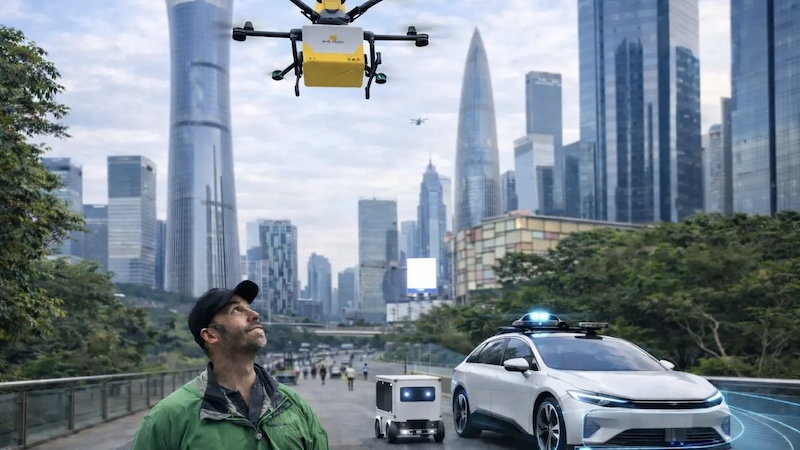
In 1980, Shenzhen was designated China’s first Special Economic Zone — a policy experiment that allowed foreign investment and market-driven economics before the rest of China. The result, over 40 years, was one of the fastest industrial transformations in modern economic history.
The city attracted manufacturing investment, then technology companies, then global supply chains. This sequence matters: Shenzhen did not simply become a place where things are made. It became a place where components, tooling, expertise, and logistics are all co-located in a way that is difficult for other regions to replicate at the same scale. Why Shenzhen’s consumer electronics ecosystem supports a large share of global electronics sourcing comes down to this density — the concentration of people, skills, and supply chain relationships built up over four decades.
Shenzhen’s most recognized export category is consumer electronics, and within electronics, its supplier depth is difficult to match. The city produces:
Smartphones and tablets: Dozens of brands at every price point, from premium flagships to sub-$100 functional devices. Many global brands — including some whose headquarters are in other countries — manufacture in Shenzhen.
True wireless earbuds and audio accessories: Shenzhen’s ecosystem for audio products is comprehensive, covering drivers, housings, Bluetooth chipsets, and firmware development within a small geographic area.
Wearables: Smartwatches, fitness trackers, and health monitoring devices at consumer, clinical, and OEM levels.
Power electronics: USB chargers, power banks, and portable energy products. Shenzhen is a major global production base in this category.
Networking and connectivity: Routers, switches, wireless access points, and related infrastructure products used by both consumers and enterprises.
What distinguishes Shenzhen’s electronics output from other manufacturing regions is the OEM production in Shenzhen model. Many electronics brands rely on OEM or ODM suppliers instead of manufacturing every product themselves. They design, and factories in Shenzhen produce. This has created a manufacturing ecosystem that is extremely experienced at translating buyer specifications into finished products at scale.
Shenzhen is one of the world’s most important commercial drone manufacturing centers. DJI, the global market leader in consumer and professional drones, is headquartered and manufactures in Shenzhen. Much of the supporting supply chain — motors, electronic speed controllers, camera gimbals, lithium batteries, propellers, flight controllers — is concentrated in Shenzhen and the wider Guangdong region.
For buyers in agricultural, logistics, photography, surveying, and infrastructure inspection industries, Shenzhen is the practical starting point for drone procurement regardless of the brand. Current drone sourcing increasingly involves AI-assisted and specialized imaging modules, navigation systems, and multi-sensor configurations that reflect how rapidly the category is evolving.
Shenzhen and the surrounding Guangdong region are major LED production bases. The product range covers:
LED manufacturing benefits from Shenzhen’s electronics supply chain directly: the same semiconductor and component suppliers that serve consumer electronics also supply the LED industry. This co-location keeps component costs competitive and enables faster product development cycles.
BYD, one of the world’s largest manufacturers of electric vehicles and lithium batteries, is headquartered in Shenzhen. Shenzhen is important for EVs and batteries because of BYD and the surrounding Guangdong supplier base, but many EV components are sourced across multiple Chinese regions. Within Shenzhen specifically, the concentration is strongest in:
Beyond BYD, many EV component suppliers operate in the Shenzhen-Guangdong region, making it an important sourcing destination for buyers in the EV supply chain.
Shenzhen is a strong production base for IoT devices:
Many of the world’s most widely deployed IoT platforms — regardless of which company markets them — have hardware manufactured in Shenzhen. The combination of electronics expertise, software development talent, and component access means that IoT prototypes can often move from concept to production faster when the supplier and component base are already in place — though complex products with custom tooling or regulatory requirements still take weeks.
Beyond consumer-facing technology, Shenzhen also produces a substantial volume of industrial and hardware products. Precision metal components, tooling, mechanical assemblies, and specialized hardware for industries including construction, manufacturing, and medical devices are produced in the Shenzhen area. For buyers seeking hardware products from China, Shenzhen and the nearby Pearl River Delta offer manufacturing capabilities across CNC machining, die casting, stamping, and surface treatment. The same precision manufacturing infrastructure that serves electronics — tight tolerances, automated inspection, clean production environments — carries over into industrial hardware categories. For heavy industrial products, large machinery, or commodity metal goods, other Chinese regions may offer stronger supplier depth.
Medical devices: Diagnostic equipment, monitoring devices, and hospital hardware. Medical devices require strict destination-market regulatory review before sourcing — manufacturing capability and compliance readiness are separate considerations.
Fashion accessories and lifestyle products: While Shenzhen is not primarily a fashion manufacturing hub, it produces significant volumes of technology-adjacent accessories, cosmetics packaging, and lifestyle electronics.
Robotics and automation equipment: Industrial robots, collaborative robot arms, and automation components for factory use are a growing Shenzhen export category.
One reason buyers return to Shenzhen even when unit pricing is not the lowest option is prototyping speed. Simple hardware prototypes may move quickly, but complex products with custom tooling, regulatory testing, or firmware development still take weeks or more. The co-location of component suppliers, PCB houses, injection molders, and assembly factories means that all stages of prototype development happen with component suppliers close to the assembly base, reducing logistics lag between development steps.
For simple revisions, Shenzhen can compress development time. For complex products, the advantage is less about instant speed and more about easier coordination between component suppliers, tooling shops, and assembly factories.
Understanding what Shenzhen makes is inseparable from understanding how its supply chain is organized. Why Shenzhen’s supply chain works is not simply about labor cost — it is about density and integration.
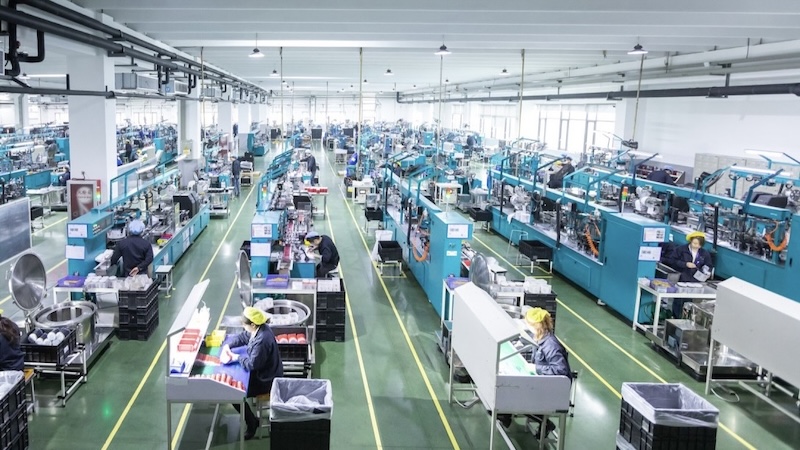
In Shenzhen and the Pearl River Delta, a buyer sourcing a finished electronics product can typically find:
This density produces two practical advantages for buyers. First, sampling is fast. A product revision can be incorporated and sampled in days rather than weeks. Second, per-unit costs benefit from supplier competition and scale. The number of suppliers competing in each category helps keep pricing transparent and competitive.
Verify factory type before engaging. Shenzhen has both genuine manufacturers and trading companies presenting as manufacturers. The Huaqiangbei district, while famous, is primarily a components market and retail/wholesale zone — not a factory district. Most assembly factories are in neighboring districts like Longhua, Bao’an, and Longgang.
Understand certification requirements before ordering. Electronics destined for the EU require CE marking; US-bound goods typically need FCC. Children’s products have additional requirements. Confirm what certifications exist and whether they apply to the exact product model you are ordering.
IP protection requires active management. Sharing product designs, firmware, or packaging specifications with Shenzhen factories creates real IP exposure. Use a properly drafted China-specific NNN agreement before sharing sensitive technical files, and share information in stages — only what is needed for each production phase.
Quality varies significantly across the supplier base. Shenzhen’s electronics market ranges from factory-direct precision manufacturers with ISO certification to informal assembly operations with no quality systems. Due diligence — including factory audits, sample approval, and pre-shipment inspection is a standard layer of protection for meaningful orders. The buyer’s quality control process, not the city’s reputation, determines what arrives at the destination.
A Shenzhen sourcing agent can help when buyers lack local supplier knowledge, Mandarin communication, or on-site quality control.
Q1: Is Shenzhen only good for electronics, or can I source other products there?
Shenzhen’s primary strengths are electronics, LED products, and technology-related goods. For furniture, textiles, or commodity consumer goods, other cities in the Pearl River Delta — Foshan, Guangzhou, Dongguan — often offer better supplier depth and lower pricing. Shenzhen is the right starting point when the product has a circuit board, battery, display, motor, or connectivity function.
Q2: Is Huaqiangbei still the best place to source electronics components?
Huaqiangbei remains useful for sourcing small quantities of components, viewing market pricing, and understanding what is available. For bulk component procurement or finished product sourcing, working directly with manufacturers in Shenzhen’s industrial districts or through established suppliers on B2B platforms is more practical and provides better quality assurance.
Q3: How do I find genuine factories rather than trading companies in Shenzhen?
Request the factory’s business license and compare the registered address to the factory location they claim. Ask specific production questions — what is the monthly production capacity, what machinery is used, what is the lead time for tooling? Arrange a video call with a factory tour. Commission a factory audit for significant orders. The key is whether the supplier can answer production-specific questions without vague or delayed responses.
Q4: What certifications should I ask for when sourcing electronics from Shenzhen?
This depends entirely on your destination market. EU importers need CE marking and, for electronics, RoHS compliance. US importers typically need FCC for wireless devices. Additional requirements may include EN safety standards, REACH compliance, UL listing, or category-specific standards. Confirm what is required for your specific product category and destination before placing a production order. Certificates should match the exact product model, components, and destination-market requirements — retrofitting compliance after production is expensive.
Q5: Are Shenzhen products good quality or are they cheap imitations?
Both exist in Shenzhen. The city’s manufacturing base spans the full quality spectrum, from premium OEM production for major global brands to low-cost, short-lifecycle consumer products. Quality is determined by specification, supplier selection, and quality control process — not by the city itself. Buyers who define clear specifications, approve samples, and inspect before payment have a much better chance of receiving good quality.
Shenzhen plays an outsized role in global electronics and technology manufacturing, supported by a supply chain ecosystem built over four decades.
For buyers, the practical implication is straightforward: if your product involves electronics, LED technology, drones, IoT hardware, or EV components, Shenzhen is where to look first. The supplier depth, component access, and production speed available there are not easily replicated elsewhere.
Successful Shenzhen sourcing depends less on the city’s reputation and more on buyer discipline. Verify the factory, approve the sample, inspect before payment, and protect your IP before sharing it.
 English