CIF looks like the easiest option. The seller handles export clearance, ocean freight, and insurance — you just wait for the goods to arrive at your destination port. No hassle, no logistics to manage. Sounds ideal.
It is not.
Here is what actually happens. The Chinese seller’s freight forwarder quotes rock-bottom freight — sometimes zero. That money has to come from somewhere. It reappears at the destination port as handling fees, document release fees, and charges with vague names that were never disclosed upfront. You need those documents to clear customs. You may have limited leverage if you need the release documents to clear the shipment.
If the freight looks free, the cost usually appears somewhere else.
After years in China trade, the advice for small and mid-sized importers is clear: FOB first. DDP for selected simple orders. EXW only with local support. CIF only when destination charges are fully disclosed upfront.
This guide explains why — and what each Incoterm actually means for your wallet.
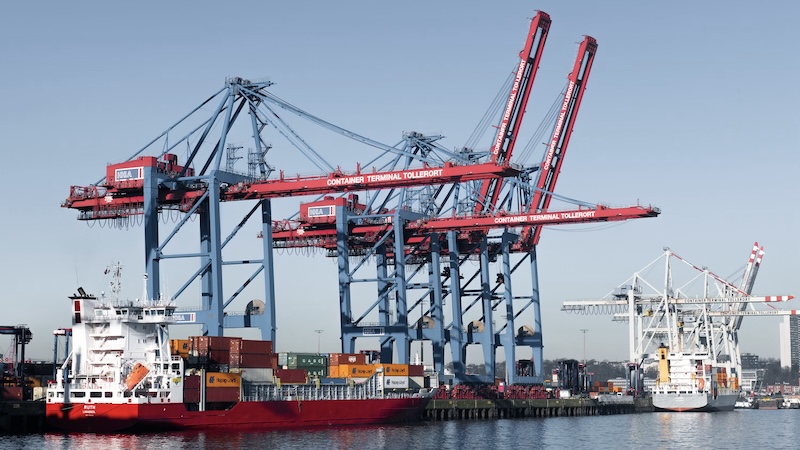
When you buy from a factory in China, who pays for each leg of the journey, and where does risk transfer?
That is what Incoterms clarify. They are a set of agreed rules — written into your purchase contract — that define key responsibilities, cost points, and risk transfer points between buyer and seller. At what point does the risk shift to you? Who books the ship? Who handles customs? Who gets the bill when something goes wrong at the port?
Think of it like ordering a pizza. Sometimes it is delivered to your door. Sometimes only to the lobby. Sometimes you pick it up yourself. The price on the menu might look similar — but the total cost and effort are very different depending on the deal.
For China importers, four Incoterms come up in almost every transaction: FOB, CIF, EXW, and DDP. A supplier in Shenzhen might quote you the same $5.00 unit price under any of them — but your real cost, your real risk, and how much control you have over the shipment can be completely different.
Two buyers ordered the same product from the same factory on the same day. One chose CIF. One chose FOB. The CIF buyer paid $200 less at the time of order. He paid $650 more by the time the goods were in his warehouse. That $450 difference came from destination handling fees he never saw coming.
That is the difference Incoterms make — and why choosing the right one matters more than most buyers realize.
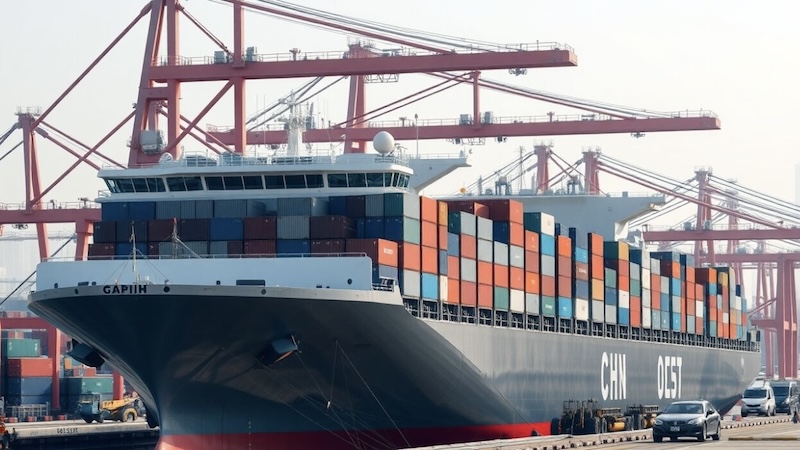
CIF stands for Cost, Insurance and Freight. The seller pays for ocean freight and minimum insurance to the destination port, but risk generally transfers to the buyer once the goods are loaded on board the vessel at the port of shipment.
It sounds convenient. For a first-time buyer, it can feel reassuring — let the supplier handle the complicated stuff in China, and just deal with the customs clearance at your end.
Here is the problem. When the seller controls the freight, their freight forwarder controls the relationship with the destination agent. And that agent — typically a partner of the Chinese forwarder, not someone you chose — is the one who presents the arrival paperwork you need to release your cargo.
The arrival charges can include destination terminal handling, delivery order fees, document release charges, storage, and other local handling costs. If customs examines the shipment, examination-related costs may be added separately. These are not unusual costs — they exist in FOB shipments too. The difference is that under CIF, you discovered them after the ship sailed. Under FOB, you would have known about them before the order was placed.
A real example: An importer brings in a container of outdoor furniture from Guangdong under CIF terms. The supplier quotes “$0 freight.” The goods arrive. The destination agent invoices $780 in handling and release fees that were not itemized in the CIF quote. The importer had budgeted for customs brokerage and duties — not for an extra $780 that showed up with no warning and could not be disputed without losing access to the cargo.
This is not necessarily fraud. It is a structural risk of accepting CIF without seeing the destination cost structure. When you accept CIF, you accept that someone else made the logistics arrangements — including the destination arrangements — on your behalf.
Under FOB, when a delay happens, you call your forwarder directly. Under CIF, you wait for the seller’s agent to relay information. For express shipments, the same principle applies: are usually easier to resolve when the buyer has direct access to the carrier or forwarder. Having — commercial invoice, packing list, bill of lading — also prevents most customs holds before they happen.
The other CIF problem: insurance. Under CIF, the seller usually provides minimum cargo insurance — often based on ICC Clause C — unless broader coverage is agreed. This covers a limited set of risks and often leaves gaps for fragile goods, water damage, or theft. If you have high-value cargo, you need to arrange your own policy regardless.
FOB stands for Free On Board. The seller clears the goods for export and delivers them loaded on board the vessel at the named Chinese port. Understanding helps you negotiate more confidently with suppliers. From that point, you take responsibility: you book the freight, you choose the forwarder, and you manage customs clearance at destination.
This is the Incoterm that gives you the most control over the parts of the shipment where cost and service vary most: the international freight leg and the destination handling.
Under FOB, your forwarder works for you — not the supplier. You know the destination charges before the ship leaves China. You can compare freight quotes from multiple forwarders, choose your transit time, and build a repeatable that holds up across suppliers and seasons.
For , FOB pricing is transparent: freight quote plus product cost, no hidden bundles. That is why most experienced importers treat FOB as their default.
DDP stands for Delivered Duty Paid. In a properly structured DDP shipment, the seller is responsible for export clearance, international freight, insurance, import customs clearance, duty and tax payment, and final delivery to your named address. You receive the goods at your door, fully landed.
This is the highest responsibility for the seller of any Incoterm. And for some importers, it is genuinely useful.
When DDP makes sense: You are new to importing and want to understand the product before managing the logistics. You are testing a new supplier with a small first order. You are importing into a country where customs is complex and you do not yet have a reliable broker. The supplier has genuine DDP experience and a track record of transparent pricing.
The catch: DDP is expensive. The seller builds all logistics costs into the product price, and you lose visibility into what duties and freight actually cost. You are also relying on the seller to handle your country’s import compliance correctly — HS codes, customs valuation, duty classification. If something goes wrong at customs, you are pulled in to resolve it regardless.
In some countries, a foreign seller may not be able to act as importer of record without local registration — confirm this before relying on DDP. first reduces compliance risk. Use DDP for test orders, not as a scaling strategy.
EXW stands for Ex Works. The seller’s only obligation is to make the goods available at their premises. You handle everything else: factory pickup, inland trucking to the Chinese port, export customs clearance, loading, international freight, import customs, and delivery.
The product price under EXW is usually the lowest. That is the appeal.
Here is the problem. As a foreign buyer, you cannot simply handle Chinese export customs yourself. You need a freight forwarder or export agent based in China to manage those procedures. And depending on the supplier’s location, the inland trucking can be expensive — especially if the factory is far from the port.
The costs you take on under EXW — factory pickup, trucking to port, export documentation, port handling — are not small. A factory in an inland city can add $400 in trucking plus $150 in export handling. Your apparent EXW saving disappears quickly, and you are managing all of it remotely.
EXW creates the earliest buyer-side risk. Risk generally transfers when the goods are placed at the buyer’s disposal at the seller’s premises, and loading or export clearance can become a dispute if not clearly agreed in advance. A dropped pallet, a rejected customs declaration, a supplier who is uncooperative with the export agent — all of this is on you before the goods have even left China.
EXW has legitimate uses: for experienced importers with a strong China-based logistics partner who can manage consolidation across multiple factories. For most standard import orders, the complexity and risk outweigh the apparent cost saving.
The only way to compare Incoterms fairly is to calculate total landed cost — everything it takes to get one unit to your warehouse, ready to sell. Use this framework:
| Cost Component | FOB | CIF | DDP | EXW |
|---|---|---|---|---|
| Quoted product price | Clear | Bundled | Fully bundled | Lowest |
| Origin charges | Included | Included | Included | Buyer pays |
| International freight | Buyer arranges | Seller arranges | Included | Buyer arranges |
| Insurance | Buyer arranges | Minimum included | Included | Buyer arranges |
| Destination charges | Visible upfront | Often hidden | Included | Depends on forwarder |
| Customs clearance | Buyer arranges | Buyer arranges | Included | Buyer arranges |
| Duties and taxes | Buyer pays | Buyer pays | Seller pays | Buyer pays |
| Transparency | High | Low | Medium | Medium |
The table shows why CIF is the outlier: it is the term where destination charges are most likely to be unclear at the time of quoting. Everything else is either clearly the buyer’s cost to arrange, or clearly included in the seller’s price.
Q1: Can I negotiate Incoterms with my Chinese supplier?
Yes, and you should. Some Chinese suppliers default to CIF or EXW because it may be simpler or more profitable for them. FOB is reasonable to request and most experienced export factories will agree to it. Frame it as your standard business requirement, not a criticism of how they work.
Q2: What if my supplier insists on CIF?
Ask for a full itemized quote of all destination charges before you accept. Get the name of their destination agent and ask what their standard arrival fees are for your port. If they cannot or will not provide this, that is a warning. Consider whether a different supplier who offers FOB is worth exploring.
Q3: Is DDP worth paying more for?
For small first orders or one-off products, sometimes yes. For regular, repeat importing, the cost premium and reduced visibility make DDP less efficient than FOB over time. Use DDP to learn the product and route, then transition to FOB once you have a customs broker and forwarder you trust.
Q4: My supplier offered “free shipping” on CIF terms. Is this a red flag?
It should make you cautious. Freight costs money. If the supplier is offering zero freight, they are recovering it somewhere — often through destination-side fees or margin built into the shipment arrangement. Ask for the name of the destination agent and request an itemized arrival cost estimate before accepting.
Q5: Does the Incoterm affect import duties?
Duty valuation rules vary by country. Some countries calculate duties on a CIF basis, meaning freight and insurance may be included in the customs value. Others use different valuation bases. Check with your customs broker before comparing Incoterms on this basis — the difference can be significant for high-value goods.
Q6: What if I want to use EXW for consolidation from multiple factories?
This is one of the legitimate use cases for EXW. If you have a reliable China-based sourcing agent or freight forwarder who can manage factory pickups, consolidate cargo, and handle export clearance, EXW can work efficiently. The key is having a trusted local partner who makes the origin logistics predictable.
Q7: Is FOB always better than DDP for Amazon FBA?
For experienced sellers importing regularly, FOB usually gives better cost control and lower total cost. For sellers just starting out, DDP to an Amazon warehouse can reduce operational complexity at the cost of a higher product price. Many sellers start with DDP and move to FOB as their volume grows.
Q8: How do I verify that CIF insurance actually covers my goods?
Ask the seller for the insurance certificate and read the coverage terms. Standard CIF insurance is often based on limited coverage, such as ICC Clause C, unless broader coverage is agreed. This typically covers major losses and may leave gaps for ordinary damage, shortage, or theft risks. If your goods are fragile, high-value, or seasonal, arrange your own policy under the broader ICC Clause A terms through your freight forwarder or insurer.
The Incoterm your supplier suggests is not neutral. It reflects what is convenient for them — not necessarily what is cheapest or safest for you.
CIF can hide costs. EXW shifts risk early. DDP trades control for simplicity. FOB gives you visibility where it matters most.
For most importers building a scalable sourcing operation, FOB is where to start. For one-off or test orders, DDP can reduce operational friction. EXW is for specialists with strong China-side infrastructure. CIF is the term to approach with the most caution — always ask what the destination bill will look like before you agree.
For importers who want fewer surprises between production, loading, and final delivery,
 English