Tariffs have risen. Labor costs in China have increased. Alternative manufacturing hubs in Southeast Asia and South Asia are more developed than they were a decade ago. And yet, in 2026, China remains a leading sourcing destination for many product categories that international buyers source at scale.
Why does China remain competitive? The answer is more nuanced than “it’s cheap” — and understanding the real reasons matters for anyone building or reviewing a sourcing strategy.
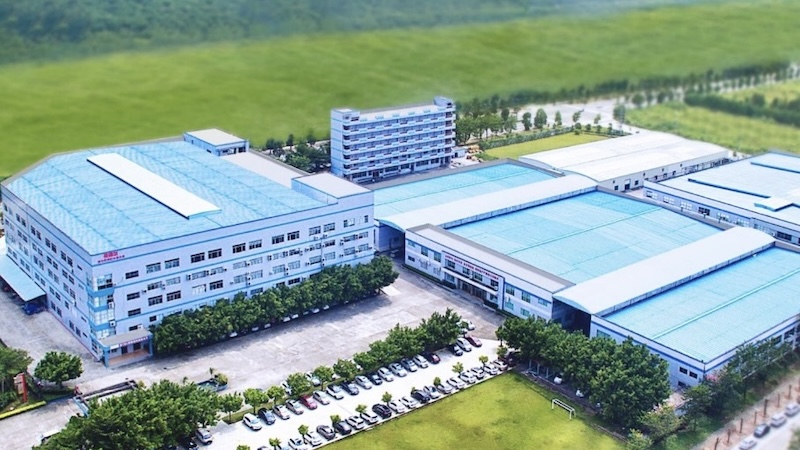
The primary reason China maintains its sourcing position is not unit cost. It is supply chain density.
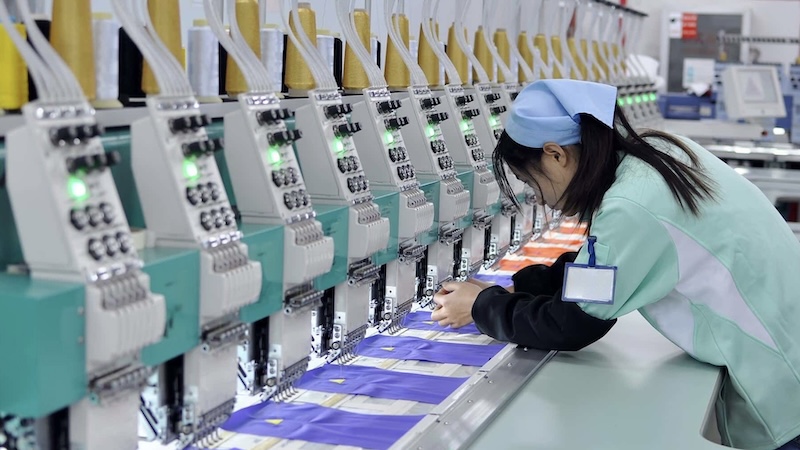
In Guangdong, Zhejiang, and Jiangsu, raw material processors, component makers, tooling shops, packaging suppliers, and assembly factories are often concentrated within the same regional cluster. A product that requires five types of materials and three manufacturing steps can be produced and coordinated inside a single regional ecosystem — without cross-country logistics between stages.
This density creates three compounding advantages:
Speed. A design revision in a China-based supply chain can often be implemented and sampled faster than in a fragmented multi-country supply chain. The same revision in a fragmented supply chain — where components move between countries — can take weeks or months.
Cost predictability. When all stages of production are co-located, coordination costs, communication delays, and logistics between stages are minimized. The hidden costs that erode margins — expedited freight between suppliers, miscommunication on specifications, delays in component delivery — are reduced by proximity.
Customization access. China’s factory density means that many customization requests — alternative materials, custom colors, modified packaging, new sizes — can be sourced locally. This is much harder to achieve in manufacturing bases where the supplier ecosystem is narrower.
China’s supply chain efficiency — the accumulated infrastructure, logistics network, and supplier coordination capability built over decades — is the advantage other manufacturing regions are still working to replicate at comparable scale.
The sourcing calculus for China has shifted. Buyers who entered the market a decade ago based primarily on labor cost arbitrage now face a different reality.
Labor costs have risen. Coastal manufacturing wages in China are significantly higher than they were in 2010. For purely labor-intensive, commodity products — basic garments, simple assembly, unskilled processing — other regions can now compete on unit price.
Tariff exposure has increased for US-bound goods. Ongoing tariff and trade-policy uncertainty have made landed-cost calculation more complex and more variable for buyers exporting to the United States.
Quality expectations have risen. Buyers and consumers expect higher quality, better packaging, and tighter compliance than they did ten years ago — and suppliers in China have evolved to meet this standard at competitive price points.
Sustainability requirements are increasingly part of supplier selection. Some Chinese suppliers have improved packaging, energy management, and environmental documentation, but buyers still need to verify claims independently.
What has not changed is China’s advantage in the categories where supply chain depth matters most:
The depth of this ecosystem is visible in the most complex supply chains. China’s role in global electronics manufacturing illustrates how even highly scrutinized global supply chains remain partly anchored in China because the combination of technical capability, component access, and production scale is difficult to consolidate elsewhere.
For evaluating global sourcing options honestly, China is not always the cheapest option for simple, labor-intensive goods. It is often one of the strongest options for products where ecosystem advantages outweigh the labor cost differential.
China’s electronics supply chain — centered in Shenzhen and surrounding Guangdong — remains one of the deepest in the world in terms of component access, prototyping speed, and supplier density for consumer technology. Why Shenzhen leads in electronics sourcing comes down to one factor: the ability to source every component, sub-assembly, and material within the same regional ecosystem, which makes iteration and production speed difficult to match elsewhere.
For electronics buyers, the relevant advantages are: access to a broad range of components at competitive prices, the ability to move from engineering sample to production-ready prototype faster when specifications and supplier capability are clear, and a deep supplier base familiar with international compliance requirements (FCC, CE, RoHS).
The risks — counterfeit components, IP exposure, quality fade — are also concentrated here. They require active management through supplier verification, component traceability, and inspection.
For consumer goods — home products, personal care, kitchen accessories, fitness equipment, apparel accessories — China’s advantages are breadth and customization flexibility. Private-label buyers benefit from China’s OEM and ODM ecosystem, where factories can adapt materials, branding, packaging, and specifications to buyer requirements without the tooling investment and development timeline of a fully custom product.
For industrial components, precision parts, and technically demanding products, China’s manufacturing capability is more differentiated than its reputation suggests. Jiangsu and Shanghai host sophisticated factories with quality management systems, international certifications, and engineering talent capable of producing to demanding tolerances.
The benefits of manufacturing in China in industrial categories include economies of scale on tooling and materials, technical workforce depth, and the ability to iterate on engineering specifications through close supplier collaboration — advantages that are less visible in price comparisons but significant in practice.
A common sourcing error is comparing factory quotes directly. Factory price is one input into landed cost — it is not a proxy for total sourcing economics.
A realistic total-cost model for China sourcing includes:
| Cost component | Notes |
|---|---|
| Unit price (FOB or EXW) | Starting point, not the full picture |
| Tooling and mold cost | One-time, amortized over order volume |
| Freight and insurance | Varies by mode, route, and season |
| Import duties and tariffs | Varies by HS code and destination |
| Inspection fees | Often charged per man-day or per inspection, depending on location, product, and scope |
| Packaging | May be included or quoted separately, depending on specification |
| Internal management time | Often invisible but real |
| Quality risk allowance | Estimated from product category and inspection results |
A supplier with a higher per-unit price but better quality consistency, tighter lead times, and fewer rework events often produces a lower total cost than the cheapest quote. Understanding logistics trade-offs when sourcing from China — freight mode, Incoterm choice, consolidation strategy — is as important as supplier negotiation in optimizing total landed cost.
China’s advantages are strongest when:
Order volume is sufficient to leverage the factory network. Small-batch, one-off orders rarely unlock China’s cost and customization advantages. The ecosystem is optimized for repeat, scalable production.
Product specifications are clear and documented. China’s manufacturing depth benefits buyers who know what they want. Vague specifications produce inconsistent results regardless of supplier quality.
The product category has deep China supplier penetration. Electronics, consumer goods, furniture, apparel, toys, LED products, and home textiles all have supplier bases in China that are difficult to match elsewhere. For niche industrial categories, other regions may offer better specialist depth.
Quality can be verified at the source. The buyers who get the most value from China sourcing are those with active quality control processes — pre-production checks, in-process monitoring, and pre-shipment inspection — that catch issues before goods leave China.
For buyers with established supplier relationships, clear product knowledge, and sufficient volume to command factory attention, direct sourcing from China is efficient and cost-effective.
For buyers entering a new product category, launching a new private-label line, sourcing from multiple suppliers, or operating without Mandarin-speaking staff, a local sourcing agent provides meaningful advantages: supplier pre-screening, factory verification, Mandarin communication, on-site quality oversight, and logistics coordination.
The choice is not binary. Many buyers use agents for supplier discovery and new category entry, then manage established suppliers directly once the relationship is proven.
The cost of a sourcing agent — charged as a commission, flat fee, retainer, or markup depending on the service model — should be weighed against the cost of errors it prevents: wrong factory selection, quality disputes, miscommunicated specifications, and delayed shipments. For first-time buyers in a new category, the agent cost can be justified when it reduces supplier-selection, quality, or communication risk. For repeat orders from proven suppliers, the cost-benefit calculation is more nuanced.
China’s advantages come with known risks. Acknowledging them honestly is part of building a durable sourcing program.
Quality fade. A supplier who delivers excellent quality on the first order may allow standards to slip as the relationship matures and margin pressure increases. Regular inspection, retained approved samples, and periodic supplier performance reviews are the practical defenses.
IP exposure. Sharing product designs, specifications, and packaging artwork with suppliers creates IP risk. A China-specific NNN agreement (non-disclosure, non-use, non-circumvention) is usually more practical than a generic Western NDA when properly drafted and signed by the correct legal entity. Sharing technical information in stages — only what is necessary for each phase of production — reduces exposure.
Supply chain disruption. Concentration in a single supplier or single region creates vulnerability to factory fires, port disruptions, regulatory changes, and geopolitical events. Buyers with critical SKUs should maintain awareness of backup options even when primary suppliers are performing well.
Currency and tariff volatility. For US buyers especially, tariff policy on Chinese goods has shifted multiple times since 2018 and continues to evolve. Building tariff sensitivity into landed cost models — and monitoring HS code classification carefully — protects against unexpected cost increases.
Q1: Is China still the cheapest place to manufacture?
Not for everything. For simple, labor-intensive goods, countries like Vietnam, Bangladesh, and Cambodia can be more cost-competitive on pure labor cost. China remains cost-competitive for products where supply chain depth, component access, and production repeatability matter — categories where the ecosystem advantage outweighs the labor cost differential.
Q2: How has the US-China tariff environment affected sourcing decisions?
US tariffs on Chinese goods vary by HS code, tariff list, product category, exclusions, and current policy, and have made landed-cost calculation more complex for some buyers. This has encouraged some buyers to diversify tariff-sensitive or simple products while keeping more complex, ecosystem-dependent products in China.
Q3: What product categories are most vulnerable to China sourcing risk?
Products with significant IP exposure, products dependent on single-source components, and tariff-sensitive goods with simple production processes carry the highest risk profile. Products with clear specifications, active quality control, and supplier diversification carry much lower risk.
Q4: Can smaller buyers compete for factory attention in China?
Yes, with realistic expectations. Smaller buyers often work best with smaller factories, trading companies with aggregation capabilities, or sourcing agents who can combine orders from multiple buyers to meet factory MOQ requirements. The key is matching buyer scale to appropriate supplier type — not trying to work with factories optimized for large enterprise programs.
Q5: How do I verify that a China supplier is what they claim to be?
Request business license, factory photos, production capacity documentation, and relevant certifications. Conduct a video call with a factory tour component. For significant orders, commission a third-party factory audit. The level of verification should scale with the financial risk of the order and the product category’s compliance complexity.
China’s sourcing advantages in 2026 are real but more specific than the generic “world’s factory” narrative suggests. They are strongest in categories requiring ecosystem depth, customization access, and production repeatability — and less compelling in purely labor-intensive categories where cost is the primary driver.
Durable China sourcing programs are not built on the cheapest quote. They are built on total-cost thinking, supplier fit, verification, and quality control before shipment.
China’s manufacturing ecosystem is a tool. Used with clear specifications, active verification, and realistic cost modeling, it remains a powerful sourcing tool.
 English