



Landed cost is the true, all-in cost of getting a product from a Chinese factory into your warehouse ready to sell. It’s the factory price plus freight, insurance, duties, taxes, customs clearance, port handling, and final delivery.
| Cost block | What it covers |
|---|---|
| Product cost | Factory price, packaging, tooling, labeling |
| Freight | Ocean, air, or rail, plus surcharges |
| Insurance | Optional cargo cover |
| Duties and taxes | Customs duty, tariffs, VAT, GST, or other import charges |
| Clearance and handling | Brokerage, port and terminal fees |
| Final delivery | Port-to-door trucking |
Landed cost = product cost + origin charges + freight + insurance + duties and taxes + customs clearance + destination handling + final delivery.
Per-unit landed cost = total landed cost ÷ sellable units. Not every shipment includes every line, but almost every shipment includes more than the buyer first expects. The goal is simple: make sure no real cost stays hidden until the invoice lands.
One habit helps a lot. Separate one-time costs (tooling, testing, packaging artwork) from repeating ones (freight, duties, taxes). That tells you whether a pricey first order is just startup cost, or whether the product stays expensive even at volume.
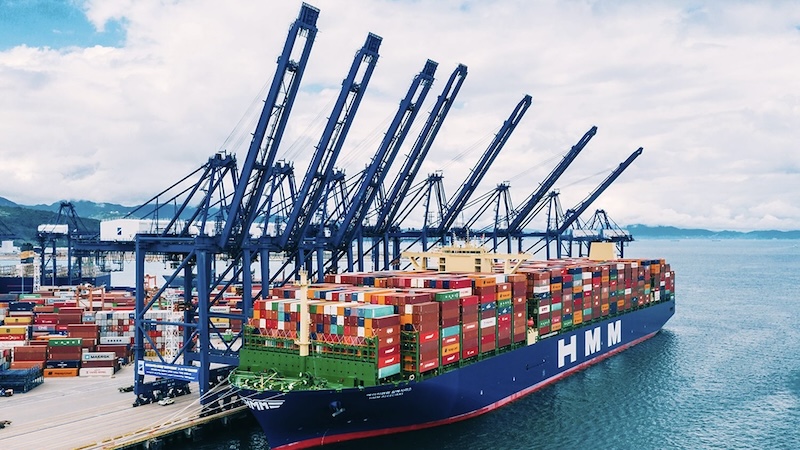
The unit price is the easy part. The costs that quietly eat your margin are the ones billed by other parties, and they’re where most first-timers get caught.
Start with the shipping term, because a quote only means something once you know what’s behind it. A factory price (the term EXW) means the goods sit ready at the factory and you handle everything after. A free-on-board price (the term FOB) means the supplier delivers to the departure port and loads for export, so more origin cost is already included. Never compare an EXW quote from one supplier to an FOB quote from another as if they’re equal. Match the term first, then add any missing origin charges.
Case: One supplier offered a lower factory-price rate. After adding trucking to the port, export paperwork, and loading, the savings vanished. A second supplier’s slightly higher price already included all of that plus better packaging. The cheaper-looking quote was the expensive one. It pays to negotiate the price only after you know what the quote really covers.
Freight is the next trap. It’s never just the ocean or air rate. Break it into main carriage (the long-distance move) and local logistics (origin handling, port fees, destination delivery), so you can compare air against sea freight honestly. Watch for volume-based pricing on light, bulky cartons, where the quote jumps once the forwarder measures the shipping volume instead of the weight.
Then come duties and taxes, set by your product code and declared value. Confirm the code, verify the shipping term, and check for extra tariffs before you finalize pricing. If you import to the US, understand the import duties and tariffs first. Remember taxes hit cash flow at customs entry even when partly recoverable later, so a profitable deal can still demand more upfront cash than you expect. Many of these are the same hidden import costs that catch new buyers off guard.
Finally, port and terminal fees are small but easy to miss because they hide inside “shipping.” Ask for origin charges as a separate line, and confirm which party pays terminal handling under your shipping term.
Here’s the whole calculation on a real order, so you can see how the pieces add up to a per-unit number you can price against. Say you’re importing 1,000 units of a small electronics accessory.
| Line | Cost |
|---|---|
| Product (1,000 × $4.50 free-on-board) | $4,500 |
| Sea freight + destination delivery | $1,200 |
| Duty + entry charges | $650 |
| Cargo insurance | $60 |
| Bank and documentation fees | $40 |
| Total landed cost | $6,450 |
| Per unit (÷ 1,000) | $6.45 |
If your target needs a landed cost under $6.20, this shipment already needs a renegotiation, a bigger order, or a different freight plan. Three quick steps get you there:
Step 1: Lock product cost and shipping term. Start with unit price, minimum order, packaging, and any tooling. Confirm the shipping term, since it decides which costs are yours. Add one-time costs too, like $300 for packaging artwork, for an honest first-order view.
Step 2: Build freight per unit. Ask for the full picture: origin pickup, export handling, main transport, surcharges, and destination delivery. Calculate it per unit so “$1.20 a unit by sea versus $3.80 by air” becomes an easy call.
Step 3: Classify and apply the rate. Your product code sets the duty rate, so a guessed code distorts everything. Have your broker or sourcing team confirm the code before you apply a rate.

Even a careful estimate is a draft. Three things push the real cost around more than importers expect.
| Variable | Why it changes your cost |
|---|---|
| Product type and code | Sets duty rate and compliance needs |
| Order volume and container | Drives per-unit freight |
| Destination and port | Changes handling, brokerage, and delivery |
Product code affects duty, documentation, and inspection, and regulated goods like electronics or anything with batteries add testing costs. Bigger orders spread fixed costs across more units, lowering the per-unit figure. And your destination and port change handling, brokerage, and inland delivery, so plan against your real route, not a generic template.
Q1: How accurate can a landed cost estimate be before shipment?
Directionally useful, not perfect. Freight, customs, and currency can move before arrival, so prepare a base case plus a small contingency range and refine it as real invoices come in.
Q2: What’s the single most-forgotten cost?
Origin-side charges: the trucking, export paperwork, and terminal handling before goods even sail. They’re billed separately and can erase the savings from a lower factory price.
Q3: Should currency exchange be part of the calculation?
Yes. If the rate shifts between order and payment, your real cost moves. Lock a rate assumption and revisit it whenever the exchange rate swings.
Q4: How does order size change my per-unit landed cost?
Bigger orders spread fixed costs like clearance and tooling across more units, lowering the per-unit figure. A product too expensive on a tiny order can work at volume.
Q5: Does insurance need to be in the calculation?
For low-value or fast shipments many buyers skip it, but for high-value cargo or long ocean routes it’s cheap protection against loss or damage. Include it whenever a lost shipment would seriously hurt.
Q6: How do I compare two suppliers fairly on landed cost?
Put both quotes on the same shipping term and run each through the full formula, not just the unit price. A higher factory price with cheaper freight and better packaging often wins once every cost is in.
Q7: Can I estimate landed cost before choosing a freight method?
Yes, as a scenario model. Build one version for air and one for ocean, then compare total cost, transit time, and stock impact.
Q8: What tools can I use to calculate landed cost?
A simple spreadsheet is enough for most buyers: one row per cost line, then a total divided by sellable units. Freight forwarders and some sourcing agents will also build the estimate with you, which helps when duties or local charges are unclear.
Treat your landed cost as a living model, not a one-time guess. Start with product cost, freight, insurance, duties, taxes, and destination charges, then test the total against your target margin before you order. When any input is fuzzy, especially the product code or local charges, use a conservative assumption instead of forcing false precision.
If you’d rather have the quotes, terms, and hidden charges checked for you before you commit, a good place to start is with purchase management that keeps every cost visible from factory to door.
 English