Maple Sourcing Ltd.
Maple Sourcing Ltd.
We Make Your Sourcing Easy!
Need help? sales@maplesourcing.com
English
Maple Sourcing Ltd.
Maple Sourcing Ltd.

Why Huaqiangbei Electronics Market Is Becoming Risky for Importers

Published:
Updated:
9592 Views
Table of Content [Hide]

    You found a great sample at a Huaqiangbei stall, negotiated a good price, and felt confident about the deal. Why does the bulk order so often fail to match what you saw on the counter?

    Bad quality can drive out good quality when buyers compare mostly on price. That is the structural risk many importers underestimate at Huaqiangbei.

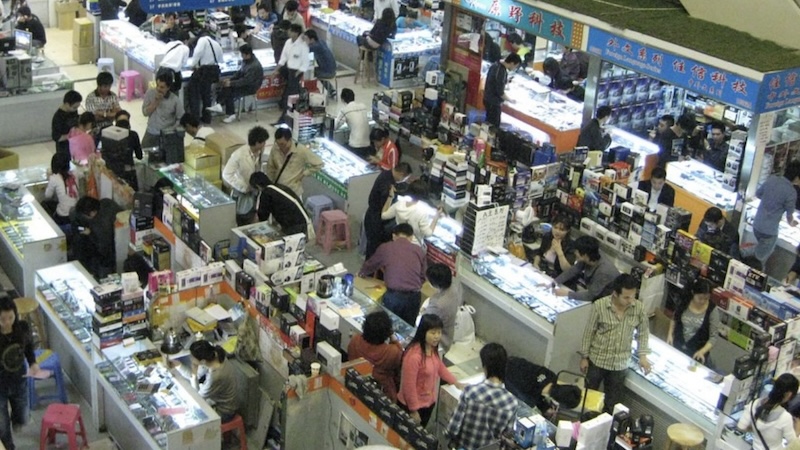
    Vendor counter at Huaqiangbei electronics market

    A Common Scenario: Two Phone Case Vendors

    Consider a common example. A buyer, let’s call him Mark, sourced silicone phone cases from a vendor at Huaqiangbei for two years. Good samples, fair prices, reliable delivery. Then a friend told him about a stall three buildings over selling the same style of case for 15% less.

    Mark walked over, checked the sample, and it looked just as good. He went back to his usual vendor and asked for a price match. The vendor pushed back gently — “our silicone is better quality, it won’t crack as fast.” But Mark had just held a sample from the other stall in his hand. It felt the same. Looked the same. He didn’t see the difference.

    The vendor matched the price. Where did the savings come from? Slightly thinner silicone. A cheaper grade of pigment that fades faster under sunlight. Mark didn’t notice for two more orders — until customers started complaining the cases were cracking after a few months and the color was fading faster than expected.

    By the time Mark went back to ask what changed, the vendor’s explanation was simple: Mark had asked for the same price as the next stall, so the savings had to come from somewhere. Mark had not asked the vendor to cut quality. He had asked for a lower price and assumed the vendor would absorb the difference. The vendor absorbed it the only way available — in the silicone Mark could not see or feel in a five-minute sample check.

    Nobody lied to Mark. The vendor did what the market rewarded him for doing: match the price or risk losing the customer.

    This same pressure repeats across many stalls and many product categories. That is why batch quality can become less consistent even when nobody is trying to cheat anyone.

    Why This Happens: Stalls Are Too Close Together

    Picture the layout. Hundreds of stalls selling similar products, packed into the same floor, the same building. A buyer can walk five steps and check a competitor’s price. Samples on the counter all look about the same — same components, same finish, same price tag nearby.

    Price is the easiest thing to compare. Quality is the hardest. So buyers chase price. Vendors who want to keep the order have only one lever to pull: cut cost somewhere in the next batch. That “somewhere” is almost never visible in the sample.

    This is not about dishonest vendors. It is what happens when a market is built on stalls standing shoulder to shoulder, fighting over the same buyers, every single day. Even vendors who genuinely want to hold a higher standard get pulled down by the buyer next to them comparing prices in real time. A vendor who refuses to match the price loses the order today. A vendor who matches it survives to sell another day — and quietly trims something the buyer is unlikely to notice until much later, often after the goods have already shipped to customers.

    This same dynamic can appear in many Huaqiangbei product categories — phone accessories, chargers, cables, small gadgets, and components. The product changes. The pressure does not.

    Other Risks Worth Knowing

    Many stalls are traders, not factories. Many Huaqiangbei vendors buy from factories and resell — they are not the people actually making your product. That means less control over quality, less ability to customize, and an extra markup you don’t need to pay. It also makes it harder to ask the questions that matter, like what material grade is actually being used or whether the design can be changed at all. Verifying whether a supplier is a real factory — not just a friendly stall owner — is worth doing before you place a large order anywhere in China, not only at a market.

    Fake and refurbished parts are a real problem. Counterfeit chips, refurbished components sold as new, and parts that pass a quick test but fail under real use — these are known risks anywhere electronics are sourced informally, and Huaqiangbei stalls make it especially hard to trace where a part actually came from. A chip that works fine on a quick bench test can still fail after a few months of real use, and by then the batch may be difficult to trace.

    Big orders don’t scale well. A stall that handles a few hundred units smoothly might quietly subcontract a 5,000-unit order to a workshop you’ve never seen — bringing back the same quality risk you were trying to avoid in the first place. The vendor you negotiated with may not even visit that workshop during production.

    Paperwork is often missing. Many vendors are not used to export documentation — certificates, test reports, formal invoices that satisfy customs in your country. If a quality dispute comes up later, a handshake deal gives you nothing to point to, and a customs officer asking for a proper commercial invoice will not accept a verbal agreement.

    Comparing phone case sample quality side by side

    Where Buyers Are Sourcing Instead

    Huaqiangbei still has a place — for small test orders, repair parts, or just seeing what’s trending in the market. But for orders you plan to scale, more buyers are moving to:

    Verified factories through B2B platforms. Alibaba, Global Sources, and Made-in-China.com help you find candidates — but verifying the supplier yourself, checking certificates, and testing samples still matters. The platform finds them. You still have to check them. A badge on a profile is not the same as walking the production floor.

    Electronics trade shows. Shows like Global Sources Consumer Electronics and the Hong Kong Electronics Fair bring export-focused suppliers together in one place, where you can compare products side by side and discuss custom requirements in a more structured setting.

    Factories in nearby industrial zones. Bao’an, Longgang, and Dongguan have many electronics factories set up for export production, not retail foot traffic. A properly checked factory can give you a clearer production process, a fixed point of contact, and a paper trail — something a stall transaction usually cannot provide, no matter how friendly the vendor is.

    Keeping Quality Consistent Wherever You Buy

    The same controls work no matter where you source:

    Check the supplier before you commit — don’t take their word for certifications or experience. For bigger or ongoing orders, a factory audit tells you what they can actually produce, not just what the sample shows. Treat the approved sample as the standard, not a guarantee — and arrange a pre-shipment inspection before you pay the balance. Put terms in writing — quality standards, prices, payment milestones — not a handshake.

    This matters most precisely because of what happened to Mark. He never asked his vendor to lower quality. He only asked for a lower price and trusted the vendor to find the savings somewhere fair. That trust is the gap a written specification and an independent inspection are built to close — not because the vendor is dishonest, but because price pressure makes “somewhere fair” very hard to guarantee on a handshake alone.

    FAQ

    1. Is Huaqiangbei still worth visiting?

    Yes, for small orders, repair parts, or checking out what’s trending. You can hold real products in your hand and get a feel for a category in an afternoon that would take weeks to research online. For larger, repeat orders where consistency matters, factory relationships or vetted suppliers are safer — the same density that makes Huaqiangbei great for browsing is what makes it risky for bulk production.

    2. Why does the same vendor’s quality change over time?

    Constant price comparison from nearby stalls pushes vendors to cut prices to keep customers. The only way to lower a price is to lower a cost somewhere — usually in the batch you don’t get to inspect closely. A vendor you’ve trusted for years can change their materials gradually, batch by batch, without ever telling you, simply because the buyer next door keeps asking for a better price.

    3. Are fake parts a real risk at Huaqiangbei?

    Yes. Counterfeit and refurbished components are a known risk in informal electronics sourcing generally, and market-stall transactions make it especially hard to trace where a part actually came from. A component that passes a quick bench test in the stall can still fail months later once it is inside a finished product being used by a real customer.

    4. Can I get custom (OEM) products made through Huaqiangbei stalls?

    Usually not at the level a real brand needs. Custom development needs direct access to a factory’s engineering team — most stalls are set up to sell existing stock, not build something new with you. A vendor might agree to “customize” your order, but that often just means adding your logo to an existing product, not changing the actual design or materials.

    5. What’s a safer way to source electronics from China?

    Find candidates through B2B platforms or trade shows, then verify them yourself — check certificates, request samples, and consider a factory audit for bigger orders. A platform profile or trade show booth is a lead source, not proof of supplier reliability. Properly checked factories in zones like Bao’an, Longgang, or Dongguan are often better set up for export than market stalls, with clearer production responsibility, documentation, and quality control.

    6. How do I avoid the price-driven quality problem described here?

    Don’t pick a supplier on sample price alone. Check their production process and track record. For any meaningful order, inspect the actual bulk batch against your approved sample — don’t just trust that it will match. If a price drops suddenly without you asking for it, that is worth asking about directly rather than simply accepting the savings.

    7. Is the Chinese government cracking down on fake goods at markets like this?

    Yes. Chinese authorities continue to crack down on counterfeit and substandard goods, but enforcement does not remove the sourcing risks created by informal deals, unclear supplier identity, and batch-level quality variation. A market can be free of obvious counterfeits and still have the same price-driven quality slide that affected Mark’s phone cases.

    8. What products are riskiest to buy at Huaqiangbei?

    Critical components — chips, sensors, anything needing certification — carry the highest risk, because a defect is invisible until the product fails in the field. Simple, low-stakes items carry less risk, though quality consistency is still worth checking, especially once you scale past a small test order.

    Conclusion

    Huaqiangbei’s biggest strength — stalls packed close together, easy to compare — can also become its biggest weakness. When every stall can be price-checked in five steps, and every sample looks convincing, the market rewards the cheapest quote, not the most consistent batch. The same pressure can appear across many stalls and many categories.

    For buyers who need help identifying electronics suppliers, checking factory capability, verifying documents, and managing sample-to-bulk risk, supplier sourcing in China can help reduce risk before orders scale.

    Need help finding reliable China suppliers?
    Maple Sourcing helps search, compare, and shortlist suitable suppliers before you request samples, pay deposits, or start production.
    Aaron Li
    I’m Aaron Li, a sourcing expert. Since 2012, I’ve helped 300+ startups source from China and manage product standards. Here, I share practical answers to common questions about sourcing and quality control.
    All Articles
    How to Calculate Landed Cost from China: Formula + Example
    CIF vs FOB Shipping from China: Which Should You Use?
    Carton Shipping Marks: What Importers Should Specify
    Where to Source Products for Retail Arbitrage in 2026
    Chinese Wholesale Websites: Which One Should You Use?
    Senior Living Products from China: What Importers Should Source in 2026
    Wholesale Home Decor from China: What Retailers Should Check
    How to Source Solar Panels from China: A Buyer's Guide
    Can You Get Free Samples from Chinese Factories? Here's How
    Dollar Store Products in Africa: What Sells Best from China
    Private Label Sourcing from China: The Pros, Cons, and What Most Sellers Get Wrong
    4 Risks of Buying from Alibaba Before You Pay
    How to Find Wholesale Suppliers for Small Businesses
    CBM Calculator for Ocean Freight: Formula and Examples
    Profitable Ecommerce Niches: How to Find Gaps Before You Source
    Proforma Invoice or Commercial Invoice? What Every Importer Needs to Know
    Gross vs Net Weight in Shipping: What to Check
    Direct vs Indirect Sourcing: How to Choose the Right Model
    How to Write a Quote Request That Gets Real Prices
    Supply Chain Trade-Offs: Cost, Speed, and Risk
    How Much Does It Cost to Start an Import Export Business?
    China's Major Logistics Companies: Who They Are and What They Do
    How to Get a Supplier to Lower the Price, Not the Quality
    The Hidden Costs of Importing from China That Eat Your Margin
    Sourcing from China for Amazon: What Most Sellers Get Wrong
    Custom Packaging from China: How Small Businesses Can Start
    Supplier Quality Audit in China: What to Check and Why
    China Manufacturing Hubs: Which Region Fits Your Product?
    Made in PRC: What the Label Means and Why It Matters for Importers
    FCL vs LCL Container Shipping: Which Is Right for Your Order?
    Sea Freight vs Air Freight: The Real Cost Difference and When to Use Each
    Top Toys to Import from China: What’s Selling in 2026
    China to Canada Shipping: How to Cut Freight Costs
    Alibaba vs AliExpress: Which Platform Should You Use?
    China to USA Imports: How to Navigate Tariffs Without Losing Your Margin
    OEM or ODM? How China Manufacturers Define the Difference
    How to Protect Your Product Idea When Outsourcing from China
    FOB vs EXW for China Imports: What the Difference Really Costs You
    1688 Purchasing Agent: How to Buy from China’s Domestic Market
    Yiwu Market Product List: What to Buy and What to Avoid
    What Is 4PX Shipping? Delivery Times, Tracking, and Delays
    DHL Shipment On Hold? What to Do and Who Fixes It
    Best Taobao Agent for Kitchen Products: What to Look For
    Can You Trust an Alibaba Verified Supplier for Quality?
    Foshan Furniture Market Guide: What to Buy, What to Check
    Guangzhou Fabric Market Guide: What to Buy, What to Avoid
    Is the Canton Fair Worth It for a First-Time Buyer?
    Why Huaqiangbei Electronics Market Is Becoming Risky for Importers
    China Electric Toothbrush Suppliers: What to Check
    Bag Manufacturers in China: How to Find One That Can Execute Your Design
    Managing Sample Orders in China: Why What You Imagined Isn't What You Get
    Top 5 Shipping Documents Every Importer Must Know
    Procurement Life Cycle: Step by Step for Logistics
    Top Beauty and Healthcare Products on Amazon: Seller Risks
    Can Your Factory Actually Deliver? How to Check Before You Order
    Top 10 Wholesale Markets in China: Which One Fits Your Product?
    Why Are So Many Toothbrushes Made in China?
    Shenzhen's Best-Known Products: From Electronics to Innovation
    Lower MOQ, Same Supplier: Negotiation Tactics That Actually Work
    Why Brands Use OEM Instead of Their Own Factories
    Why Smart Importers Consolidate Shipments from Multiple Suppliers
    10 Profitable Products to Import from China to Europe (2026)
    Key Shipping Ports in China and North America for Importers
    What Apple's China Suppliers Teach Small Buyers in 2026
    Incoming Quality Control in China: What Buyers Need to Know
    China Sourcing Agent Fees: Hidden Costs and Real Rates (2026)
    8 Most Profitable Products from China to Resell in 2026
    Why Are Most Things Made in China? The Real Reasons Behind the Label
    Inspection Companies in China: How to Choose in 2026
    How Much Cheaper Is Manufacturing in China?
    Customized Products from China: 4 Trends Buyers Should Check
    China Pre-Shipment Inspection Process: What Buyers Need to Know
    Global Sourcing Challenges: What Goes Wrong and How to Fix It
    How to Source Electronics from Shenzhen Markets
    How to Verify a Chinese Company Without Visiting China
    Bulk Order from China: 7 Checks Before You Pay
    How to Order from Alibaba Without Losing Your Deposit or Getting the Wrong Product
    What Makes China's Supply Chain Impossible to Replace?
    Rapid Prototyping in China: Get Samples Faster
    China FBA Sourcing: What Amazon Sellers Must Know Before the First Order
    Buying in Bulk from China: Is It Still Worth It?
    Sourcing LED Lights from China: 6 Checks Before You Order
    How a China Sourcing Service Saves You Time, Money, and Costly Mistakes
    How to Contact Chinese Factories and Get a Reply
    China Manufacturing: 8 Steps to Keep Orders on Track
    Kitchen Products from China: 7 Supplier Mistakes to Avoid
    6 Practical Checks to Find the Best Products to Import from China
    Trendy Electronics from China: What’s Selling in 2026
    Chinese Supplier Search: How to Shortlist the Right Ones
    Shenzhen Sourcing Agent: Best for Electronics and Tech Sourcing
    Hardware Import from China: What Buyers Must Check First
    China Direct Sourcing: When It Helps and When It Hurts
    China Supplier Management: 5 Things to Lock Down
    Direct Product Sourcing in China: A Beginner's Complete Guide
    China Outdoor Product Suppliers: What Separates Good from Bad
    China Buying Agent: When You Need One and When You Don’t
    Manufacturing in China: What’s Changed and What Hasn’t
    The Real Cost of Managing China Procurement In-House
    Metal Products from China: 6 Checks Before You Order
    How a China Sourcing Agent Helps Amazon Sellers Scale Fast
    Read More
    References
    Our Features
    Custom Products
    Turn concept to reality
    Quick Response
    Within 24 hours
    Detail Oriented
    Strive for perfection
    Assured Quality
    100% Guarantee