



Walk through any store in the United States, the United Kingdom, or Australia and turn over the products on the shelf. Electronics, tools, kitchenware, toys, furniture — the label often reads the same way: Made in China.
Most importers accept this as a given. Fewer understand why China became the world’s factory, or why that position has proven so durable despite rising wages, trade tensions, and repeated predictions that manufacturing would shift elsewhere.
Understanding why China remains central to global consumer-goods manufacturing is not just economic trivia. It shapes how you source products, where you find suppliers, and what risks you are actually managing when you place an order.
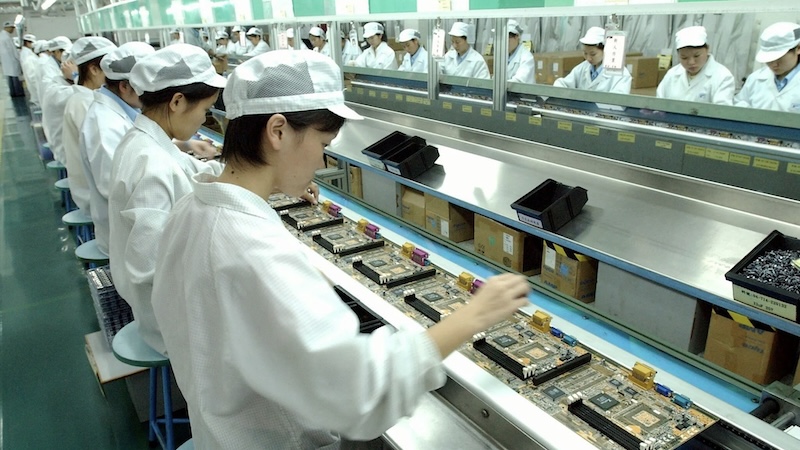
The standard explanation is cheap labor. That was accurate in the 1980s and 1990s when China’s manufacturing sector first scaled significantly. It is less accurate today.
Average manufacturing wages in China have risen substantially over the past two decades. Countries like Vietnam, Bangladesh, and Cambodia now offer lower labor costs for certain product categories. And yet China remains the largest manufacturing economy and a central player in global production.
Labor costs were the entry point. What kept China at the top is something harder to replicate: a complete manufacturing ecosystem built over forty years.
The single biggest reason China is still where most things get made is not cost. It is the supply chain ecosystem.
Consider what it takes to produce a consumer electronics product: circuit boards, plastic housing, metal components, cables, packaging materials, and dozens of smaller parts. In China’s Pearl River Delta — the region around Shenzhen, Guangzhou, and Dongguan — many of these components may be available within a short drive.
A factory in Vietnam or Mexico making the same product may need to import many of those components. That adds cost, lead time, and logistics complexity. A factory in Shenzhen may find them in the same district or nearby industrial cluster.
This proximity effect compounds across industries. When many suppliers, sub-component makers, tooling shops, and logistics providers are nearby, production moves faster, problems get solved faster, and the total cost stays lower even when the headline labor rate is higher than competing countries.
A typical example: A silicone kitchen product requires custom tooling, specialized silicone compounds, food-grade documentation, and printed packaging. In Guangdong province, many of these inputs can often be sourced within the same industrial cluster. A buyer sourcing the same product in Southeast Asia would typically need to import the tooling from China, source specialty materials from separate suppliers, and manage a more fragmented logistics chain — often still routed through a Chinese port.
China’s manufacturing landscape is not uniform. Different regions specialize in different product categories, and that specialization has created depth of expertise that is difficult to replicate elsewhere.
Shenzhen and the Pearl River Delta are the global center for electronics manufacturing, consumer tech, and hardware. The density of component suppliers, printed circuit board manufacturers, and electronics assembly operations here is difficult to match. For anyone sourcing electronics from China, the ecosystem starts here.
Guangzhou is a major trading and manufacturing hub for apparel, textiles, accessories, furniture-related sourcing, and machinery. The Canton Fair, held twice a year in Guangzhou, remains one of the largest trade exhibitions in the world.
Yiwu is the global wholesale hub for small consumer goods — accessories, gifts, seasonal products, and household items. Importers buying ready-made products in relatively small quantities often use Yiwu as their sourcing base.
Dongguan specializes in components, electronics assembly, plastics, molds, and precision manufacturing. It operates as part of the components and manufacturing backbone for many Pearl River Delta assembly factories.
Ningbo and Wenzhou are known for hardware, tools, and industrial products. Many hand tools and hardware items sold globally are manufactured in this region.
This regional specialization means that when you find manufacturers in China for a specific product, you are typically looking for a factory in a cluster that has spent decades building expertise in exactly that category. The knowledge is embedded in the workforce, the tooling ecosystem, the local supplier base, and the production processes.
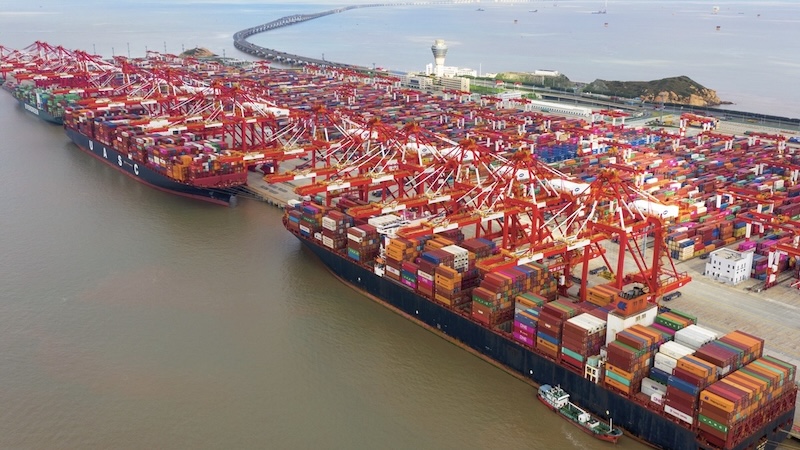
China handles some of the world’s largest container volumes, with Shanghai, Shenzhen, Ningbo-Zhoushan, and Guangzhou among the major global port hubs.
This infrastructure was built specifically to support export manufacturing. Factories in Southern China can get goods to a port, through customs, and onto a vessel with a degree of efficiency that many manufacturing countries still struggle to match. For importers, this translates into predictable lead times and manageable freight costs.
Inland infrastructure has also been invested heavily. High-speed rail, expressways, and logistics networks connect manufacturing clusters to ports efficiently, reducing the cost of moving goods from factory to ship.
For four decades, Chinese industrial policy has prioritized manufacturing as a strategic national objective. This has taken various forms:
Special Economic Zones established in the 1980s created areas with favorable tax rates, relaxed regulations, and investment incentives that attracted foreign manufacturers and helped build the initial manufacturing base.
Infrastructure investment has been consistent and substantial. Ports, roads, power supply, and industrial zones have been built and expanded to support manufacturing growth.
The Made in China 2025 initiative shifted the focus from low-cost assembly toward higher-value manufacturing — robotics, semiconductors, aerospace, electric vehicles, and advanced manufacturing equipment. This signals a strategic move up the value chain rather than an exit from manufacturing.
Workforce training has been prioritized at a national level, producing a large pipeline of engineers, technicians, and skilled manufacturing workers each year.
Few emerging manufacturing countries have matched this combination of policy support, infrastructure, workforce development, and export orientation.
The rising wage argument against China has been partially answered by automation. Chinese manufacturers, particularly in electronics and automotive, have invested heavily in robotics and automated production lines.
This matters for buyers because it changes the cost structure. A factory running automated assembly lines can compete on per-unit cost even with higher nominal wages, because the labor input per unit drops. For precision manufacturing in particular — tight tolerances, consistent quality, high volume — Chinese factories running modern automation have advantages that are difficult to match in lower-wage countries.
China has become one of the world’s largest adopters of industrial robots. The manufacturing sector is moving up the value curve through technology investment, not just labor.
China’s manufacturing dominance is not permanent, and some categories are shifting. Garments, certain electronics assembly, and labor-intensive products are increasingly produced in Vietnam, Bangladesh, Cambodia, and India. Tariff pressures have accelerated some of this movement.
But for many consumer product categories — especially those requiring custom development, complex supply chains, or precision manufacturing — China remains the practical default. The reasons are structural, not just cost-based:
For buyers working on product development in China, this means that even when comparing alternative sourcing countries, the baseline for tooling, prototyping, and supplier qualification often starts in China — regardless of where final production happens.
The most important practical implication for importers: understanding which manufacturing cluster is relevant for your product category is more important than knowing general facts about China manufacturing. A buyer sourcing electronics in Yiwu, or sourcing furniture in Shenzhen, has misunderstood the landscape. The right cluster for your product category determines your supplier options, your typical lead times, and the quality of the ecosystem you are working within.
Working with a sourcing agent in China who operates within the relevant manufacturing cluster — rather than acting as a general intermediary — significantly affects what you can access and how efficiently you can manage the sourcing process.
1. Are labor costs in China still competitive?
Labor costs in China have risen significantly since the 1990s and are now higher than in several Southeast Asian countries for basic assembly work. However, for skilled manufacturing, technical operations, and products requiring complex supply chains, China’s total cost — including supply chain proximity, infrastructure, and workforce depth — often remains competitive even when nominal wages are higher.
2. Why hasn’t manufacturing shifted significantly to other countries?
Some categories have shifted, particularly basic garment assembly and simple electronics. But the supply chain ecosystem, tooling infrastructure, and workforce depth built in China over forty years cannot be quickly replicated. For many product categories, alternative countries still rely on components, tooling, and materials sourced from China. Moving final assembly does not eliminate the China dependency.
3. How do US tariffs affect China manufacturing?
Tariffs have added cost for US importers sourcing from China and have accelerated some production shifts to countries like Vietnam and Mexico. However, some Chinese manufacturers have responded by establishing or partnering with final-assembly operations outside China while keeping core components, tooling, or upstream production in China. The supply chain remains deeply China-centric for many product categories. Buyers should verify actual production origin when evaluating suppliers claiming non-China manufacturing.
4. Which product categories are most likely to stay in China?
Electronics and consumer tech, precision hardware, custom-developed consumer goods, industrial components, and any product requiring complex supply chain integration are likely to remain strongly China-centered in the near term. Simple, labor-intensive products with minimal supply chain complexity are more likely to shift.
5. Is Chinese manufacturing quality improving?
In many export-oriented factories, yes. Chinese factories producing for international buyers have been adapting to quality requirements for decades. Higher-tier factories — particularly in the Pearl River Delta electronics cluster and manufacturing zones serving major international brands — can operate to very high international quality standards. Quality varies enormously between factories, which is why supplier selection and quality inspection in China remain critical processes for importers.
6. What is the Made in China 2025 plan?
Made in China 2025 is a Chinese government industrial policy initiative aimed at upgrading the manufacturing sector toward higher-value industries: semiconductors, robotics, electric vehicles, aerospace, and advanced manufacturing equipment. It signals China’s intent to move up the value chain rather than compete primarily on low-cost assembly.
7. How do I find suppliers in the right manufacturing cluster for my product?
Start by identifying which region specializes in your product category. Electronics and tech products are mainly in the Pearl River Delta. Hardware and tools are concentrated in Ningbo and Wenzhou. Furniture is strong in Guangdong, especially Foshan and Shunde, as well as parts of Zhejiang. Textiles and apparel are strong in Guangdong, Zhejiang, Jiangsu, and Fujian depending on product type. Working with a local sourcing partner who has established relationships in the relevant cluster is faster and more reliable than searching Alibaba without regional context.
8. Is “Made in China” still a reliable quality indicator?
Made in China is not a quality indicator in either direction — it is a manufacturing origin label. The quality of a product made in China depends entirely on the specific factory, the buyer’s quality requirements, and whether quality inspection and control processes are in place. Some of the world’s highest-quality consumer products are made in China. So are some of the worst. The label tells you where it was made, not how well.
9. What are the biggest risks of sourcing from China?
The main risks are supplier reliability, quality consistency, intellectual property protection, communication gaps, and supply chain disruption. These risks are manageable through proper supplier verification, written specifications, quality inspection, and building relationships with suppliers who have a track record with international buyers.
10. Should I be concerned about China’s rising wages when planning long-term sourcing?
Rising wages are a real trend, but they have not displaced China from its manufacturing leadership position because productivity, automation, and supply chain efficiency have risen alongside wages. For long-term planning, the more relevant question is whether your product category is one where alternative manufacturing locations can deliver comparable quality, lead times, and supply chain reliability — and at what total landed cost, not just at the factory gate price.
China did not become the world’s factory by accident or by price alone. Four decades of infrastructure investment, policy support, supply chain development, and workforce training built a manufacturing ecosystem that few countries have matched in scale or depth.
For importers, this means China is likely to remain a primary sourcing destination for many consumer product categories in the near term — not because there are no alternatives, but because the alternatives have not yet built the ecosystem required to compete on total cost and supply chain reliability.
The more useful question for any buyer is not whether to source from China, but how to source from the right part of China, with the right suppliers, and with the right quality controls in place. A well-managed product sourcing process starts with understanding this landscape.
 English