



You are buying from three factories in China. One makes your packaging, one makes the product, and one makes a small accessory. Each supplier has different lead times. Each one wants to ship separately. What happens to your freight costs?
Three separate LCL shipments from China can cost more than one consolidated FCL shipment when the combined volume is high enough. And the logistics of tracking three shipments, managing multiple clearance files, and receiving goods separately creates more administrative work.
This is why consolidation exists. It is often one of the most cost-effective practices available to importers who source from multiple Chinese suppliers — and one of the most overlooked.
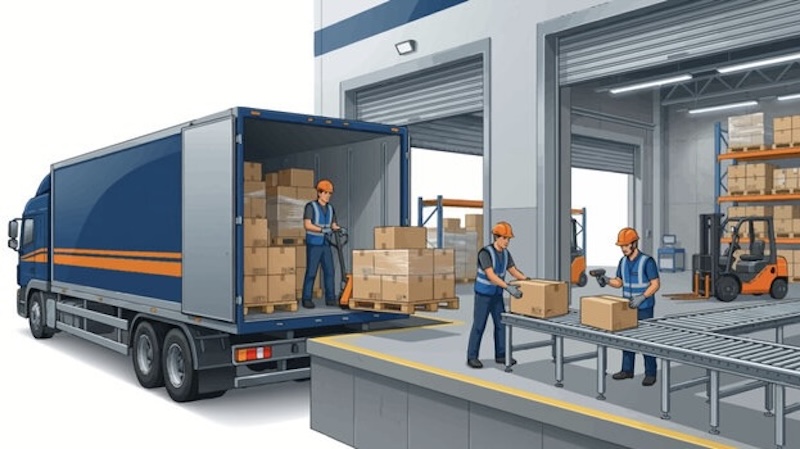
In the context of sourcing from China, consolidation means collecting finished goods from multiple factories at a warehouse or consolidation hub in China, then shipping them together as one coordinated export shipment.
This is distinct from the corporate strategy of “reducing your supplier count.” For importers from China, consolidation is a logistics tool. You may still buy from five different suppliers — you just coordinate their shipments to arrive at one location before export.
The consolidation point is typically:
Goods from each factory are delivered to this central location. Once all shipments are received, they are checked, stored if needed, and loaded together for export when the shipment is ready.
Most importers do not set out to complicate their logistics. Multiple suppliers emerge naturally when:
Understanding China’s regional manufacturing clusters helps explain why this happens: furniture is strongly represented in Foshan, electronics in Shenzhen and Dongguan, and textiles in Guangzhou and Zhejiang. A buyer sourcing a mix of product types is almost inevitably dealing with multiple regions, not just multiple factories.
The core financial case for consolidation is the difference between FCL and LCL shipping costs. FCL shipping economics for consolidated orders may become favorable once combined volume reaches the typical LCL/FCL break-even range. Below that, LCL is typically cheaper. Above it, FCL rates are usually more cost-effective per CBM.
Three separate LCL shipments each at 6 CBM cost more in total than one FCL shipment at 18 CBM. The per-CBM rate for LCL is usually higher than for FCL, and each LCL shipment also carries its own set of origin and destination handling charges — documentation fees, CFS handling, deconsolidation fees — that multiply across three separate bookings.
Calculating total CBM across multiple suppliers is the first step in deciding whether consolidation makes economic sense for a given order cycle. If the combined volume from multiple factories will exceed the LCL break-even threshold, consolidation is often worth reviewing.
Beyond per-CBM rates, consolidation reduces:
For busy importers, the time savings alone can justify consolidation even when the freight cost difference is modest.
The process follows a clear sequence, though it requires upfront coordination.
Step 1: Align supplier production timelines
This is the most common challenge in consolidation. If one factory finishes production two weeks before another, the first factory’s goods sit in a warehouse waiting. Each week of warehouse storage has a cost, and goods held in China during peak season can be difficult to coordinate.
Set a target “ready date” for the consolidation and communicate it to each supplier at the time of order placement. Build buffer into your timeline — one supplier running late can delay the entire shipment.
Step 2: Choose a consolidation point
The consolidation warehouse should be:
If your suppliers are in different cities (e.g., one in Shenzhen, one in Foshan, one in Guangzhou), a warehouse in the Pearl River Delta may be practical given access to Shenzhen, Guangzhou, and nearby ports. If suppliers are in distant regions, the inland freight cost to the consolidation point is part of the total cost calculation.
Step 3: Coordinate delivery to the consolidation point
Each factory arranges delivery of their goods to the consolidation warehouse. The warehouse operator receives each delivery, checks quantities against packing lists, and notes any obvious damage or discrepancies.
Step 4: Inspection at the consolidation point
This is where consolidation adds quality value beyond just freight savings. With all goods in one place before export, a coordinated quality check is possible. Inspection at the consolidation point lets you verify each supplier’s goods against your purchase orders and approved samples before the container is loaded.
Finding a problem at this stage still allows correction. Once the container is sealed and on the vessel, your options for addressing defects shrink considerably.
Step 5: Container loading and export
Once all goods are received and inspected, the warehouse team loads the container. You receive a consolidated document set — which may include one bill of lading and combined or supplier-specific invoices and packing lists, depending on customs and broker requirements. Customs clearance may be handled as one consolidated entry, with each product clearly itemized.
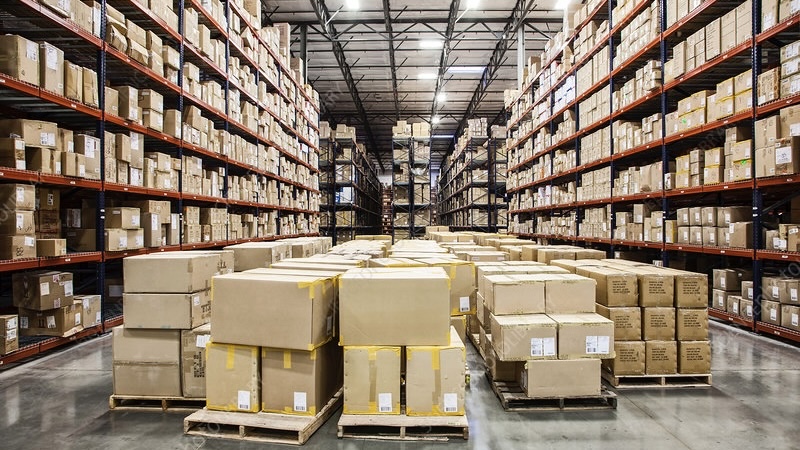
Many importers use a sourcing agent to manage consolidation, particularly when they lack a local presence in China or do not have relationships with 3PL providers in the relevant cities.
A sourcing agent can:
This is one practical way a sourcing agent may reduce landed cost — not just through price negotiation, but through logistics efficiency that an importer managing remotely cannot easily replicate.
The most common reason consolidation fails to deliver its expected savings is poor timing management.
Factory delays: If one factory is two weeks late, the goods from the other factories may sit in the consolidation warehouse for two weeks. Storage fees accumulate. The shipment misses the booking window and has to wait for the next vessel.
Mitigation: Build a realistic buffer into your consolidation timeline — a practical buffer beyond each factory’s stated ready date. Do not schedule consolidation around a factory that has a history of delays without accounting for it.
Seasonal capacity pressure: During peak pre-holiday shipping seasons (often August–October for many Western retail shipments, depending on product category and sales season), warehouse space and container availability tighten. Consolidation timelines are harder to maintain. Book container space early.
Goods from different regions: If your factories are in Zhejiang and Guangdong, inland freight to a single consolidation point takes time and costs money. Evaluate whether the consolidation savings exceed the inland freight and coordination overhead.
Consolidation works well when:
Consolidation may not be worth it when:
For importers uncertain about whether consolidation makes sense for a specific order, freight options when shipping consolidated goods provides context on how FCL, LCL, and hybrid approaches compare under different volume scenarios.
Consolidation adds a logistical dependency: if one supplier ships defective goods, the entire consolidated shipment may be held while the problem is resolved. This raises the stakes for supplier reliability.
Verifying suppliers before combining orders — confirming legal registration, checking business scope, reviewing litigation history — reduces the risk that one weak supplier disrupts your entire shipment.
For new suppliers being consolidated with established ones for the first time, a factory audit before the first order is advisable. A quality problem discovered at the consolidation warehouse is better than one discovered at your destination — but a quality problem avoided through upfront supplier evaluation is better still.
Q1: Does every order need to be consolidated?
No. Consolidation is most valuable when individual supplier orders are too small for FCL on their own but the combined volume justifies it. For large single-supplier orders that already fill an FCL, consolidation adds coordination overhead with no freight benefit.
Q2: Who arranges the container booking in a consolidation?
Either your freight forwarder or your sourcing agent. If you are using a sourcing agent for consolidation, they typically coordinate with the freight forwarder. Clarify responsibility and booking timeline before goods reach the consolidation point.
Q3: How are customs documents handled for a consolidated shipment?
One commercial invoice and one packing list cover all goods in the container, typically listing each supplier’s goods as separate line items. Customs clearance may be handled as one consolidated entry, with each product clearly itemized. Your freight forwarder or customs broker prepares the entry based on the documents provided.
Q4: Can I consolidate goods from different product categories?
Yes, with some caveats. Ensure that the product categories are compatible for storage (no risk of contamination, chemical interaction, or moisture damage between product types). Customs classification and duty rates may differ by product type, so the packing list must clearly itemize each category.
Q5: What happens if one factory’s goods fail inspection at the consolidation warehouse?
The failed goods are held while the problem is resolved. If the issue can be corrected quickly (e.g., relabeling, minor rework), this may delay the shipment by days. If the issue is significant, you may need to decide whether to ship the passing goods now and arrange a separate later shipment for the corrected goods, or hold the entire container.
Q6: Is consolidation available for air freight as well?
Yes. Air freight consolidation (groupage) works similarly — multiple shipments may move under consolidated air freight documentation, often with house and master air waybills. The economics differ: air freight is already priced differently from ocean freight, and savings from air consolidation may be smaller and depend heavily on chargeable weight, routing, and timing. Air consolidation is typically more useful for time-sensitive mixed orders than for routine cost optimization.
Consolidation is not a complex strategy. It is a practical logistics tool that reduces freight cost and administrative overhead when you are buying from multiple Chinese suppliers. For importers managing goods from multiple Chinese factories, order monitoring and consolidation coordination aligns production timelines, warehouse receipt, and export booking across all suppliers.
The core logic is simple: if your combined volume justifies FCL, three separate LCL orders may cost more than one consolidated container. Aligning timelines, managing warehouse receipt, and inspecting before loading are the cost of capturing those savings.
A reliable consolidation workflow — trusted warehouse, clear supplier communication, and inspection before loading — can turn logistics complexity into a cost advantage. See how our team coordinates multi-supplier consolidation in China.
 English