Maple Sourcing Ltd.
Maple Sourcing Ltd.
We Make Your Sourcing Easy!
Need help? sales@maplesourcing.com
English
Maple Sourcing Ltd.
Maple Sourcing Ltd.

FOB vs EXW for China Imports: What the Difference Really Costs You

Published:
Updated:
7498 Views
Table of Content [Hide]

    Your supplier quotes you a price. Is it EXW or FOB? Most buyers don’t think to ask — and that oversight can add far more cost than they expected.

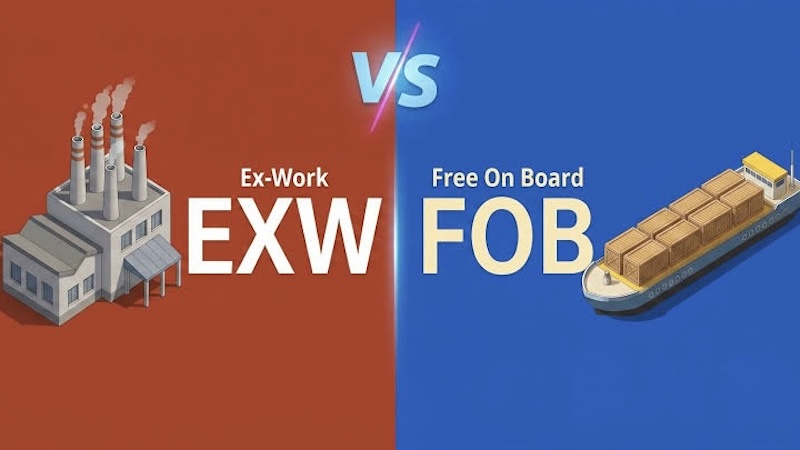
    EXW and FOB are Incoterms are internationally recognized rules that define where key seller and buyer responsibilities transfer. The difference between them determines who handles export customs in China, who pays for inland freight to the port, and at what point you start bearing the risk of loss or damage. For importers sourcing from China, getting this wrong is one of the most common sources of unexpected costs.

    Crane loading container at export port

    What EXW Actually Means

    EXW stands for Ex Works. Under EXW terms, the seller’s only obligation is to make the goods available at their premises — typically their factory or warehouse — on an agreed date. Everything that happens after that is the buyer’s responsibility.

    That means you, as the importer, are responsible for:

    • Arranging pickup and, unless otherwise agreed, loading support at the supplier’s premises
    • Inland freight from the factory to the Chinese port
    • Port handling and documentation fees at the origin port
    • Export customs clearance in China — the most critical point
    • International freight (ocean or air)
    • Cargo insurance
    • Import customs clearance at destination
    • Delivery to your warehouse

    Under EXW, risk generally transfers when the goods are placed at the buyer’s disposal at the seller’s premises. If loading responsibility is not clearly agreed, damage during pickup can become a dispute under EXW.

    The export customs problem: As a foreign company, you cannot handle Chinese export customs directly. You must hire a local freight forwarder or customs broker in China to act on your behalf. If your supplier is a small factory that does not hold an export license — which can happen with smaller or domestically focused suppliers — you need to find a third-party licensed exporter, adding cost, delay, and complexity that you are managing from thousands of miles away.

    What FOB Actually Means

    FOB stands for Free On Board. Under FOB terms, the seller is responsible for all costs and risks until the goods are loaded on board the vessel at the named port of shipment.

    The seller’s responsibilities under FOB include:

    • Arranging inland movement from the factory to the named port
    • Origin port handling and documentation fees
    • Export customs clearance in China

    Your responsibilities as the buyer begin when the goods are confirmed on board the vessel:

    • International freight
    • Cargo insurance
    • Import customs clearance at destination
    • Delivery to your warehouse

    The risk transfer point is clear and verifiable: when the goods are loaded on board the vessel at the named port. The seller remains responsible for the main origin-side obligations before that point.

    The Critical Difference: Export Customs

    The single most important practical difference between EXW and FOB is who handles Chinese export customs clearance.

    Under FOB, the seller or its appointed export entity handles this. Experienced export suppliers handle this routinely. It is their legal and operational territory.

    Under EXW, the buyer must arrange it. As an overseas buyer with no legal entity in China, you depend heavily on a China-side forwarder, customs broker, or export agent to manage a process you cannot handle directly as an overseas entity. If anything goes wrong — incorrect documentation, a customs inspection, a supplier without an export license — it is your problem to resolve.

    For many importers, this single point of risk is enough reason to start with FOB.

    How the Landed Cost Really Compares

    EXW prices look lower because the seller has done less. But the true comparison is not EXW product price vs FOB product price. It is total landed cost under each term.

    Under EXW, your total cost includes:

    • EXW product price
    • Local truck from factory to port (often expensive if factory is inland)
    • Origin port handling fees
    • Third-party export agent fees
    • International freight
    • Insurance
    • Import duties and customs brokerage

    Under FOB, your total cost includes:

    • FOB product price (higher than EXW, but includes the first three items above)
    • International freight
    • Insurance
    • Import duties and customs brokerage

    Calculating your total landed cost from China under each term is the only reliable way to compare. An inland supplier can make an EXW quote look cheaper upfront while shifting substantial inland freight and export costs to the buyer — costs that are difficult to estimate accurately from overseas.

    A Note on CIF — Why Most Importers Should Avoid It

    CIF (Cost, Insurance and Freight) is a third Incoterm that suppliers sometimes propose. Under CIF, the seller handles international freight and insurance to the destination port. On the surface it sounds simpler — the supplier handles more.

    The problem: when the supplier controls the freight, they choose the forwarder, the shipping line, and the service level. Their priority may be keeping the quoted freight cost low, not optimizing your delivery timeline or destination-side costs. More importantly, their forwarder in China typically works with a partner agent at the destination port, who presents you with a separate bill for destination handling and document release fees. These fees can be higher than what your own forwarder would charge, and you may have limited leverage and may need to pay before the cargo is released.

    CIF usually requires the seller to arrange only minimum cargo insurance unless broader coverage is agreed, which may leave gaps for common transit risks.

    For many standard China import orders, FOB is usually the cleaner starting point. It lets you control the most expensive and service-sensitive part of the journey — international freight — while leaving origin logistics and export customs with the party best positioned to handle them.

    When EXW Makes Sense

    EXW is not always the wrong choice. There is one scenario where it is genuinely useful: consolidation from multiple suppliers.

    If you are buying from several factories in the same region — one supplying the product, one supplying packaging, one supplying an accessory — you can use EXW with all three. Your freight forwarder or sourcing agent in China collects from each factory and consolidates everything into a single shipment. This is often more efficient than three separate FOB shipments.

    For this to work well, you need a reliable local partner in China — a sourcing agent or freight forwarder who knows the area, can manage the collection logistics, and has experience with export customs. Without that partner in place, EXW consolidation creates the same export customs risks described above.

    Shipping containers stacked at port yard

    Connecting Incoterms to the Rest of Your Sourcing Process

    Supplier vetting: A supplier’s preferred Incoterm is informative. Many experienced export manufacturers can quote FOB clearly. A supplier who insists on EXW only may not hold an export license, may lack direct export capability, rely on another export entity, prefer not to manage origin logistics, or have limited international trade experience, or may be inexperienced in international trade. Verifying supplier export capability before negotiating terms — including checking their business scope and registration status — reduces this risk before it becomes your problem at the port.

    RFQ process: When you send a Request for Quotation, ask for both EXW and FOB prices. How to request EXW and FOB quotes from suppliers — and what to include in your RFQ to get accurate, comparable responses — is worth understanding before the first inquiry goes out. The gap between the two prices gives you insight into what the supplier considers their local logistics costs. Always specify the named port — such as FOB Shenzhen or FOB Ningbo — so quotes are comparable. If the gap seems unreasonably large, it may indicate extra margin, conservative local cost estimates, or misunderstanding of the requested terms.

    Freight planning: Once you have agreed on FOB terms, the next decision is how the goods will move from the Chinese port to your destination. FCL and LCL options for your FOB shipment depend on your volume, timeline, and cost priorities — decisions you can control more directly under FOB.

    Pre-shipment inspection: Your Incoterm does not change the importance of inspection, but it does affect timing. Under FOB, inspection should be completed at the factory before the supplier dispatches goods to the port. Under EXW, inspection should be completed before your truck arrives for collection. Pre-shipment inspection timing under FOB and EXW matters because once goods are at the port, correcting problems becomes significantly more expensive and complicated. Release balance payment only after the inspection report is reviewed.

    Shipping documents: Under FOB, the seller usually provides the commercial invoice and packing list, while the carrier or forwarder issues the bill of lading after shipment. Key shipping documents for FOB shipments and what each one covers is worth knowing so you can verify the document set is complete before the vessel departs.

    FAQ

    Q1: Can I use FOB for air freight?

    Technically, Incoterms 2020 recommends FCA (Free Carrier) rather than FOB for air freight, as FOB refers specifically to loading on board a vessel. In practice, many buyers and sellers still use FOB language informally for air shipments. What matters is that you and the supplier agree clearly on who handles export customs and where risk transfers. Clarify this in writing regardless of the term used.

    Q2: My supplier only quotes EXW. Should I walk away?

    Not necessarily. Ask why. Some legitimate manufacturers default to EXW because it simplifies their accounting or because most of their customers use a local agent. Ask directly whether they hold an export license and whether they can quote FOB as an alternative. If they cannot quote FOB at all, find out whether your freight forwarder has a China-side partner who can handle export clearance reliably.

    Q3: Who arranges cargo insurance under FOB?

    You do. Under FOB, the seller’s responsibility ends when goods are on board the vessel. From that point, cargo insurance is your responsibility. Your freight forwarder can typically arrange this, or you can work directly with a cargo insurer. Do not leave a shipment uninsured assuming the seller or forwarder has covered it — confirm explicitly.

    Q4: What if the supplier delivers damaged goods to the port under FOB?

    Under FOB, the seller generally bears risk until the goods are loaded on board the vessel. If damage occurs before that point, the issue usually falls within the seller’s risk period, and it is their liability to address. This is one reason why pre-shipment inspection before goods leave the factory is important — it documents the condition of goods at a point where the seller is still responsible.

    Q5: Is FOB always the best choice?

    FOB is usually the best default for many standard China import orders. EXW makes sense when you have an experienced local partner managing consolidation from multiple factories. CIF can be convenient, but buyers should understand destination charges and insurance limits before accepting it. DAP or DDP may work for experienced buyers, but they require clear control of destination compliance, tax, and customs responsibilities. For most importers sourcing from China, FOB is the practical starting point.

    Conclusion

    The gap between EXW and FOB is not just a logistics technicality. It is the difference between managing a clean, predictable supply chain and taking on risks in a foreign country that you are poorly positioned to handle.

    Under FOB, you keep control of international freight while the supplier handles origin export work. Under EXW, you take on origin-side tasks that are harder to manage from overseas. For many importers, that distinction is decisive.

    For complex China orders, visibility matters before the goods ever reach the port. Order management from China helps connect production timing, inspection, port booking, and shipment tracking so responsibilities do not fall through the gap between supplier, forwarder, and buyer.

    Choose FOB as your default. Negotiate EXW only when you have the local infrastructure to handle it. Use CIF only when you fully understand the destination-side cost structure.

    Need production updates before your China order ships?
    We monitor supplier progress, timing risks, order details, and shipment readiness so problems are easier to catch before delivery.
    Aaron Li
    I’m Aaron Li, a sourcing expert. Since 2012, I’ve helped 300+ startups source from China and manage product standards. Here, I share practical answers to common questions about sourcing and quality control.
    All Articles
    How to Calculate Landed Cost from China: Formula + Example
    CIF vs FOB Shipping from China: Which Should You Use?
    Carton Shipping Marks: What Importers Should Specify
    Where to Source Products for Retail Arbitrage in 2026
    Chinese Wholesale Websites Compared: Which One Actually Fits Your Sourcing Strategy?
    Senior Living Products from China: What Importers Should Source in 2026
    Wholesale Home Decor from China: What Retailers Should Check
    How to Source Solar Panels from China: A Buyer's Guide
    Can You Get Free Samples from Chinese Factories? Here's How
    Dollar Store Products in Africa: What Sells Best from China
    Private Label Sourcing from China: The Pros, Cons, and What Most Sellers Get Wrong
    Buying from Alibaba? Here Are the Risks No One Warns You About
    How to Find Wholesale Suppliers for Small Businesses
    CBM Calculator for Ocean Freight: Formula and Examples
    Profitable Ecommerce Niches: How to Find Gaps Before You Source
    Proforma Invoice or Commercial Invoice? What Every Importer Needs to Know
    Gross vs Net Weight in Shipping: What to Check
    Direct vs Indirect Sourcing: How to Choose the Right Model
    How to Write an RFQ for China Suppliers: Examples and Best Practices
    Supply Chain Trade-Offs: Cost, Speed, and Risk
    How Much Does It Cost to Start an Import Export Business?
    China's Major Logistics Companies: Who They Are and What They Do
    How to Ask a Chinese Supplier to Lower the Price Without Losing Quality
    The Hidden Costs of Importing from China That Eat Your Margin
    Sourcing from China for Amazon: What Most Sellers Get Wrong
    Custom Packaging from China: How Small Businesses Can Start
    Supplier Quality Audit in China: What to Check and Why
    China Manufacturing Hubs: Which Region Should You Source From?
    Made in PRC: What the Label Means and Why It Matters for Importers
    FCL vs LCL Container Shipping: Which Is Right for Your Order?
    Sea Freight vs Air Freight: The Real Cost Difference and When to Use Each
    Top Toys to Import from China: What’s Selling in 2026
    China to Canada Shipping: How to Cut Freight Costs
    Alibaba vs AliExpress: Which Platform Should You Use?
    China to USA Imports: How to Navigate Tariffs Without Losing Your Margin
    OEM or ODM? How China Manufacturers Define the Difference
    How to Protect Your Product Idea When Outsourcing from China
    FOB vs EXW for China Imports: What the Difference Really Costs You
    1688 Purchasing Agent: How to Buy from China’s Domestic Market
    Yiwu Market Product List: What to Buy and What to Avoid
    What Is 4PX Shipping? Delivery Times, Tracking, and Delays
    DHL Shipment On Hold? What to Do and Who Fixes It
    Best Taobao Agent for Kitchen Products: What to Look For
    Alibaba Verified Supplier: Useful Filter, But Not a Quality Guarantee
    Foshan Furniture Market Guide: What to Buy, What to Check
    Guangzhou Fabric Market: Tour Guide & Sourcing Tips
    Is the Canton Fair Worth It for a First-Time Buyer?
    Why Huaqiangbei Electronics Market Is Becoming Risky for Importers
    China Electric Toothbrush Suppliers: What to Check
    Bag Manufacturers in China: How to Find One That Can Execute Your Design
    Managing Sample Orders in China: Why What You Imagined Isn't What You Get
    Top 5 Shipping Documents Every Importer Must Know
    Procurement Life Cycle: Step by Step for Logistics
    Top Beauty and Healthcare Products on Amazon: Seller Risks
    Can Your Factory Actually Deliver? How to Check Before You Order
    China's Top 10 Wholesale Markets: Where to Source, What to Expect
    Why Are So Many Toothbrushes Made in China?
    Shenzhen's Best-Known Products: From Electronics to Innovation
    Lower MOQ, Same Supplier: Negotiation Tactics That Actually Work
    Why Brands Use OEM Instead of Their Own Factories
    Why Smart Importers Consolidate Shipments from Multiple Suppliers
    10 Profitable Products to Import from China to Europe (2026)
    Key Shipping Ports in China and North America for Importers
    What Apple's China Suppliers Teach Small Buyers in 2026
    Incoming Quality Control in China: What Buyers Need to Know
    China Sourcing Agent Fees: Hidden Costs and Real Rates (2026)
    What Products from China Are Most Profitable to Resell in 2026?
    Why Are Most Things Made in China? The Real Reasons Behind the Label
    Top 10 Quality Inspection Companies in China: Who to Trust in 2026
    How Much Cheaper Is Manufacturing in China?
    Customized Products from China: 4 Trends Buyers Should Check
    China Pre-Shipment Inspection Process: What Buyers Need to Know
    Global Sourcing Challenges: What Goes Wrong and How to Fix It
    How to Source Electronics from Shenzhen Markets
    How to Verify a Chinese Company Without Visiting China
    Bulk Order from China: 7 Checks Before You Pay
    How to Order from Alibaba Without Losing Your Deposit or Getting the Wrong Product
    What Makes China's Supply Chain Impossible to Replace?
    Rapid Prototyping in China: Get Samples Faster
    China FBA Sourcing: What Amazon Sellers Must Know Before the First Order
    Buying in Bulk from China: Is It Still Worth It?
    Sourcing LED Lights from China: 6 Checks Before You Order
    How a China Sourcing Service Saves You Time, Money, and Costly Mistakes
    How to Contact Chinese Factories Directly and Get a Response
    China Manufacturing: 8 Steps to Keep Orders on Track
    Kitchen Products from China: 7 Supplier Mistakes to Avoid
    6 Practical Checks to Find the Best Products to Import from China
    Trendy Electronics from China: What’s Selling in 2026
    Chinese Supplier Search: How to Shortlist the Right Ones
    Shenzhen Sourcing Agent: Best for Electronics and Tech Sourcing
    Hardware Import from China: What Buyers Must Check First
    China Direct Sourcing: When It Helps and When It Hurts
    China Supplier Management: 5 Things to Lock Down
    Direct Product Sourcing in China: A Beginner's Complete Guide
    China Outdoor Product Suppliers: What Separates Good from Bad
    China Buying Agent: When You Need One and When You Don’t
    Manufacturing in China: What’s Changed and What Hasn’t
    The Real Cost of Managing China Procurement In-House
    Metal Products from China: 6 Checks Before You Order
    How a China Sourcing Agent Helps Amazon Sellers Scale Fast
    Read More
    References
    Our Features
    Custom Products
    Turn concept to reality
    Quick Response
    Within 24 hours
    Detail Oriented
    Strive for perfection
    Assured Quality
    100% Guarantee