FOB China Shipping: What It Means and What It Costs
FOB China means your supplier gets the goods loaded onto the ship and stops there, and every cost after that point is yours. That sounds like the worse half of the deal, and it is the half most experienced importers insist on.
| Leg of the Journey | Who Pays Under FOB |
|---|---|
| Factory to Chinese port | Supplier |
| Export clearance and loading | Supplier |
| Ocean freight | You |
| Cargo insurance, if taken | You |
| Destination port charges | You |
| Import duty and clearance | You |
| Delivery to your door | You |
The split looks lopsided, but every line on your side is one you can quote and compare before you book, rather than meet on arrival.
What FOB Actually Covers
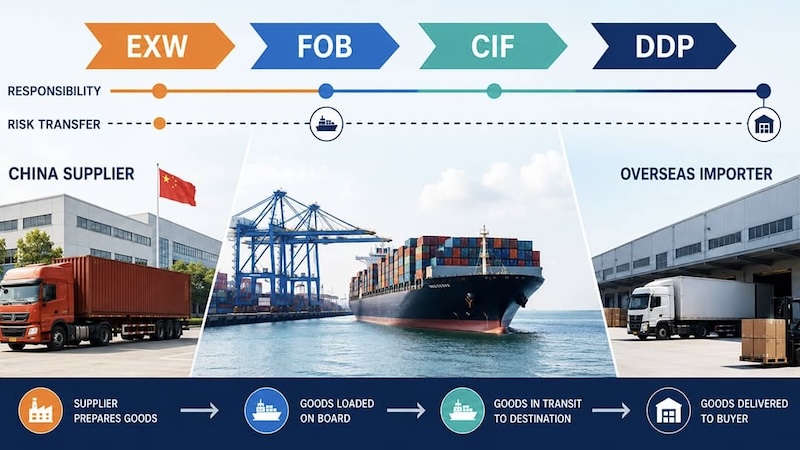
FOB stands for free on board, and the handover happens once your goods are on board the ship at a Chinese port. Until that moment the supplier is responsible for trucking the goods to the port, clearing them for export, and getting them on board.
After that moment the cost and the risk are both yours. You book the ocean freight, you pick the forwarder, you decide whether to insure, and you file the import entry at your end. Nobody argues about it later, because the dividing line is a physical place.
What the term does not decide is worth knowing too. Ownership and payment timing both live in your contract, not in three letters, so writing FOB on the order settles less than buyers assume.
The term also does nothing to watch the factory between the deposit and the loading date, which is the part order management handles from the China side.
What FOB Costs You Once the Ship Loads
The freight leg and the destination charges are the two numbers FOB puts in your hands. Everything before the ship is already inside the factory’s price. Ocean freight you can quote from three forwarders in an afternoon, and destination charges are the ones that catch people, so ask for them in the same quote.
Terminal handling, document release, and delivery order fees all land at your port, not the Chinese one. A forwarder working for you will list them before you book. One appointed by your supplier answers to somebody else, so ask in writing. These are charged per shipment, not per unit, so a small order feels them hardest.
Picking that forwarder is the decision that pays you back every shipment. If you have never done it, it is worth learning how to choose a freight forwarder before the first booking rather than after a bad one.
Why CIF Looks Cheaper and Usually Is Not
CIF, short for cost, insurance and freight, means the supplier arranges the ocean leg and a basic policy to cover it. The quote looks better because the freight sits inside it, sometimes at zero.
What CIF does not buy you is the import side. You still file the entry, pay the duty, and run customs clearance from China at your own end, exactly as you would under FOB.
The catch is control over the charges in between. When the supplier books the freight, their forwarder appoints the agent at your port, and that agent holds the shipping documents you need before you can collect your cargo.
The handling and release fees then come from a company you never chose. Free freight is rarely free. It has moved to a line you cannot see, alongside the other hidden import costs that catch new buyers.
The insurance is the second weak spot. Risk still passes to you when the goods are loaded in China, even though the supplier paid the freight all the way to your port. CIF cover is a minimum policy. It may pay out on a total loss while leaving gaps for breakage, shortage, theft, and water damage, so arrange your own for anything fragile or valuable.
Where DDP and EXW Fit
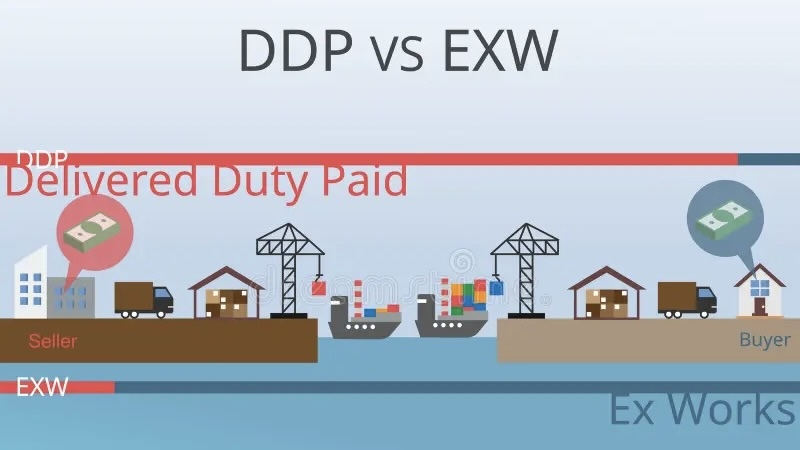
DDP, delivered duty paid, hands the whole job to the supplier, from export through customs to your door. It is the easiest option to buy and the hardest to check. Before you accept a delivered price, find out who is named as the importer and how the goods will be declared. That is the part of DDP shipping from China worth settling first.
EXW, ex works, sits at the opposite extreme, where the supplier leaves the goods at the factory gate and the rest is yours. The price looks lowest until a factory far from port puts its own trucking and export handling on your bill. Most foreign buyers cannot clear Chinese customs on the way out either. The FOB vs EXW comparison goes further into that trade.
Compare Landed Cost, Not the Quote
The only fair comparison is what it costs to get sellable goods into your warehouse. Product price, freight, destination charges, duty, and delivery together give you landed cost from China rather than the number on the first quote.
Two quotes written on different terms are not comparable until both sums are finished. Add back whatever each one leaves out, so both cover the same journey, and the ranking often flips.
FAQ
Q1: What does the “free” in FOB actually mean?
It means the seller has to get the goods on board at its own cost and risk, so you are free of both up to that point. Free describes where the seller’s job ends, not a price of zero.
Q2: My supplier wrote “FOB China” with no port named. Is that a real quote?
Not a usable one, since trucking to Shanghai and trucking to Shenzhen are different costs. Get the port in writing before you compare that number against anything.
Q3: Why does my FOB price move when I change the order quantity?
Export paperwork and handling are largely fixed per shipment, while trucking and port charges move with the volume and the truck size. Ask for the price at two quantities if you want to see which part is really fixed.
Q4: Does my supplier need export rights to sell on FOB terms?
Export clearance has to happen on the seller’s side, but it does not have to hold the license itself. Plenty of factories export through an agent, which works as long as you know whose name goes on the export declaration.
Q5: Is FOB better than DDP for Amazon FBA?
Usually yes, if you have a forwarder who can handle FBA delivery appointments, because FOB keeps the cost in your hands. If you start on DDP, agree the declaration details before the booking, because your room to correct anything shrinks fast once goods have shipped.
Q6: Does the trade term change how my import duty is worked out?
No, your destination country sets that rule. The term only changes which costs are already inside the invoice price, so what differs is the adjustment at the border, not the rate.
Q7: Does FOB protect me if the factory ships late?
No, because the term splits cost and risk, not schedule. Put the ship-by date and the consequence in the order itself, since FOB says nothing about when the goods reach the port.
Q8: What happens if the ship is delayed and my goods sit at the Chinese port?
Who pays depends on what caused it and what the booking says, so it is not automatically your bill. Ask your forwarder how many free days the terminal allows and what starts the clock.
Conclusion
The term your supplier suggests is the one that suits your supplier. FOB moves the freight decision back to your side of the table, which is where it belongs once you are shipping regularly.
Under FOB the booking is yours, so your forwarder needs a ready date that holds and cargo details that match what actually leaves the factory. We follow production to that point and hand your forwarder the brief through order management, while the freight stays with the company you picked.