
Express Shipping from China: Costs, Times, and Carriers
Express shipping from China is the fastest mainstream way to move a parcel, reaching major markets in about 2 to 5 business days with DHL, FedEx, or UPS. The premium climbs with both weight and box size. Budget lines like 4PX, YunExpress, and ePacket cost far less and commonly run one to three weeks on the main lanes, though each is a different product and your route decides the window.
| Shipping option | Typical major-lane speed | Cost basis | Best for |
|---|---|---|---|
| DHL, FedEx, UPS express | 2-5 business days | Chargeable weight, premium | Urgent, high-value |
| Budget parcel lines | Often 1-3 weeks | Lower cross-border rate | Light e-commerce |
The choice is days against weeks, and the weight of the box decides which one you can afford.
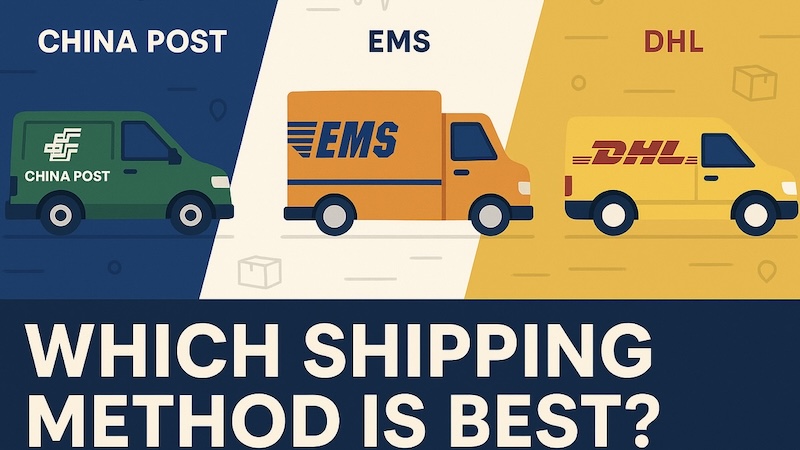
How the Express Model Works
Express is fast because one carrier manages most of the journey, from factory pickup to the final delivery. The big three couriers coordinate pickup, the flight, customs, and delivery as one integrated service, which cuts the handovers that slow other methods and makes delays easier to trace.
That control is why express is the default for urgent shipments, from samples and replacement parts to last-minute restocks and small e-commerce orders. It also explains the price, since you are paying for a controlled chain rather than a seat on a plane.
Express is not one fixed service but a set of tiers the couriers sell at different speeds and prices. The fastest options charge more for a guaranteed delivery window, while slower express tiers cost less, and availability differs by carrier and lane. Ask for the premium and the slower option before booking, since the cheaper tier is often fast enough.
Picking the right tier, and packing so the box does not price itself into a higher one, is routine work inside sourcing and quality control.
DHL, FedEx, and UPS: The Big Three
The three global couriers offer broadly similar premium speed, so the difference shows up lane by lane rather than overall. DHL tends to be strong into Europe and on light parcels, FedEx leans toward US commercial lanes, and UPS is built around North American business delivery. A negotiated account and the exact route can flip any of those.
Because the gap moves by route, volume, and account, the only reliable comparison is a live quote on your own shipment. The full breakdown of how the three price, where each is strongest, and how they handle customs sits in the DHL vs FedEx vs UPS comparison.
What separates them in practice is the paperwork side, not the plane. Ask each carrier what its committed delivery date is on your exact postcode, whether that address counts as remote, and how a customs question gets handled. A courier that clears cleanly and delivers to the door on your lane beats one that looks faster in a brochure.
What It Costs, and Why
Express is priced on chargeable weight, the greater of a parcel’s actual weight and its volumetric weight, so size can cost more than mass. No standard per-kilo rate exists, since the number shifts with the lane, the account, the service, and the surcharges.
Picture a 3 kilogram box measuring 40 by 40 by 40 centimeters: its volumetric weight works out near 13 kilograms, so you pay on 13, not 3. That is also why two parcels of equal scale weight get quoted very differently, and why an oversized carton prices higher than a compact one holding the same goods.
The number that drives it is the divisor, the figure a carrier uses to turn box dimensions into weight. The one written into your rate card decides what a bulky carton costs, so ask which divisor applies before you compare two quotes on the same box. Knowing how gross and net weight are counted keeps the same argument from repeating on the freight side.
Fuel, remote-area, and peak-season surcharges then stack on top, which is how two prices for the identical box end up far apart before anything is packed.
How to Bring Your Express Cost Down
A few habits cut an express bill more than switching carriers ever will. The first is packing tight: right-size the carton and remove the dead air. The second is consolidating, because combining several small parcels into one shipment spreads the fixed per-parcel fees and often clears the carrier’s minimum charge only once.
The rest is about the rate itself, not the box. A negotiated account beats a walk-up quote, and enough volume to earn a discount, or a forwarder that already has one, changes the per-kilo rate before any packing trick applies.
Always ask for an all-in quote that lists base freight and every surcharge. That way you compare final prices rather than headline rates that quietly grow by the time you check out.
How Long It Takes, by Destination
Transit time depends far more on the destination and the route than on the carrier’s brand. The fastest lanes to major markets often clear in a few business days. The real door-to-door figure includes pickup, export, the flight, import clearance, and the final delivery run, and each leg carries its own queue.
The two busiest lanes have their own guides. China to US express shipping and China to UK express shipping break down the typical windows and the delays that push them out.
Judge the schedule by the day the goods land, not the transit figure on the quote. A committed date is the courier’s own target, and it usually carves out customs holds, remote addresses, missing paperwork, and peak season.
Promise customers a later date than the carrier gives you. Seasonal crunches, especially the Chinese New Year shutdown and the year-end rush, slow every lane at once, so a date that is comfortable in spring can be tight in winter.
Cheaper Parcel Lines for Light Orders
When an order is light, low-value, and not urgent, a premium courier is usually overkill. Cross-border parcel lines move small online orders for a fraction of the premium courier rate, in exchange for slower delivery and lighter tracking.
4PX shipping and the YunExpress network both move lightweight parcels over cross-border networks, usually a one-to-three-week window shaped by the route and the delivery point. Consolidated volume rather than speed is what makes those rates work.
The tracking is lighter too. China Post ePacket and lines like it scan at major milestones rather than every step. Ask how long a silent stretch normally runs on your route, then set a date to chase it rather than waiting the parcel out and missing the claim window.
Customs, Duty, and the Delays You Do Not See
The headline transit time assumes a clean customs step, and that is exactly where parcels stall. When the invoice, the goods description, the declared value, and the customs code disagree, an officer pauses the parcel to ask why. That pause outlasts any speed the courier promised, so straightening the documents before the box ships is the best value in the whole move.
Duty and tax land on someone regardless of speed, so settle the terms before shipping. Decide whether you or the supplier clears and pays. The courier or its broker collects from whichever account the billing instructions specify, and a third-party account usually needs prior approval.
Paying before release or being invoiced afterward depends on your destination and how the account is set up. When a parcel is held, the guide to customs clearance from China covers who owns each step.
What You Can and Cannot Ship by Express
Not every product moves through a standard express service. Lithium batteries, liquids, powders, magnets, aerosols, and other regulated goods may need special packaging, labels, test reports, or a dangerous-goods service, and what a courier will accept differs by destination. Shipping lithium-ion batteries from China is the case that catches most first-time senders.
Tell the courier exactly what the shipment contains before booking. A parcel that is declared incorrectly can be rejected, returned, delayed, or fined, so confirm that your product is accepted before the factory packs the order.
Batteries carry the heaviest paperwork of the group. A lithium shipment usually needs the transport test summary from the cell maker, the right hazard labels on the outer carton, and packing that matches the declared class. Ask the factory for those documents while the goods are still being packed, because a courier that refuses the box at pickup costs you the whole week.

When to Skip Express
Express is worth its price on small, urgent, valuable shipments and loses that edge fast as the box gets heavy. As the chargeable weight rises, the premium that felt cheap on a small parcel gets hard to justify, and freight through a forwarder may cost far less.
No fixed crossover weight exists, so quote both once a courier number climbs high enough to question, then choose a freight forwarder who can price the whole door-to-door move.
Splitting the order is often smarter than rushing all of it. When only part of a shipment is urgent, send a small first batch by express and let the bulk follow by freight. That protects a launch without paying premium rates on every unit, so keep express for the pieces that cannot wait.
FAQ
Q1: Is express air freight the same as standard air freight?
No. Express is a door-to-door courier service run mostly by one carrier, while standard air freight is arranged through a forwarder with separate pickup, airline transport, clearance, and delivery. Air freight can be quoted door to door too, but it does not run as one integrated parcel service, and it gets cheaper as the shipment grows.
Q2: Can I ship lithium batteries by express from China?
Many battery shipments can move by express, but acceptance depends on the battery type, the packing method, the documents, the courier, and the destination. Confirm the exact product before booking, because undeclared batteries can be rejected or returned.
Q3: How do I pick between the three big couriers?
Start with your lane and shipment, not the brand, since each carrier is stronger on different routes and weights. Price the same box, weight, and destination with at least two of them, surcharges included, then compare what lands on the invoice rather than the headline rate.
Q4: Is booking through a freight forwarder cheaper than going direct?
Often, for regular or heavier volume, because forwarders buy express and freight at discounted rates and pass some of it on. For a single urgent parcel, booking the courier directly is usually simpler and about as fast.
Q5: Does packing into a smaller, denser carton lower my express cost?
Only when volumetric weight is what you are being billed on. If the actual weight is already higher, a smaller box changes nothing, so weigh and measure the finished carton, work out both numbers, and check whether the smaller box drops you into a lower rate step.
Q6: How much should I budget for express as a share of the order value?
There is no fixed percentage, but express only makes sense when the speed is worth more than the freight, so it fits high-margin, high-value, or urgent goods best. For low-value bulk, the freight can swallow the margin, which is the signal to slow down and ship cheaper.
Q7: Is express worth it for a single low-value sample?
Usually yes, since a sample that arrives in days keeps a project moving and the cost is small against the time saved. If several samples are coming and none are urgent, a cheaper parcel line can carry them together.
Q8: Should a new importer start with express or a cheaper line?
For first samples and small test orders, express is worth the premium for speed and simple tracking while you learn the process. Once volumes grow and deadlines are predictable, mixing in cheaper lines and freight brings the average cost down.
Conclusion
No single answer fits every shipment. Express wins on speed for light, urgent, and valuable parcels, budget lines win on price for small online orders, and freight takes over once the load turns heavy.
Picking the method is the easy part; packing, paperwork, and pickup are where the days and the money go. We handle all three under sourcing and quality control, one shipment at a time.