Logistics Services in China: Choosing a Forwarder
China has the biggest logistics companies on earth, and almost none of them are going to move your order. The one that matters is a freight forwarder you have never heard of, and choosing that company is the decision you make with the least information.
| Your Shipment | Who Actually Moves It |
|---|---|
| Product samples | An express carrier |
| Bulk order by sea | Ocean carrier via a forwarder |
| Bulk order by air | Airline space via a forwarder |
| Alibaba small parcels | A supplier-arranged parcel service |
| Selling inside China | A China fulfillment provider |
Most bulk orders run through a forwarder, and that is the company nobody thinks to check.

The Famous Names Are Not Your Shipping Company
SF Express, ZTO, Cainiao, JD Logistics: household names in China, and rarely the company a small importer hires. They were built to drop parcels on Chinese doorsteps at enormous volume, not to move your pallets to a warehouse abroad. Your supplier will use one of them to send you samples, and that is where the relationship ends.
COSCO is real for you, but you will rarely deal with them directly. The ocean carriers move your container, and the forwarder is the one who books the space, alongside Maersk, MSC and the rest. You approve decisions; you do not negotiate carrier contracts.
So the whole question collapses into one company: the forwarder. They pick the carrier, they quote the price, they file the paperwork, and they are the phone number you call at midnight. Everyone else in the shipping chain is theirs to coordinate, while the product facts and the final decisions on method, timing, and responsibility stay yours, which is the ground covered in the guide to shipping from China.
Checking that a forwarder is a licensed company with real cargo history, rather than a website and a WeChat account, is the same supplier verification you would run on a factory.
What a Forwarder Is Actually Selling You
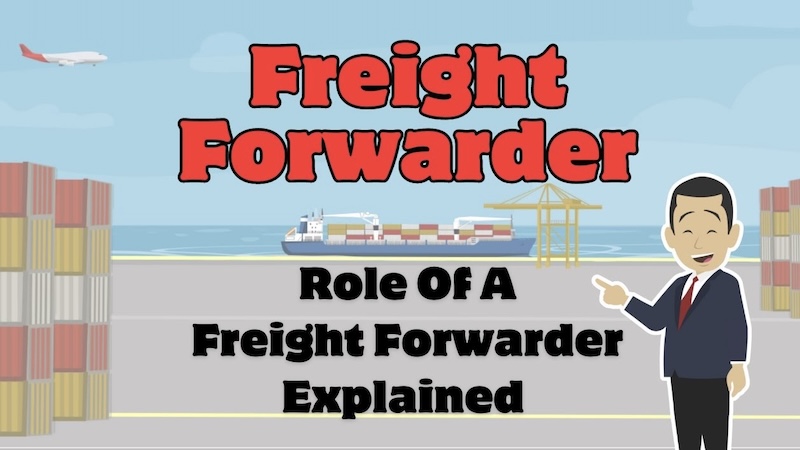
A forwarder does not sail the ship or fly the plane, and that is not what you are buying. What you pay for is access to carriers, coordination, paperwork, and somebody who solves the legs you cannot see from your desk.
The good ones make decisions you would not know to make. Which sailing actually leaves on time. Which port is jammed this month. Whether your goods should go by sea or by air given the date you need them, and whether your volume justifies a full or shared container.
The weak ones sell you a number and forward your emails. Same job title, same website, entirely different outcome on the week something goes wrong.
What to Check Before You Book
Almost nobody checks the forwarder, only the rate, and finds out about the forwarder later. Twenty minutes of questions before the first booking is worth more than any discount you will negotiate afterwards.
Their lane, not their brochure: ask how many shipments they run from your port to yours each month. A forwarder strong on Shenzhen to Los Angeles may be a stranger in Ningbo.
Their agent at your end: ask who clears the goods and who delivers them in your country. That partner is the half of the service you will actually experience, and it is often the half nobody mentions.
Your product, specifically: batteries, liquids and magnets change everything. A forwarder who has never shipped your category will find out at the airport, using your cargo.
Who answers, and when: get the name of the person handling your file, not the sales address. Then note how fast they reply before you have paid them anything, because that is the fastest version of them you will ever see.
Their own credentials: a registered company, an office and a bank account you can verify, and whatever licence their service actually requires. A company that will not show you those things is telling you something.
How to Read the Quote
Two quotes are only comparable when they cover the same journey. Where the goods get collected. Which origin and destination charges sit inside the number. Whether clearance is included, whether the address is your door or a port, and how many free days you get before storage starts.
The cheap quote almost always ends earlier than the expensive one. It stops at the port while the other reaches your warehouse, and the gap arrives later as an invoice you did not plan for. Knowing what a freight forwarder does and where its job stops is what lets you see which parts of the journey a quote has quietly left out.
Ask what is not included, in writing, and watch what happens. A good forwarder answers in a paragraph. A bad one answers with reassurance.
Ask about cover before you need it. If they say your cargo is insured, ask whether they mean a policy on your goods or cover for their own mistakes. Shipping insurance and a forwarder’s liability are very different products.
The Relationship Is the Product
Rates are a commodity, and space in October is not. Anyone can quote you in March. The question is who finds you a slot when everyone in China is shipping into a Western Christmas at the same time.
Forwarders look after the customers who ship all year, and that is not favoritism. It is how the business works. Chasing the cheapest quote every time puts you at the back of the queue in exactly the weeks you cannot afford it. Anyone planning around when to ship from China is really planning around this.
If you buy from several factories, the forwarder becomes a coordinator too. Pulling goods from three suppliers into one load means consolidating cargo in China, and it only works when somebody in China is actually watching the dates.
When to Leave the One You Have
Most importers stay with a bad forwarder far too long, because switching feels like work and staying feels like nothing. Staying is not nothing. It is a decision you make again every booking.
The signal is never the rate but who you are talking to. The person who knew your product left, and the replacement asks you things you answered a year ago. Your file is now a queue position rather than a relationship, and that shows up in October, not in March.
Two failures are worth leaving over. You found out about a problem from your customer instead of from them. Or the invoice arrived with charges that were never in the quote, twice.
Change between orders, and keep the old one warm for a season. A forwarder you leave badly is a forwarder who has your paperwork and no reason to hurry.
What Your Forwarder Cannot Do
A forwarder moves cartons, and cannot fix what went into them. They do not know whether production finished on time, whether the goods match your sample, or whether the cartons will survive five weeks at sea. They did not write the invoice either.
That earlier stage is where small importers lose the most money, and it is nobody’s job unless you make it somebody’s. Supplier follow-up, an inspection before packing, correct labels, clean documents. Get those right and the shipment reaches your forwarder ready to move rather than full of surprises.
Choosing a forwarder is a supplier decision, not a shipping decision. You are hiring a company to act in your name, with your money, on the other side of the world. That is the same test you apply to every other partner in the chain.
FAQ
Q1: Can my supplier arrange the shipping instead?
They can, and then they choose the forwarder, set the markup and hold the relationship. It is convenient on a first order and less comfortable the day you need someone whose loyalty is to you rather than to the factory.
Q2: When should I pick a forwarder, before or after I place the order?
Before, and it surprises people. The mode, the carton sizes and the packing all depend on how the goods will travel, so a forwarder brought in after production is a forwarder pricing decisions somebody else already made.
Q3: Is a bigger forwarder safer?
Not automatically. Big buys leverage and systems; small buys attention. A small importer is often better served by a mid-sized company that wants the business than by a giant where you are a rounding error.
Q4: Can one forwarder handle all my suppliers, and both air and sea?
Most will say yes, and most can. Ask which lanes and which mode they actually run every week, because a company that books air twice a year is buying your space from somebody else and adding a margin.
Q5: Why does my quoted rate expire in two weeks?
Because ocean rates move constantly and your forwarder is reselling space they buy at a moving price. Ask what triggers a change and how much notice you get, so a rate expiry does not become a surprise at booking.
Q6: Is it normal for the forwarder to want my supplier’s contact details?
Yes, because somebody has to arrange the pickup and they cannot do it through you. Tell your supplier who is coming and when, though, because the forwarder will chase the cartons and nobody will chase the factory.
Q7: Who is right when my supplier says the goods are ready and my forwarder says they are not?
Usually both, which is why this is the most common week in importing. Ready means packed in the factory, booked means space on a ship, and the gap between them is yours to close because neither of them owns it.
Q8: What can I do when the final invoice comes in higher than the quote?
Ask them to show where the charge arose and why it sat outside the original scope, then compare that against what you have in writing. You can still dispute it, but the bigger win is making every inclusion and exclusion explicit on the next quote.
Conclusion
Nobody chooses a freight forwarder carefully until the first time one costs them a season. The company you pick speaks for you across the chain, files documents on your behalf, and decides which problems reach you in time to matter. That is a lot of trust to hand over on the strength of a rate sheet.
A forwarder holds your goods, your documents, and your money all at once, and the weak ones look identical to the good ones on a quote. We check the license, the cargo history, and the insurance through supplier verification before you hand anything over.