Maple Sourcing Ltd.
Maple Sourcing Ltd.
We Make Your Sourcing Easy!
Need help? sales@maplesourcing.com
English
Maple Sourcing Ltd.
Maple Sourcing Ltd.

China to Canada Shipping: How to Cut Freight Costs

Published:
Updated:
7669 Views
Table of Content [Hide]

    The cheapest way to ship from China to Canada depends on three things: how much you are shipping, how fast you need it, and what your landed cost actually is once duties, brokerage, and destination charges are included.

    The Decision Framework

    Shipment size Best method Why
    Under 150 kg Express courier (DHL, FedEx, UPS) Handling and customs often included; fixed cost can beat air cargo fees
    2–15 CBM LCL sea freight Share container space; pay only for volume used
    15+ CBM FCL sea freight Flat rate per container; lowest per-unit cost at volume
    High-value, time-sensitive Air cargo or express Speed justifies cost; reduces inventory risk

    The number that matters is not the freight quote — it is the landed cost: product price + freight + duties + customs brokerage + destination handling + final delivery. A cheaper freight rate from a CIF supplier often hides destination charges that eliminate the saving.

    What Actually Cuts Costs

    The freight quote is the most visible cost, but the largest savings come from decisions made earlier in the supply chain.

    For most volume shipments, use FOB and choose your own forwarder. Letting your supplier control freight under CIF or DDP hides costs and removes your ability to compare rates or resolve problems efficiently.

    Consolidate suppliers into one shipment. If you buy from three factories, shipping three separate LCL shipments costs far more than consolidating into one. A sourcing agent with a China warehouse can collect goods from multiple suppliers, inspect them, and load one combined shipment.

    Pack efficiently. For air freight, volumetric weight drives the bill. For sea freight, minimizing CBM reduces LCL costs. Ask your supplier to use appropriately sized cartons, not oversized packaging with excess void fill.

    Inspect before you ship. Receiving defective goods in Canada is not just a quality problem — it is a logistics cost. Return shipping to China is rarely viable. A pre-shipment inspection in China costs $200–$400 and prevents far larger losses.

    Verify your supplier before you order. A supplier who does not exist as described, or who cannot produce your product, creates waste at every stage of the supply chain — not just in shipping. Verifying a Chinese supplier before the first order is the most basic risk control available.

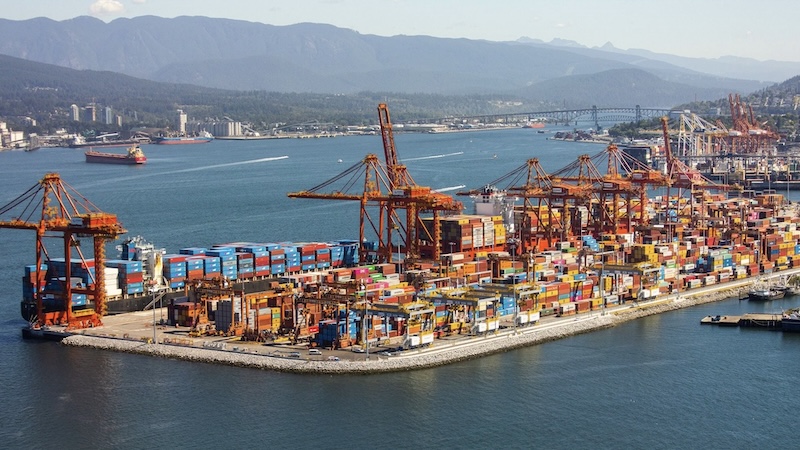
    Cargo ship at Vancouver port

    Sea Freight: Where the Real Cost Reduction Happens

    Sea freight is the right choice for most volume orders from China to Canada. Port-to-port transit time from major Chinese ports such as Shanghai, Shenzhen, and Ningbo to Vancouver is often around 15–25 days; to Montreal or Halifax, 30–40 days may be more realistic, depending on routing and congestion.

    FCL (Full Container Load)

    FCL means you rent an entire container — 20-foot (~28 CBM) or 40-foot (~60 CBM) — at a flat rate. Once loaded and sealed, FCL usually involves fewer handling points than LCL, which reduces damage risk.

    FCL makes sense when:

    • Your shipment exceeds 15 CBM
    • You are buying from one supplier or can consolidate from several
    • You need lower handling risk (fewer touches = less damage)
    • You want predictable costs regardless of seasonal rate swings

    FCL pricing fluctuates with season and global freight demand. Peak season (August–October) typically sees higher rates. Build buffer time and lock rates early when possible.

    LCL (Less than Container Load)

    LCL shares container space with other importers. You pay by CBM (cubic meter) or actual weight, whichever is greater.

    LCL makes sense when:

    • Your shipment is 2–15 CBM
    • You want to ship more frequently in smaller quantities
    • You are testing a new product before committing to container volume

    LCL downside: Higher cost per CBM than FCL, and longer transit time — consolidation and deconsolidation add days or weeks at both ends. Goods are also handled more, increasing damage risk. Understand FCL vs LCL before choosing.

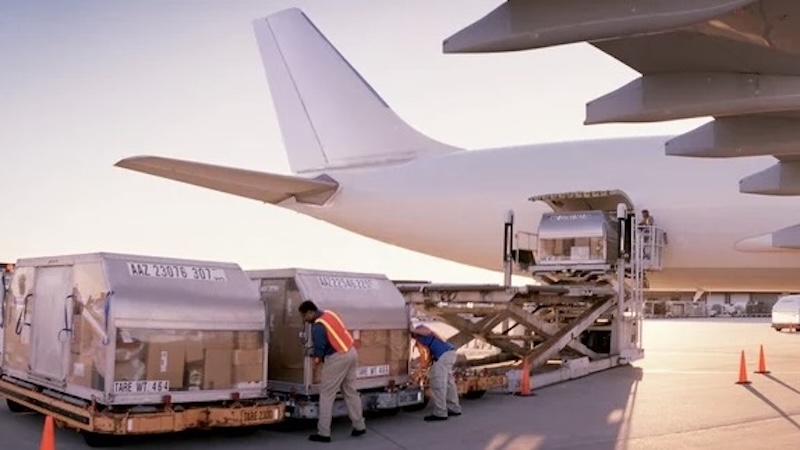
    Air cargo loading in China

    Air Freight: When Speed Justifies the Cost

    Air freight costs 4–8x more per kilogram than sea freight, but for the right shipments, it is the smarter business decision.

    Express couriers (DHL, FedEx) handle everything — pickup, export customs, international transit, Canadian customs clearance, and door delivery. For shipments under 150 kg, this all-in cost often beats standard air cargo because it eliminates fixed destination fees.

    Standard air cargo is airport-to-airport. You arrange pickup and Canadian customs separately. It costs less per kg than express but has additional fees that narrow the gap.

    The Volumetric Weight Trap

    Air freight charges based on whichever is greater: actual weight or volumetric weight.

    Volumetric weight formula: Length × Width × Height (cm) ÷ 6,000 = kg

    Example: A box of pillows, 100 × 50 × 50 cm, actual weight 10 kg:

    • Volume: 250,000 cm³
    • Volumetric weight: 250,000 ÷ 6,000 = 41.7 kg
    • You pay for 41.7 kg, not 10 kg

    This is why packaging optimization matters for air shipments. Work with your supplier to minimize empty space in cartons — every cubic centimeter of air is money.

    FOB vs CIF: Why Your Incoterm Affects the Final Bill

    The Incoterm you agree with your supplier determines who pays for what — and it matters more than the freight quote.

    FOB (Free on Board) is recommended for most Canadian importers. The supplier delivers goods loaded onto the vessel at the Chinese port; you control and pay for everything from that point. You choose your freight forwarder, you see destination costs upfront, and you have leverage when problems arise.

    CIF (Cost, Insurance, Freight) means the supplier arranges freight to your Canadian port. It sounds easier, but CIF destination charges — terminal handling fees, delivery order fees, document release charges — often arrive without warning. You also lose control over carrier selection and insurance quality.

    Canadian Customs: What to Budget

    Every shipment arriving in Canada goes through the Canada Border Services Agency (CBSA). Budget for:

    Import duties. Determined by your product’s Harmonized System (HS) code. Rates vary significantly by category — some products enter Canada duty-free from China, others carry tariffs of 5–20%. Confirm the correct HS code before ordering so your landed cost is accurate.

    GST (5%). Applied to most commercial imports, calculated on the customs value.

    Provincial sales tax or HST may also affect your total tax cost, depending on your province, product, and business registration status. Ask your broker or accountant before finalizing landed cost.

    Customs brokerage. A licensed customs broker manages CBSA paperwork and clearance. Typical fees: $100–$400 per shipment. Most commercial importers use a licensed customs broker because clearance errors can create delays and penalties that far exceed broker fees.

    Getting the HS code wrong is one of the most expensive mistakes in importing. Overpaying duties costs you margin; underpaying creates compliance problems.

    A Common Mistake

    Consider a buyer in Toronto sourcing 300 units of a kitchen product. The supplier quoted CIF Montreal, freight “included.” When the shipment arrived, the Canadian agent invoiced $620 in terminal handling, delivery order, and documentation fees — none of which had been mentioned in the CIF quote.

    The buyer had budgeted only for duties and brokerage. The $620 surprise eliminated the margin on the first order.

    On the next order, the buyer switched to FOB Shanghai. He engaged a freight forwarder directly, got a full quote including destination charges upfront, and paid $380 less total for comparable transit time.

    The cheaper Incoterm was not CIF. It was FOB with a freight forwarder the buyer chose himself.

    FAQ

    1. How long does shipping from China to Canada take?

    Sea freight to Vancouver: 15–25 days from major Chinese ports. Sea freight to Montreal or Halifax: 30–40 days. Air freight: 5–10 days for standard cargo, 3–5 days for express. Add customs clearance time at the Canadian end — typically 1–3 business days for a straightforward shipment with accurate documentation.

    2. Do I need a customs broker to import into Canada?

    Not always legally required, but strongly recommended for most commercial shipments. You can self-clear, but the CBSA process is complex, and errors cause delays and penalties. A licensed customs broker helps with HS code classification, customs valuation, and clearance. Their fee should be included in your landed cost.

    3. When does FCL become cheaper than LCL?

    Generally when your shipment exceeds 15 CBM. Below that, LCL is usually cheaper even at its higher per-CBM rate, because you are not paying for unused container space. Get quotes for both when your shipment is in the 10–18 CBM range — the crossover depends on current market rates.

    4. Should I insure my shipment?

    Yes. Cargo insurance is a small cost relative to the value of most shipments — typically 0.3–0.5% of the declared value. Sea freight involves multiple handling points and weeks in transit; air freight is faster but not immune to damage. CIF insurance provided by suppliers is usually minimum coverage only. For any significant shipment, arrange your own policy through your forwarder.

    5. What documents do I need to clear customs in Canada?

    At minimum: commercial invoice (with accurate value and HS codes), packing list, and Bill of Lading (sea) or Air Waybill (air). Some products require additional documentation — certificates of origin, safety compliance certificates, or permits. Your customs broker will advise based on your specific product.

    6. How do I compare freight forwarder quotes accurately?

    Make sure all quotes are on the same Incoterm basis (ideally FOB) and include origin charges, main freight, destination handling, customs brokerage, and final delivery. A quote that looks cheaper often excludes destination terminal handling or brokerage fees. Ask each forwarder to itemize every charge to the door — not just port-to-port.

    7. Is it cheaper to use the supplier’s freight forwarder or find my own?

    In most cases, using your own freight forwarder under FOB terms gives you better pricing and transparency. Suppliers who offer to arrange shipping (often under CIF) typically use their preferred forwarder, who prioritizes the supplier’s relationship over your costs. Your own forwarder works for you, quotes destination charges upfront, and gives you direct recourse if problems arise in transit.

    8. How do I calculate my landed cost before placing an order?

    Start with the product cost (FOB), then add: international freight (get a quote from your forwarder), import duty (look up the Canadian HS code tariff rate), GST (5% of customs value), customs brokerage ($100–$400), and final delivery to your warehouse. Run this calculation before you commit to an order size — the per-unit landed cost determines whether the product is profitable at your target retail price.

    Conclusion

    The cheapest freight option for your shipment is the one with the lowest total landed cost — including duties, brokerage, destination charges, and the cost of any quality problems that reach Canada instead of being caught in China.

    For importers who want help managing freight, supplier coordination, and pre-shipment inspection from China to Canada, see product sourcing in China.

    Need production updates before your China order ships?
    We monitor supplier progress, timing risks, order details, and shipment readiness so problems are easier to catch before delivery.
    Aaron Li
    I’m Aaron Li, a sourcing expert. Since 2012, I’ve helped 300+ startups source from China and manage product standards. Here, I share practical answers to common questions about sourcing and quality control.
    All Articles
    How to Calculate Landed Cost from China: Formula + Example
    CIF vs FOB Shipping from China: Which Should You Use?
    Carton Shipping Marks: What Importers Should Specify
    Where to Source Products for Retail Arbitrage in 2026
    Best Chinese Wholesale Websites: Alibaba, 1688, DHgate and More
    Senior Living Products from China: What Importers Should Source in 2026
    Wholesale Home Decor from China: What Retailers Should Check
    How to Source Solar Panels from China: A Buyer's Guide
    Can You Get Free Samples from Chinese Factories?
    Dollar Store Products in Africa: What Sells Best from China
    Private Label Sourcing from China: What Sellers Get Wrong
    4 Risks of Buying from Alibaba Before You Pay
    How to Find Wholesale Suppliers for Small Businesses
    CBM Calculator for Ocean Freight: Formula and Examples
    Profitable Ecommerce Niches: How to Find Gaps Before You Source
    Proforma vs Commercial Invoice: Which Clears Customs?
    Gross vs Net Weight in Shipping: What to Check
    Direct vs Indirect Sourcing: How to Choose the Right Model
    How to Write a Quote Request That Gets Real Prices
    Supply Chain Trade-Offs: Cost, Speed, and Risk
    How Much Does It Cost to Start an Import Export Business?
    China Logistics Companies: What Small Importers Need
    How to Get a Supplier to Lower the Price, Not the Quality
    Hidden Costs of Importing from China That Eat Your Margin
    Sourcing from China for Amazon: Why First Orders Fail
    Custom Packaging from China Without the High MOQ
    Supplier Quality Audit in China: What to Check and Why
    China Manufacturing Hubs: Which Region Fits Your Product?
    Made in PRC: What It Means and What to Check
    FCL vs LCL Container Shipping: Which Is Right for Your Order?
    Sea Freight vs Air Freight: When to Pay for Speed
    Top Toys to Import from China: What’s Selling in 2026
    China to Canada Shipping: How to Cut Freight Costs
    Alibaba vs AliExpress: Which One Is Right for You?
    Importing from China to USA: Protect Your Margin
    Product Development in China: Buy or Build Your Product?
    Protect Your Product Idea Before a China Factory Copies It
    FOB vs EXW China Imports: Which Term Really Costs Less?
    1688 Purchasing Agent: How to Buy from China’s Domestic Market
    Yiwu Market Product List: What to Buy and What to Avoid
    4PX Shipping: Tracking, Delivery Times and Is It Legit?
    DHL Shipment On Hold? What to Do and Who Fixes It
    Best Taobao Agent for Kitchen Products: What to Look For
    Can You Trust an Alibaba Verified Supplier for Quality?
    Foshan Furniture Market Guide: What to Check Before Buying
    Guangzhou Fabric Market Guide: What to Buy, What to Avoid
    Is the Canton Fair Worth It for a First-Time Buyer?
    Huaqiangbei Electronics Market: Why Cheap Deals Cost More
    China Electric Toothbrush Suppliers: What to Check
    Bag Manufacturers in China: Can They Make Your Design?
    China Product Samples: Why They Don't Match Your Idea
    Shipping Documents: 5 Mistakes That Delay Customs
    Procurement Life Cycle: Step by Step for Logistics
    Top Beauty and Healthcare Products on Amazon: Seller Risks
    Can Your Factory Actually Deliver? Check Capacity First
    Top 10 Wholesale Markets in China: Which One Fits Your Product?
    Why Are So Many Toothbrushes Made in China?
    Famous Products Made in Shenzhen: A Buyer’s Guide
    How to Negotiate Lower MOQ Without Losing Supplier Trust
    Why Brands Use OEM Instead of Their Own Factories
    Consolidate China Shipments and Cut Freight Costs
    10 Profitable Products to Import from China to Europe (2026)
    Key Shipping Ports in China and North America for Importers
    What Apple's China Suppliers Teach Small Buyers in 2026
    Incoming Quality Control in China: What Buyers Need to Know
    China Sourcing Agent Fees: Hidden Costs and Real Rates (2026)
    8 Most Profitable Products from China to Resell in 2026
    Why Are Most Things Made in China? Not Cheap Labor
    Inspection Companies in China: How to Choose in 2026
    How Much Cheaper Is Manufacturing in China?
    Customized Products from China: 4 Trends Buyers Should Check
    China Pre-Shipment Inspection: Your Last Check Before Paying
    Global Sourcing Challenges: 8 Risks Buyers Miss
    How to Source Electronics from Shenzhen Markets
    Verify a Chinese Company: 6 Checks Before You Pay
    Bulk Order from China: 7 Checks Before You Pay
    How to Order from Alibaba Without Getting Burned
    China Supply Chain Advantage: Why It's Hard to Replace
    Rapid Prototyping in China: Get Samples Faster
    Ship from China to Amazon FBA: Prep Rules That Cost You
    Is Buying in Bulk from China Worth It? The Real Math 
    Sourcing LED Lights from China: 6 Checks Before You Order
    China Sourcing Service: What You Actually Save
    How to Contact Chinese Factories and Get a Reply
    China Manufacturing: 8 Steps to Keep Orders on Track
    Kitchen Products from China: 7 Supplier Mistakes to Avoid
    Best Products to Import from China: 6 Checks Before You Buy
    Trendy Electronics from China: What’s Selling in 2026
    Chinese Supplier Search: How to Shortlist the Right Ones
    Shenzhen Sourcing Agent: Best for Electronics and Tech Sourcing
    Hardware Import from China: What Buyers Must Check First
    China Direct Sourcing: When It Helps and When It Hurts
    China Supplier Management: 5 Things to Lock Down
    Direct Product Sourcing in China: 9 Steps Beginners Miss
    China Outdoor Product Suppliers: What Separates Good from Bad
    China Buying Agent: When You Need One and When You Don’t
    Manufacturing in China: What’s Changed and What Hasn’t
    In-House vs Outsourced China Procurement: True Cost
    Metal Products from China: 6 Checks Before You Order
    China Sourcing Agent for Amazon: When It Pays Off
    Read More
    References
    Our Features
    Custom Products
    Turn concept to reality
    Quick Response
    Within 24 hours
    Detail Oriented
    Strive for perfection
    Assured Quality
    100% Guarantee