How to Choose the Right Manufacturing Process in China
The right process is the one that matches your part’s shape, volume, and accuracy, not the one a factory happens to prefer. Start with what the part is and how many you need, and the choices around cost, tooling, and quality become much clearer.
| Your part or situation | Best process | Why |
|---|---|---|
| Plastic, high volume | Injection molding | Low unit cost at scale |
| Plastic, prototype or low volume | 3D printing | No production mold, fast changes |
| Complex aluminum or zinc housing, volume | Die casting | Detailed shapes at scale |
| Precision part, low-mid volume | CNC machining | Tight tolerances |
| Flat panels, brackets, cases | Sheet metal | Cost-effective for formed parts |
| Flat sheet blanks and profiles | Laser cutting | Fast, no cutting die |
Most wrong choices come from picking a process before the part is defined.
How to Read the Decision
Four questions settle most process choices: what shape, how many, how tight, and how it should look. Answer those before you ask a single factory for a quote, because the answers rule most processes in or out on their own.
Volume decides whether tooling pays off. A mold or die requires a high upfront investment but can cut the unit cost sharply across repeat production, so it wins at volume. Cutting and machining methods avoid that expensive production tooling, but they still involve programming, setup, and machine time.
Getting the shape, the volume, and the tolerance settled on paper before anyone quotes is exactly what product development is for.
Those methods usually suit lower volumes, where the upfront cost is far smaller than opening a mold. The crossover depends on how many parts you expect to order over the life of the product, the tooling cost, the unit price, and the risk of future design changes.
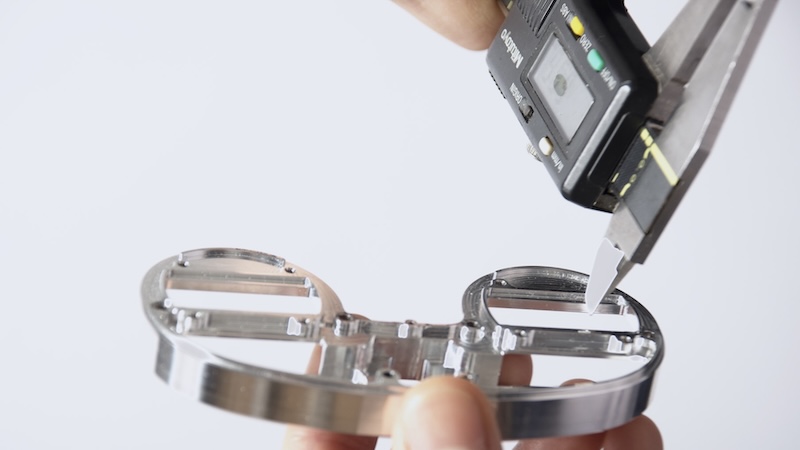
Accuracy and finish narrow what is left. Tight tolerances, sealing surfaces, or a tightly controlled cosmetic surface push you toward machining or precision molding, while a basic bracket hidden inside a product may only need the lowest-cost method that still meets its strength and quality requirements. Separate what the part truly needs from what is just nice to have, since every extra demand adds cost.
Choosing a Process for Plastic Parts
For plastic, the choice is mostly about volume and how settled the design is. A stable, higher-volume plastic part is often a strong candidate for injection molding, where the mold cost spreads across repeat orders and the per-part price usually falls as volume grows.
While the design is still moving or the quantity is small, print instead of tooling. 3D printing skips the mold entirely, so it suits prototypes, design checks, and short runs, and it lets you change a part between rounds without paying to re-cut steel.
Picking a Method for Metal Parts
Metal parts split across four common methods, and the part’s shape usually points to one. Match the geometry and volume to the method rather than asking one shop to force every part through its favorite machine. Grade, coating, and availability all move with the method, which is why they run through every checklist for a hardware import from China.
Die casting suits complex metal housings at volume. Die casting injects molten metal under pressure into a steel die, producing repeatable, detailed shapes once the tooling cost is justified, which fits enclosures and structural parts in steady demand.
CNC machining is a strong choice for precision and lower volumes. CNC machining cuts the part from solid stock, holding tight tolerances and clean surfaces, and it handles both metal and plastic without dedicated production molds, so it also serves as a practical bridge while a design is still settling.
Sheet metal fabrication owns flat parts that are cut and bent. For brackets, panels, trays, and enclosures, sheet metal fabrication is often more economical and better suited to production than machining a full block or printing the same flat, folded shape.
Laser cutting is often the first step, not the finished part. Laser cutting turns flat sheet into precise blanks quickly without dedicated cutting dies, though programming, setup, and later operations still affect the final cost. Those blanks then get bent, welded, or finished into the real part.
From Prototype to Production
Process choice is not one decision made once and kept forever. It changes as you scale. Early on, speed and flexibility matter most, so a rapid prototyping run using printing or machining lets you test the design before committing to production tooling.
The expensive mistakes happen at the jump to volume. A hand-built sample can fail once normal production variation appears, so plan the shift to volume with a pilot run and clear checks. Switch to a tooling-based method only once the design is frozen and the numbers justify it.
After You Pick a Process
Choosing the method is the engineering half; the sourcing half decides whether it actually works. The same process can run smoothly or badly depending on the factory, the material supply, and the checks around it.
Confirm the material and process together. Grade, coating, availability, and production method all affect one another, so review them early rather than discovering a supply or processing problem after tooling starts.
Then treat the buy like the sourcing project it is. Once the process is set, supplier verification, quality control, compliance, packaging, and shipping still have to be managed before the goods leave China.
FAQ
Q1: Can a part be redesigned into a cheaper process?
Often yes, if you let the factory suggest changes to the shape rather than only the material. A rib moved or a corner opened up can drop a part out of machining and into a pressed or moulded route.
Q2: What matters more, volume or design?
Both matter, but shape and material usually narrow the options first, while the quantity decides whether tooling is worth it. A changing design favors flexible methods like machining or printing, and stable repeat demand makes molding or casting more attractive.
Q3: Do finishing and coating steps affect the choice?
Yes, and buyers often forget them. Painting, plating, anodizing, and polishing add cost and lead time, and a “cheap” part can get expensive after finishing. Define the finish standard up front so quotes cover the same work.
Q4: What if my part needs more than one process?
Many parts do, such as a cast body that is then machined and coated. Look at the whole route rather than one step in isolation, since the cheapest single process can create a costly chain of handoffs. Fewer outsourced steps usually mean easier control.
Q5: How do I compare a quote with tooling against one without?
Spread the tooling over the quantity you will realistically order, not over the supplier’s ideal volume. A low unit price built on ten thousand pieces is not a price if you will only ever buy two thousand.
Q6: Does the process choice change my lead time?
Significantly. Tooling-heavy methods and multi-step finishing stretch schedules, even when the quoted production cycle looks short. Map tooling, steps handled by outside factories, and inspection timing before approving a process, not after.
Q7: One factory for everything, or specialists?
It depends on the product and your time. A specialist often delivers better quality in the process it knows best, while a factory that handles several processes in-house simplifies coordination across several steps. For complex products, some buyers use specialists for critical steps and consolidate the simple ones.
Q8: How do I confirm a factory can actually run my process?
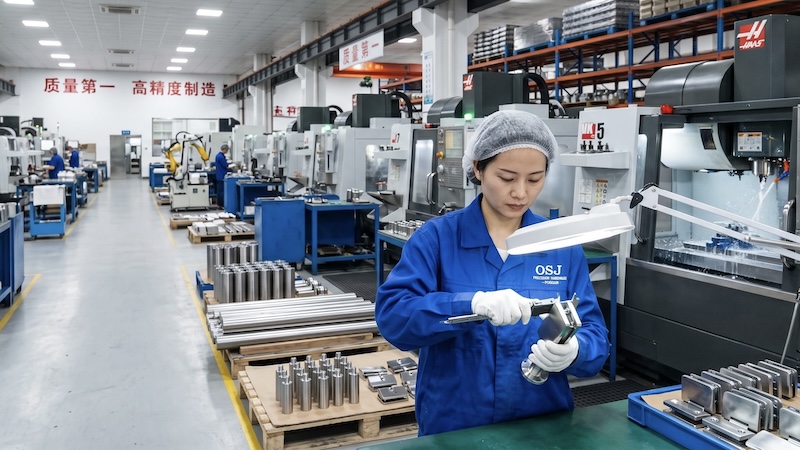
Ask for samples of similar parts, an equipment list, and examples of comparable production work. Many factories accept work outside their strength, so a small trial order or a third-party factory check helps verify real capability before a large commitment.
Conclusion
The right manufacturing process becomes much clearer once you define the part’s shape, volume, accuracy, and finish, so settle those before you shop for a factory. Pick the method that fits the part and the order size, not the one a single supplier is set up to sell.
Matching a drawing to the right process, finding a factory that actually runs it, and holding the first article to your numbers are hard to judge from a distance. Our product development work covers all three, so the method you picked is the one that ships.