
China to UK Shipping Time: How Long Express Takes
Express from China to the UK commonly lands in about 3 to 5 working days with DHL, FedEx, or UPS. Cheaper cross-border lines like 4PX, YunExpress, and ePacket usually run one to three weeks. Door-to-door time depends on pickup, the flight, UK customs, and the final delivery run, and that gap is where many UK importers get caught out.
| Service | Typical UK Planning Range | Best For |
|---|---|---|
| Premium express (DHL, FedEx, UPS) | 3-5 working days | Samples, urgent restock |
| Budget line (4PX, YunExpress, ePacket) | 1-3 weeks | Light e-commerce parcels |
Treat both as planning ranges, not guarantees, because customs, remote postcodes, and peak season all move the real UK arrival date.
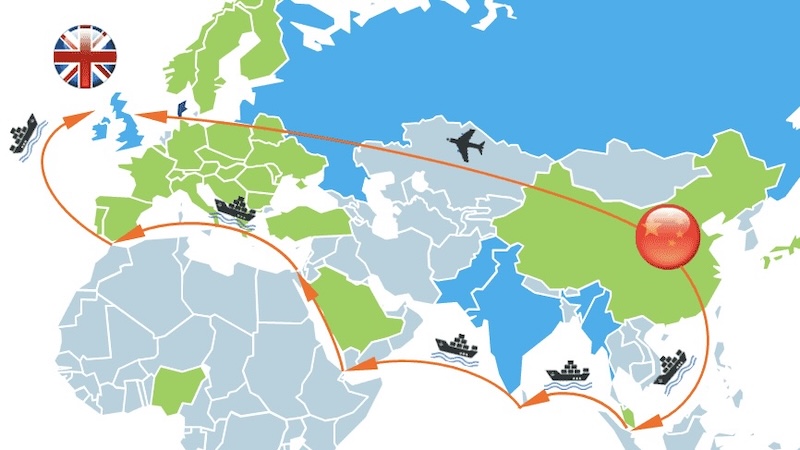
What Premium Express Buys You
Premium express is usually the fastest parcel service into the UK because one carrier controls most of the journey. DHL, FedEx, and UPS coordinate collection in China, the international movement, customs support, and final UK delivery through one integrated service. That cuts handovers and makes any delay easier to trace.
You pay heavily per kilo for that speed, so premium express suits samples, replacement parts, and urgent restocks rather than a full pallet of stock. For a side-by-side on how the three compare on price and lane strength, the DHL vs FedEx vs UPS breakdown is the place to start.
Most of the slippage happens in the days before pickup, which is the stretch order management covers by watching production rather than the tracking page.
Budget Parcel Lines Trade Speed for Price
Budget cross-border lines cost far less than premium express, but they trade away speed and tracking certainty. Services such as 4PX shipping and the YunExpress network move light e-commerce parcels to the UK at a fraction of the courier rate. Expect anywhere from a week to three, depending on the route and the delivery address.
China Post ePacket and the postal routes behind it show fewer updates between major milestones, so a quiet stretch between the China departure and the UK arrival is normal rather than a lost parcel. Match the line to the order: premium express for fast and valuable, the cheap lines for light and patient. The full express shipping from China picture sets both against freight.
Where the Express Clock Actually Goes
The number a courier quotes is the transit time, not the full span from the factory floor to your UK warehouse. A parcel is packed and collected, cleared for export, flown, then cleared through UK import customs before a van makes the final run. Each of those steps carries its own short queue.
Premium express compresses these stages because one network runs them, yet even a fast lane can pause for a customs question or a missed delivery slot. Plan against the estimated UK delivery date the courier gives you, not the raw flight time, since that is the date your sales plan has to follow.
Why UK Delivery Runs Past the Estimate
Customs is one of the most common sources of hidden delay, especially when the invoice, product description, declared value, or commodity code do not match. If they conflict, someone asks a question and the parcel stops moving. A vague description like accessories invites exactly that, so clean paperwork at the factory is the cheapest speed you will ever buy.
Two other delays hit UK express parcels more than buyers expect. An address outside the courier’s main delivery area can add time and a surcharge. Peak periods stretch every stage, so the weeks around Chinese New Year and the run-up to Christmas are when even a premium lane slows down.
What UK Importers Should Sort Out First
Confirm which EORI number the import needs before the goods ship, not when they land. Businesses importing goods into England, Scotland, or Wales normally need a GB EORI, while some movements involving Northern Ireland may also require an XI EORI. Apply before shipping, because additional checks can delay approval.
Decide up front who clears the goods and pays the UK duty and VAT. If your supplier quotes DDP, they are responsible for the agreed import clearance, duties, and taxes.
You should still confirm which company is legally bringing the goods in and which EORI will appear on the declaration. Either way, knowing your product’s import duty to the UK in advance keeps the courier’s customs invoice from becoming a surprise.
The Weight Where Express Stops Paying
Once the shipment turns heavy or bulky, express stops being the sensible way to reach the UK. As the chargeable weight climbs, the per-kilo premium turns a fast parcel into an expensive one. That is the point to price air or sea freight through a forwarder instead, as laid out in sea freight vs air freight.
For light, urgent, or high-value UK orders, express and the cheap cross-border lines stay the right tools. What moves you off them is weight rather than urgency, so run the comparison again each time an order grows.

FAQ
Q1: Does the quoted express transit time include UK customs clearance?
The estimate usually assumes routine customs clearance, but it does not guarantee how long clearance will take. A document query, a duty-payment delay, or a customs inspection can extend the delivery time.
Q2: Can DHL, FedEx, or UPS deliver directly to a UK Amazon FBA warehouse?
They can, but the shipment must meet Amazon’s current labeling, packaging, carrier, and delivery requirements. Amazon accepts fulfillment-center deliveries only through approved professional carriers using the required booking process.
Q3: Will a delivery to a UK home address take longer than to a business?
It can, since residential delivery attempts may be less predictable when no one is available to receive the parcel. Give a business address with someone on hand to receive it where you can.
Q4: My tracking stopped updating after the parcel left China. Is it lost?
Usually not, especially on the low-cost lines that only scan at major points. Compare the pause against the promised window and look the parcel up on a second tracker before treating a quiet tracker as a lost parcel.
Q5: Does the parcel’s origin city in China change the UK transit time?
Less than most buyers expect, since the couriers funnel parcels through a few major export hubs before the flight. A pickup from a remote factory can still add a day before the parcel reaches that hub, so ask the courier when the transit clock actually starts.
Q6: Can I split one order between express and a cheaper parcel line?
Yes, and it is a common way to protect a deadline without paying premium rates on everything. Send a small express batch to cover the first sales, and let the rest follow on a slower, cheaper line.
Q7: When should I book to avoid Chinese New Year delays to the UK?
Book well before the holiday and confirm the courier’s cutoff dates, since pickup capacity tightens and factories close for weeks. Anything that misses that cutoff waits until services restart.
Q8: Is an express transit time guaranteed, and can I claim if my UK delivery is late?
Usually not, unless you bought a specific time-definite service with a stated remedy. Standard express times are estimates, so check the carrier’s terms before assuming any refund for a late arrival.
Conclusion
The spread between a courier and a cheap line is the difference between a working week and most of a month. Which end you land on is set by your paperwork, your postcode, and the calendar, not by the carrier logo on the label. Quote the lane, then plan to the delivery date rather than the flight.
A restock date is fixed long before the parcel is booked. We keep production and shipping on one schedule through order management, so the booking, the documents, and the arrival still agree on the day it leaves.