
3D Printing in China: Costs, Materials, and Uses
3D printing is the right tool when your design is still changing or you need low-volume parts without paying for tooling. Print to validate quickly, then compare molding or machining once the design is frozen and repeat volumes grow.
| Your situation | Best method | Why |
|---|---|---|
| Changing design, few parts | 3D printing | No tooling |
| Stable design, higher volume | Injection molding | Low cost at scale |
| Flat cut-and-bent parts | Sheet metal | Cheaper panels/brackets |
| Tight tolerances, final fit | CNC machining | Precise, production-like |
The row you land on is decided by how settled the design is and how many parts you need, not by which shop you ask.
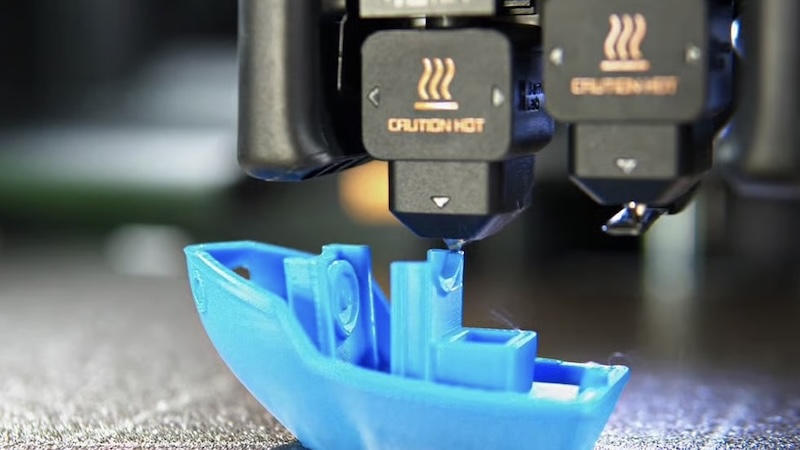
When to Print Instead of Tool
Print while you are still answering design questions. Concept checks, fit tests, how parts go together, how a product feels in the hand, and samples to show a customer or investor are all cheaper and faster to print than to tool. When the shape is still changing, a fast print keeps rapid prototyping loops short, since a change is just a new file rather than a new mold.
Distance changes how you should iterate. A nearby shop can often hand you a part fast, so changing one detail at a time is easy. Printing in China can cost less or offer more process choices, but international shipping and customs add time to every round.
So batch several design changes into one print run instead of sending a single tweak at a time. Each round then answers three questions rather than one, and the loop stays in days rather than weeks.
Deciding which changes go into which round, so three rounds do the work of six, is what product development manages from this end.
Stop printing when the drawing stops moving and the numbers grow. Printing avoids expensive tooling, but every part still costs machine time, material, and finishing, and that price falls only a little with volume. A mold is the opposite: costly to cut, then very cheap per part.
As your repeat volume grows, compare the total printing cost against the mold cost plus the low molded unit price, and switch to injection molding once the mold pays for itself over your expected orders. That switch is its own project, covered in prototype to mass production.
Match the part to the right process, not to the printer. If the part is mainly cut and bent from flat material, such as a bracket, panel, or enclosure, sheet metal fabrication is often cheaper and better suited to production.
If it needs tight final tolerances, clean surfaces, or a material close to the real product, move it to CNC machining. For the full comparison across every method, see how to choose a manufacturing process.
Which Printing Process Should You Choose?
The process you pick decides the strength, look, and price, so choose it by what the part must do. The three common plastic methods each suit a different job, and picking wrong means a part that looks fine but fails the test that mattered.
FDM is usually the low-cost choice for simple prototypes. Fused deposition modeling (FDM) melts plastic filament layer by layer, so it suits early concept parts and simple shapes, though visible print lines are common.
Resin printing is chosen for fine detail and smooth surfaces. It suits display models, small detailed parts, and anything where appearance sells the idea, though resin parts can be brittle under stress.
Nylon powder printing is a strong choice for durable functional parts. It prints tough, slightly flexible parts without support marks, which fits working prototypes, clips, and housings that need to survive testing.
Metal printing exists, but treat it as a specialist option. Aluminum, stainless, and titanium can be printed for functional metal parts, at a much higher price. If you mainly need metal parts, confirm grades and finishes the same way you would on any hardware import from China, and ask whether a machined or fabricated version would cost less.
Which 3D Printing Material Should You Choose?
Choosing the printing process is only half the decision; the material decides whether the part survives heat, bending, impact, or real assembly testing. Telling a factory to just print it in plastic leaves the most important choice to chance.
| Material | Best for | What to watch |
|---|---|---|
| PLA | Display, concept models | Low heat/strength |
| ABS | Enclosures, test parts | Heat-resistant, can warp |
| PETG | Durable, semi-clear parts | Not fully clear |
| Nylon | Clips, hinges, tests | Strong, absorbs moisture |
| TPU | Flexible grips, soft parts | Hard to hold size |
| Standard resin | Fine display models | Smooth, brittle |
| Engineering resin | Heat/functional tests | Better, pricier |
Pick the material by the job, not by habit. Match it to the heat, strength, flexibility, appearance, and environment the part will face. A clean display model and a part you plan to drop-test or leave in a hot car may need completely different materials, even for the same design.
A sample does not have to use the production material, but the gap matters. If your final part will be molded in ABS, a cheaper PLA print can still prove the shape and fit. Just remember that a different material can behave differently under load or heat, so match the sample material to whatever you actually need to test, not just the shape.
Ask the supplier to recommend, then confirm with data. A capable shop will suggest a material once you describe the part’s purpose, and can share a material data sheet so you are not guessing. If appearance is the priority, confirm the finish and color options too, since the raw look varies a lot between materials.
What 3D Printing Actually Costs
The machine quote is only part of the cost, and finishing can raise the final price quickly. Price is driven by part size, how much material it uses, the process, the quantity, and the hand-finishing after the machine stops. A low headline quote can quietly leave out the steps that make a part usable.
Watch the finishing and shipping extras. Removing supports, sanding, painting, and coloring all add labor, and a “cheap” print with heavy post-work can cost more than a tidy quote that includes it. These are the same hidden import costs that catch buyers on any China order, so ask exactly what the unit price covers.
Do not pay for precision before the design earns it. Printing early is cheap because you are not buying tooling or tight tolerances yet. Spend on accuracy and finish only after the design settles and you know the part is worth producing for real.
When you request a China quote, ask the supplier to spell out the exact process, material grade, build direction, finish, tolerance, inspection, and shipping terms. Confirm whether finishing and measurement checks are included, since two quotes that look alike can cover very different work.
FAQ
Q1: Should I print the part myself or send it to China?
A desktop printer proves a shape for almost nothing, but it cannot give you production materials, tight tolerances, or a finished surface. Send it out once the answer you need depends on how the part performs rather than how it looks.
Q2: Can a printed part be finished to look like the final product?
Often yes, with sanding and painting, and resin prints already start smooth. Ask to see finished samples, since the look depends on the hand-finishing, not just the print.
Q3: How accurate are 3D-printed parts?
Accuracy depends on the printing process, material, shape, and part size. Mark the critical dimensions on your drawing, ask the supplier what tolerance they can hold, and machine any surface or fit that requires tighter control.
Q4: How strong are printed parts compared with molded ones?
Strength depends on the process, material, print direction, and shape. FDM parts can be weaker between layers, while nylon powder parts usually have more consistent strength in different directions, so tell the supplier the forces involved.
Q5: Can I get the same part printed in more than one material?
Usually yes, and it is a cheap way to test which one survives. Ask for the same part in two or three materials in a single build, since the setup is shared and only the machine time changes.
Q6: How big a part can you 3D print?
Every printer has a size limit, so a large part may be printed in sections and joined, adding cost and visible seams. Ask for the build size early, and for big flat parts consider another process.
Q7: What files and details should I send for a quote?
Send a 3D file (STEP or STL), the quantity, the material or purpose, finish and color, and any exact measurements. For functional parts, add the loads, temperature, and working conditions the part must handle.
Q8: Can printed parts have working threads or snap-fits?
Yes for light use, but they wear faster than molded ones and fine threads often print poorly. For parts opened often, ask about metal threaded inserts or machining just those features.
Conclusion
3D printing wins on speed and flexibility while your design is changing, and it can carry custom parts and low-volume runs too. Once repeat demand grows, weigh it against molding, sheet metal, or machining, and pick the process that delivers the right cost, material, and quality.
Each print round from China costs you a week in shipping whether it carries one change or five. We plan the rounds and run them from here, through product development, so the design arrives production-ready before anyone cuts steel.