Maple Sourcing Ltd.
Maple Sourcing Ltd.
We Make Your Sourcing Easy!
Need help? sales@maplesourcing.com
English
Maple Sourcing Ltd.
Maple Sourcing Ltd.

Shenzhen Consumer Electronics Sourcing: Why Speed Matters

Published:
Updated:
6376 Views
Table of Content [Hide]

    Every major electronics-producing region can offer lower prices than your home market. Very few can offer Shenzhen’s speed. For consumer electronics buyers, speed is often worth more than price — because being first to market, first with a design update, or first to validate a new product creates advantages that unit cost savings alone cannot.

    The 5 Speeds That Make Shenzhen Different

    Type of speed Business advantage
    Finding components Prototype in days, not weeks
    Prototyping Test and iterate before large commitment
    Design changes Respond to feedback without restarting
    Small batch production Validate demand without overstocking
    Scale-up Capture demand spikes when they happen

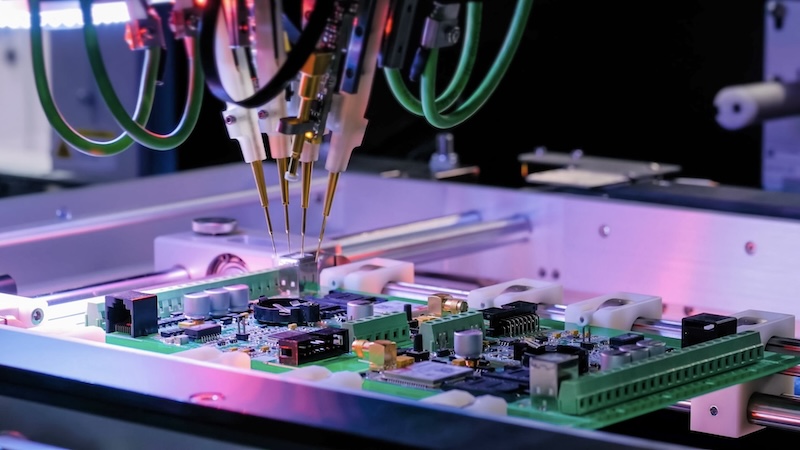
    Electronics prototype making

    Speed 1: Finding Components

    In many manufacturing cities, a component search can take days or weeks. In Shenzhen, common components can often be found much faster.

    Huaqiangbei — the electronics market district in central Shenzhen — is one of the world’s most concentrated electronics component markets. Many common IC chips, battery cells, display modules, connectors, sensors, and motors are available within walking distance. For many common components, a factory can start prototyping soon after a design is finalized, instead of waiting through a long supplier lead time.

    This matters most in early product development. When you are trying to determine whether a product design is technically feasible and cost-viable, the faster you can get a real prototype in hand, the faster you know whether to proceed. In Shenzhen, the decision cycle from “let’s try this design” to “here is a working prototype” is measured in days. Elsewhere, it is measured in weeks.

    The business impact: Development projects that may take several months in other markets can often move much faster in Shenzhen when the components, suppliers, and engineering support are already available locally. That time difference is a competitive advantage in categories where the product cycle is short.

    Speed 2: Prototyping

    For many consumer electronics projects, a first prototype in Shenzhen can be ready in days rather than weeks when the design is clear and common components are available.

    The reason is ecosystem concentration. Shenzhen has a complete stack of prototyping services — PCB fabrication, 3D printing, CNC machining, injection molding, and assembly — clustered together. A factory does not wait for each step to return from a different city; they coordinate between specialized shops that are a short drive apart.

    For buyers, this means:

    • Design validation happens faster
    • Problems discovered in the prototype are fixed in the next iteration, not the next month
    • Multiple design variations can be tested in parallel without waiting weeks for each

    The business impact: You can test two or three product concepts in the time it would take to test one elsewhere. That changes how you make product decisions — you can validate more and guess less.

    Speed 3: Design Changes

    Consumer electronics products change during development. A display module gets discontinued. A customer tests the prototype and wants a different button layout. A regulatory requirement forces a component substitution. In most manufacturing locations, each design change resets the timeline.

    In Shenzhen, a design change can often be incorporated into a revised prototype within the same week when the required components and engineering support are available locally. The supplier network responds to changes faster because everyone involved — the factory, the PCB house, the component supplier — is in the same ecosystem and used to working at this pace.

    This is especially valuable for buyers who do product development iteratively — releasing a version, collecting user feedback, and improving it. The faster the iteration cycle, the more responsive the product can be to real market feedback before the main production run.

    The business impact: Products that go through 3–4 design iterations before launch are better products. Shenzhen makes multiple iterations economically viable in a way that most other manufacturing locations do not.

    Speed 4: Small Batch Production

    Testing market demand before a large production commitment is good business practice. The barrier is usually MOQ — most electronics factories require large minimums that make small batch testing expensive or impractical.

    Shenzhen’s electronics ecosystem has a higher density of factories that can handle small batches. The component ecosystem means even small orders can be fulfilled without the factory needing to source everything from scratch. Negotiating small batch production is more viable in Shenzhen than in regions where every production run requires a full tooling and setup commitment.

    The business model this enables: order 200–500 units, list them, measure sell-through velocity, collect customer reviews, and use that data to decide whether to order 5,000. This is how modern consumer electronics brands reduce inventory risk.

    The business impact: Capital efficiency. You spend $8,000 to validate a product before spending $80,000 to stock it. The faster you can run that validation cycle, the lower your per-product launch risk.

    Speed 5: Scaling Up

    When a product succeeds, you need more inventory quickly. The time between “this is selling out” and “I have enough stock” determines how much demand you capture and how much you leave for competitors.

    Shenzhen factories — particularly those that have been producing your specific product type — can scale production quickly because the components, the production capacity, and the logistics infrastructure are already in place. A Shenzhen factory that has made 500 units of your product for testing may be able to scale to a larger order much faster than a supplier that needs to source components, tooling, and production support from separate regions.

    Checking a factory’s production capacity before the first order confirms whether they can actually scale when you need them to. A factory at 85% capacity cannot easily accommodate a large reorder; one with expansion capability can.

    The business impact: Shenzhen’s scale-up speed means you can run lean on inventory during testing phases and still respond quickly when demand validates the product.

    When Speed Matters Most

    Speed creates the largest competitive advantage in these scenarios:

    Short product cycles. Consumer electronics trends move fast. A wireless earbud design that sells well in Q1 faces new competition by Q3. Buyers who can develop, test, and launch in 3 months compete effectively. Buyers who take 9 months reach a market that has moved on.

    Platform launches. For Amazon and other marketplace sellers, being first in a category during its growth phase builds review velocity and ranking that lasts. A product launched 4 months earlier than a competitor captures 4 months of early reviews.

    Holiday inventory planning. Electronics spike sharply in November–December. Buyers who can validate demand in July and scale up in August capture the holiday season. Buyers who need 6 months of lead time are making decisions in February based on guesses about December.

    A Practical Example

    A brand developing a compact air quality monitor had a choice: prototype in Taiwan (well-established electronics manufacturing), or prototype in Shenzhen. In a more traditional electronics supply chain, the first prototype might take several weeks. In Shenzhen, when common sensors, PCB support, and assembly partners are available locally, the first working prototype may be ready much faster.

    They chose Shenzhen. In the time Taiwan’s first prototype would have arrived, they had tested three design iterations, identified a sensor module that was being discontinued, switched to a better alternative, and confirmed the final design was ready for production sampling.

    The extra 5 weeks of development time was not saved — it was reinvested in better design validation. The product launched with fewer issues because the faster iteration cycle caught problems that the slower alternative would have delivered in the bulk order.

    How to Use Shenzhen’s Speed Effectively

    Speed only creates value if you are organized enough to use it. Some practical points:

    Have your specifications ready before you arrive or before you contact factories. A factory that receives a vague brief on Monday cannot start anything until Wednesday at best. A factory that receives a detailed brief with component preferences and performance requirements can often have a prototype started the same day.

    Work with a local partner for the fast-moving parts. Design changes, component substitutions, and prototype coordination are much faster when handled by someone physically present in Shenzhen. A Shenzhen sourcing agent who has existing relationships with the right factories and component suppliers can compress timelines significantly.

    Plan your inspection before production completes. Speed at the factory becomes irrelevant if you then wait two weeks to organize a pre-shipment inspection. Have the inspection booked before production is due to finish.

    Use air freight for speed-sensitive orders. For electronics products where being first matters, air freight vs sea freight is not just a cost question — it is a competitive question. A 30-day sea freight saving of $2,000 may cost more than that in missed demand if you arrive two weeks after your competitor.

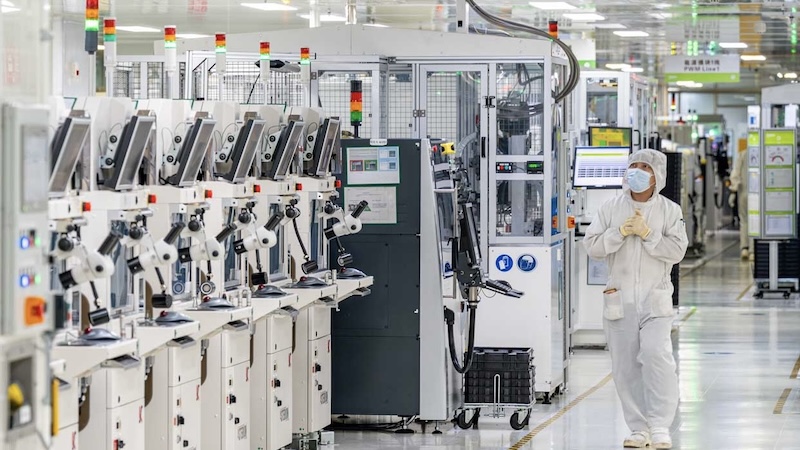
    Electronics factory in Shenzhen

    FAQ

    1. How do I know if a Shenzhen factory is genuinely fast or just promising a fast timeline?

    Ask for their last three prototype delivery dates and compare against what was promised. Factories with a real speed track record can show it. Also ask whether they fabricate PCBs in-house or outsource — in-house fabrication is typically faster and more controllable.

    2. What should I prepare before contacting a Shenzhen factory to take advantage of the speed?

    A clear design brief, component preferences or part numbers where you have them, performance requirements, and the target retail price range. The more defined your inputs, the faster the factory can start. Factories that receive a complete brief on Monday can often have a prototype underway by Tuesday.

    3. Does faster production mean lower quality?

    Not inherently. Speed in Shenzhen comes from ecosystem efficiency — components nearby, specialized factories coordinating, experienced teams. Quality depends on which factory you work with and whether you have inspection in place, not on the speed of the production timeline.

    4. What are the hidden costs of moving fast in Shenzhen?

    Air freight instead of sea freight when speed matters for launch. Expedited prototype fees if the turnaround needs to be under 5 days. Rework costs if a design error is caught in the third prototype instead of the first. Build these into your development budget — the speed benefit usually outweighs the cost, but it is not free.

    5. What types of consumer electronics are most commonly sourced from Shenzhen?

    Wireless audio products (earbuds, speakers), smart home devices, portable chargers and power banks, LED and lighting products, drones and cameras, wearables, and consumer IoT devices. These categories are well-served by Shenzhen’s component and manufacturing ecosystem.

    6. How do I find factories in Shenzhen that handle my specific product type?

    Platform search (Alibaba, Global Sources) plus trade shows (the Hong Kong Electronics Fair attracts many Shenzhen manufacturers). For product categories where component sourcing and production integration matter, a local sourcing partner with existing factory relationships is faster than a cold search.

    7. Is the Shenzhen speed advantage fading as other regions develop?

    Not meaningfully in consumer electronics. The ecosystem density — particularly around Huaqiangbei and the surrounding manufacturing districts — is the result of decades of compounding specialization. Other regions in Asia have developed strong electronics manufacturing, but none has replicated the component sourcing speed and ecosystem depth of central Shenzhen.

    8. Does the speed advantage apply to all electronics categories equally?

    No. It is strongest for products where Shenzhen has deep component and manufacturing specialization — wireless audio, smart home, portable power, LED, wearables, drones. For products that depend on components sourced outside Shenzhen (certain specialty chips, specialized sensors), the speed advantage shrinks to whatever the external component lead time allows.

    Conclusion

    Shenzhen’s consumer electronics speed advantage is real and measurable — in days of development time, weeks of launch lead time, and inventory cycles that let you validate before you commit. For electronics buyers where time-to-market matters, that speed advantage is often worth more than marginal unit cost savings.

    For buyers sourcing consumer electronics from Shenzhen, see consumer electronics sourcing.

    Need help turning a product idea into a manufacturable sample?
    Maple Sourcing coordinates supplier feedback, samples, drawings, packaging, and production-readiness details before you commit to bulk manufacturing.
    Aaron Li
    I’m Aaron Li, a sourcing expert. Since 2012, I’ve helped 300+ startups source from China and manage product standards. Here, I share practical answers to common questions about sourcing and quality control.
    All Articles
    How to Calculate Landed Cost from China: Formula + Example
    CIF vs FOB Shipping from China: Which Should You Use?
    Carton Shipping Marks: What Importers Should Specify
    Where to Source Products for Retail Arbitrage in 2026
    Chinese Wholesale Websites: Which One Should You Use?
    Senior Living Products from China: What Importers Should Source in 2026
    Wholesale Home Decor from China: What Retailers Should Check
    How to Source Solar Panels from China: A Buyer's Guide
    Can You Get Free Samples from Chinese Factories? Here's How
    Dollar Store Products in Africa: What Sells Best from China
    Private Label Sourcing from China: The Pros, Cons, and What Most Sellers Get Wrong
    4 Risks of Buying from Alibaba Before You Pay
    How to Find Wholesale Suppliers for Small Businesses
    CBM Calculator for Ocean Freight: Formula and Examples
    Profitable Ecommerce Niches: How to Find Gaps Before You Source
    Proforma Invoice or Commercial Invoice? What Every Importer Needs to Know
    Gross vs Net Weight in Shipping: What to Check
    Direct vs Indirect Sourcing: How to Choose the Right Model
    How to Write a Quote Request That Gets Real Prices
    Supply Chain Trade-Offs: Cost, Speed, and Risk
    How Much Does It Cost to Start an Import Export Business?
    China's Major Logistics Companies: Who They Are and What They Do
    How to Get a Supplier to Lower the Price, Not the Quality
    The Hidden Costs of Importing from China That Eat Your Margin
    Sourcing from China for Amazon: What Most Sellers Get Wrong
    Custom Packaging from China: How Small Businesses Can Start
    Supplier Quality Audit in China: What to Check and Why
    China Manufacturing Hubs: Which Region Fits Your Product?
    Made in PRC: What the Label Means and Why It Matters for Importers
    FCL vs LCL Container Shipping: Which Is Right for Your Order?
    Sea Freight vs Air Freight: The Real Cost Difference and When to Use Each
    Top Toys to Import from China: What’s Selling in 2026
    China to Canada Shipping: How to Cut Freight Costs
    Alibaba vs AliExpress: Which Platform Should You Use?
    China to USA Imports: How to Navigate Tariffs Without Losing Your Margin
    OEM or ODM? How China Manufacturers Define the Difference
    How to Protect Your Product Idea When Outsourcing from China
    FOB vs EXW for China Imports: What the Difference Really Costs You
    1688 Purchasing Agent: How to Buy from China’s Domestic Market
    Yiwu Market Product List: What to Buy and What to Avoid
    What Is 4PX Shipping? Delivery Times, Tracking, and Delays
    DHL Shipment On Hold? What to Do and Who Fixes It
    Best Taobao Agent for Kitchen Products: What to Look For
    Can You Trust an Alibaba Verified Supplier for Quality?
    Foshan Furniture Market Guide: What to Buy, What to Check
    Guangzhou Fabric Market Guide: What to Buy, What to Avoid
    Is the Canton Fair Worth It for a First-Time Buyer?
    Why Huaqiangbei Electronics Market Is Becoming Risky for Importers
    China Electric Toothbrush Suppliers: What to Check
    Bag Manufacturers in China: How to Find One That Can Execute Your Design
    Managing Sample Orders in China: Why What You Imagined Isn't What You Get
    Top 5 Shipping Documents Every Importer Must Know
    Procurement Life Cycle: Step by Step for Logistics
    Top Beauty and Healthcare Products on Amazon: Seller Risks
    Can Your Factory Actually Deliver? How to Check Before You Order
    Top 10 Wholesale Markets in China: Which One Fits Your Product?
    Why Are So Many Toothbrushes Made in China?
    Shenzhen's Best-Known Products: From Electronics to Innovation
    Lower MOQ, Same Supplier: Negotiation Tactics That Actually Work
    Why Brands Use OEM Instead of Their Own Factories
    Why Smart Importers Consolidate Shipments from Multiple Suppliers
    10 Profitable Products to Import from China to Europe (2026)
    Key Shipping Ports in China and North America for Importers
    What Apple's China Suppliers Teach Small Buyers in 2026
    Incoming Quality Control in China: What Buyers Need to Know
    China Sourcing Agent Fees: Hidden Costs and Real Rates (2026)
    8 Most Profitable Products from China to Resell in 2026
    Why Are Most Things Made in China? The Real Reasons Behind the Label
    Inspection Companies in China: How to Choose in 2026
    How Much Cheaper Is Manufacturing in China?
    Customized Products from China: 4 Trends Buyers Should Check
    China Pre-Shipment Inspection Process: What Buyers Need to Know
    Global Sourcing Challenges: What Goes Wrong and How to Fix It
    How to Source Electronics from Shenzhen Markets
    How to Verify a Chinese Company Without Visiting China
    Bulk Order from China: 7 Checks Before You Pay
    How to Order from Alibaba Without Losing Your Deposit or Getting the Wrong Product
    What Makes China's Supply Chain Impossible to Replace?
    Rapid Prototyping in China: Get Samples Faster
    China FBA Sourcing: What Amazon Sellers Must Know Before the First Order
    Buying in Bulk from China: Is It Still Worth It?
    Sourcing LED Lights from China: 6 Checks Before You Order
    How a China Sourcing Service Saves You Time, Money, and Costly Mistakes
    How to Contact Chinese Factories and Get a Reply
    China Manufacturing: 8 Steps to Keep Orders on Track
    Kitchen Products from China: 7 Supplier Mistakes to Avoid
    6 Practical Checks to Find the Best Products to Import from China
    Trendy Electronics from China: What’s Selling in 2026
    Chinese Supplier Search: How to Shortlist the Right Ones
    Shenzhen Sourcing Agent: Best for Electronics and Tech Sourcing
    Hardware Import from China: What Buyers Must Check First
    China Direct Sourcing: When It Helps and When It Hurts
    China Supplier Management: 5 Things to Lock Down
    Direct Product Sourcing in China: A Beginner's Complete Guide
    China Outdoor Product Suppliers: What Separates Good from Bad
    China Buying Agent: When You Need One and When You Don’t
    Manufacturing in China: What’s Changed and What Hasn’t
    The Real Cost of Managing China Procurement In-House
    Metal Products from China: 6 Checks Before You Order
    How a China Sourcing Agent Helps Amazon Sellers Scale Fast
    Read More
    References
    Our Features
    Custom Products
    Turn concept to reality
    Quick Response
    Within 24 hours
    Detail Oriented
    Strive for perfection
    Assured Quality
    100% Guarantee