HS Code from China: The Factory’s Code Is Not Yours
The code your factory puts on the export paperwork was chosen to get the goods out of China, not to get them into your country. You are the one who signs for it at the other end.
| The Assumption | The Reality |
|---|---|
| Factory knows my code | It knows its export code |
| A code is a code | Only six digits are shared |
| It is just paperwork | It sets your duty rate |
| Cheap code saves money | Customs can look back years |
| Fix it at shipping time | The product already decided |
| My broker owns it | The importer owns it |
Every one of those gets settled while you can still change the product, or it gets settled for you by a customs officer.

The Factory’s Code Was Never Meant for You
Your supplier picked a code that works for its side of the border. Export declarations, tax rebates, and a clerk who files forty of these a week. Nobody in that building was thinking about your duty bill.
A code that is perfectly correct for the factory can be wrong for you at the same time, which is exactly why this catches people. The code did its job in China and stopped being useful the moment the box left.
Pulling the product facts out of the factory early enough to classify it yourself is one of the small jobs inside purchase management that quietly changes the duty bill.
Only Six Digits Cross the Ocean
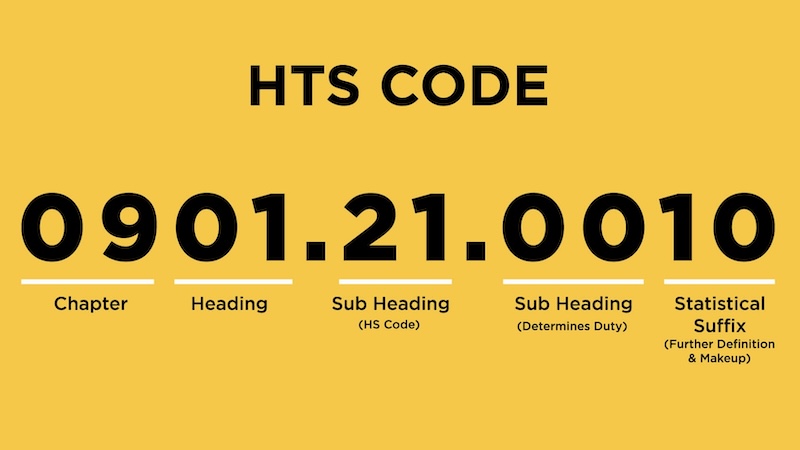
The shared part of any HS code stops at six digits. Those six put your product in the same family everywhere. Everything after them is written by one country, for that country.
China bolts its own digits onto those six, and your country bolts on different ones. China’s tail handles Chinese rebates, controls, and statistics. Copy the whole thing onto your import entry and you are answering a question nobody asked.
Treat those six shared digits as the only overlap between your supplier’s paperwork and yours, and check them anyway. Shared does not mean settled, because two customs authorities can look at the same product and land in different places. If the first six look wrong for what is in the box, the rest of the number is not worth checking.
The Code Is Your Signature, Not the Factory’s
If your name is on the import entry, the classification is yours no matter who typed it. Unpaid duty, penalties, holds, and a bill years later all land on that name. “My supplier gave me this code” has never rescued anybody at a customs counter.
Your shipping term does not decide who owns the classification. That falls to whichever business is named as importer on the entry. Under FOB or EXW it is almost always yours. Under a real DDP arrangement it can be the seller, or someone they appoint. Find out whose name is filed before you assume the risk left your desk.
Your broker files the entry, but your broker does not own the entry. They classify from the description you hand them, so a vague invoice line buys you a vague code, and it comes back to you. The code is one of several things customs clearance from China charges to whoever signs the entry.
The Cheap Code Is the Most Expensive One
Somebody will eventually offer you a code that pays less duty, and that is the moment to slow down. Sometimes it comes from the factory being helpful. Sometimes it comes from a forwarder who wants to win your business on the delivered price.
Low duty on the wrong code is not a saving but a loan. Customs can review entries years after the goods are sold. The bill lands with interest and penalties, long after that money went into stock. Repeat the mistake and slow clearance becomes your normal.
The honest version of the question is worth asking: why does this product pay less than a similar one? If the answer is a real difference in material, function, or presentation, you have a case. If the answer is that the code is cheaper, you have a bill waiting, and US tariffs on Chinese imports are where that argument usually gets tested.
Three Product Facts Do Most of the Work
Classification starts with what the product is made of, what it mainly does, and how it is presented. Not what you call it in your listing, and not what the factory calls it on the invoice. Your country’s tariff rules give the final answer, but these three facts are what those rules get applied to.
Material: a change of alloy, plastic, or fabric blend can move a product to a different code and a different duty rate. This is why metal products from China get reclassified so often, since the grade sits inside the product where nobody looks.
Function: customs cares what the thing mainly does. A multifunction tool gets classified by its main job, not by the longest bullet in your listing.
Presentation: the same goods can classify differently sold loose, sold as a set, or sold with a battery in the box. A retail bundle can be a different product in law even when it is the same product on your shelf.
Ask the Factory for Facts, Not for a Code
Stop asking your supplier for a code, and start asking for a description. They are genuinely expert on the second question and guessing at the first.
Get these in writing before production:
Material breakdown: every material and roughly how much of each, not “metal and plastic”.
Main function: what the product does when a customer uses it.
Composition of the set: what is actually inside the retail box, including cables, batteries, and accessories.
Photographs: of the real product and the real box, not a picture from the catalog.
Those four inputs are what a broker or a customs officer needs to classify anything. They are also the exact facts that belong in the order anyway, which is why classification is a buying job rather than a shipping-week job.
Decide the Code Before You Order, Not Before You Ship
Duty is a cost of the product, not a cost of the shipment. A couple of points of duty can decide whether the product works at all. You can only act on that in the window before the material is locked.
Most people meet their code for the first time when the goods are already made. By then the only options are pay it, or argue it. Put the duty into your numbers at the quote stage and treat it as something you plan around, not a surprise you absorb.
Keep the Code Consistent, and Keep the Reasoning
One story, on every document. The Chinese export declaration carries its own national code, and that is fine. What must match is the product: same material, same function, same model, same contents on the purchase order, the commercial invoice, and the packing list. Give your broker one approved import code and the facts behind it, because customs reads all the papers together.
Write down why you chose the code, not just the code. One page per product: those same four facts, the code, and the reason you picked it. When customs asks in two years, that page is the difference between an answer and a scramble. Sloppy paperwork is among the shipping document mistakes that turn a routine entry into a held one.
Name one person who approves a code change. Otherwise a new factory contact, a junior forwarder, or last shipment’s copy-paste quietly reclassifies your product for you.
FAQ
Q1: Which code is right when two suppliers give me different ones for the same product?
Possibly neither, and the disagreement is useful information. It usually means the product sits near a classification boundary, which is exactly the kind of product worth settling before you order rather than after.
Q2: Does country of origin change the code?
No. The code describes the goods themselves; origin decides which duty rate gets applied to that code. Mixing the two is common, and it leads people to hunt for a “China code” that does not exist.
Q3: Can I reclassify a product whose duty makes it unprofitable?
Sometimes, and it is a fair thing to do at the design stage. Changing a material or splitting a set can land the goods under another heading. The catch is that the product has to really change, because paperwork describing something you did not make is a different problem entirely.
Q4: Can several versions of my product share one code?
Often, but do not assume it. Check any version that changes material, function, capacity, size, or contents, because a color change usually makes no difference while a battery version, a metal version, or a jump in size sometimes does.
Q5: Does the export code on the Chinese paperwork have to match my import code?
No, and expecting them to match is where the confusion starts. They are two declarations to two authorities under two tariff schedules, so a mismatch is normal and is not what gets you in trouble. Filing the wrong import code is.
Q6: Does it matter that the factory used a different code on my second shipment?
Two codes for goods that look identical mean one of two things: the product changed, or one of the entries is wrong. Find out which before the next shipment, because that is a question you want to answer on your own schedule.
Q7: What should I do if I have been using the wrong code for a year?
Do not switch it quietly on your following order, because the change itself is visible. Take the entry history to a customs broker and ask how earlier declarations get corrected in your country. Fixing it before customs asks usually leaves you more options.
Q8: When is it worth asking customs to decide in writing?
When the product is a repeat item, the duty gap between two plausible codes is real money, or both classifications look defensible. Some customs authorities will rule in advance, and the ruling binds them to the product and facts you described. The duty rate on that code can still change.
Conclusion
The factory’s code answers the factory’s question, and you are asking a different one. Get the product facts before the deposit, decide the code while the design can still move, and keep one clean page explaining why.
Those facts are easy to get before the deposit and painful to chase during the shipping week. Pinning them into the order is what purchase management does, on every product you buy.