China Electric Toothbrush Suppliers: What to Check
An electric toothbrush is a motor, a battery, and a waterproof seal, and a supplier who is only strong on two of those three will still cost you the order. Product photos and fast replies tell you nothing about any of the three, so the checks below are the ones that decide whether your fifth batch matches your first.
| Check | What it reveals |
|---|---|
| Business scope and assembly | What they actually build |
| Named component sources | Who supplies the failure points |
| Change approval process | Whether batches stay identical |
| Documents per market | What you can legally sell |
| Problem history | How disputes actually end |
The middle three are the checks buyers skip, and the three that decide whether you reorder.
Work Out What the Company Actually Does
Factory or trader is the wrong question, because both answers cover a wide range. Plenty of traders know their factories well, and plenty of factories buy in motors, cells, and chargers without controlling how those parts change. That gap between who sells and who decides runs through consumer goods sourcing generally, and what you need here is evidence of who controls what goes inside your product.
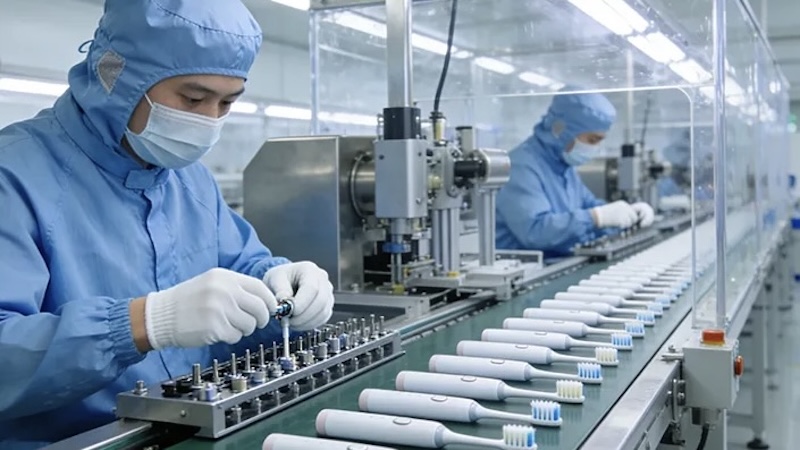
Four things are checkable, and none depend on trust. Ask for the assembly and final test area by video, not the showroom. Ask for the bill of materials with named suppliers for the motor, cell, seal, and charger.
Then ask how a change to any of those parts gets approved. The toothbrush manufacturing base around them is deep, but a supplier who cannot answer those four is not plugged into it.
Running those four checks in Chinese, against the licence and the plant, is exactly what supplier verification covers before you place a first order.
The Paperwork Is Different in Each Market
The United States treats a powered toothbrush as a medical device, and the European Union normally does not. Assuming one set of documents covers both is how buyers lose weeks.
In the US the FDA lists it under 21 CFR 872.6865, product code JEQ, as a Class I device normally exempt from 510(k) premarket notification. Exempt does not mean unregulated: establishment registration, device listing, and labeling still apply, and registration is not product approval. A novel feature, such as a therapeutic claim or a different energy source, can move the product out of that exemption.
In the EU a standard model is a consumer electrical product, not a medical device. It only enters the medical device rules if your intended use or marketing claims put it there, which is a decision you make in the copy.
What normally applies is the electromagnetic compatibility and RoHS legislation, with the radio equipment rules added for Bluetooth models. The low voltage legislation covers a defined voltage band, so the handle and its mains adapter are assessed separately.
The General Product Safety Regulation also requires a responsible person established in the EU, and without one your goods cannot legally be placed on the market. Sort that before production, not when the container is at the port.
Ask for Documents by Name
One word covers four unrelated things, and that is how buyers end up holding paper that proves nothing. For the EU you want the Declaration of Conformity, the technical documentation behind it, and test reports for the standards being claimed.
For the US you want either FCC certification with an FCC ID or a Supplier’s Declaration of Conformity, depending on the design, plus the FDA registration and listing position. Wireless charging can pull in more, so a declaration is not automatically the right route. For the battery you want its UN 38.3 transport summary.
Export history is a screening signal, not a shortcut. A supplier already shipping to your market may have handled these requirements before, but reports are tied to a specific model, applicant, and component set.
Check that the model number, named parts, and applicant on each report match what you are buying. Where a claim has to hold, product testing in China against the named standard beats a certificate with an unfamiliar logo.
What Private Label Actually Covers
The phrase covers three levels of work, and the price gap between them is large. The basic version is your artwork on the box. The next puts your mark on the handle and charging base, through laser engraving or tooling. The top covers custom firmware or a branded app on connected models.
Ask for each level to be priced separately before you talk about unit cost. Anyone who cannot itemize what is customizable is selling a standard product in a printed box, and private label sourcing is where the choice of level actually gets decided.
Component Substitution Is the Risk That Repeats
The failure that damages a brand is not a bad first batch but a good one followed by a quietly cheaper third. A seal changes grade, a motor comes from a different supplier, a cell is swapped for a lower-cost equivalent, and the product looks identical on arrival.
Write the components into the purchase order, not just the product. Name the motor type, the cell capacity and chemistry, the seal material, and the ingress rating, then state that any substitution needs written approval and a physical sample first.
Cells deserve their own line, since lithium-ion batteries from China carry transport and documentation requirements a generic supplier answer does not cover. Substitution disputes are settled by what the paperwork named, not by what both sides remember agreeing.
What to Lock Before the First Order
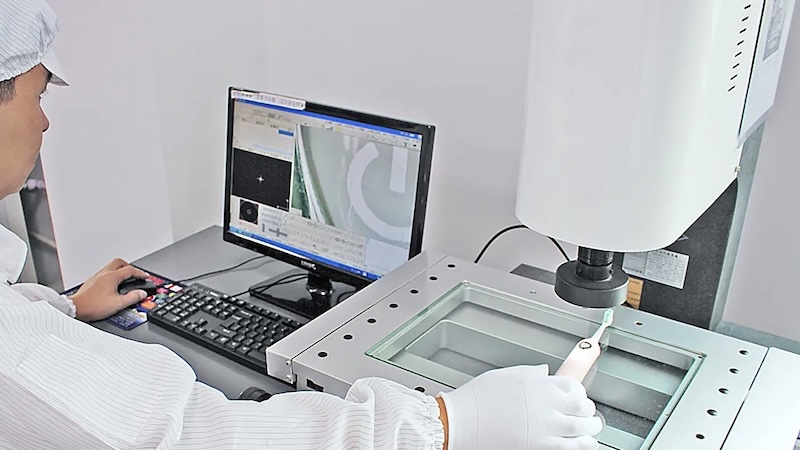
Ask what happens when a batch fails, then verify the answer instead of trusting it. A supplier who has handled disputes describes a process: replacement or credit, an investigation, and a change that stops it recurring. A supplier quality audit before the order confirms the line and test stations exist.
A pre-shipment check against a written inspection checklist confirms this batch matches the approved sample while the balance is unpaid. That scope covers charging, every vibration mode, button response, noise, brush head fit, accessory count, and barcode scanning.
Keep a water check in the batch scope, but know what it proves. A defined spot check catches sealing and assembly problems in that batch, which is worth having. It does not demonstrate the rating you advertise: that claim rests on a type test report for the model, with the handle, the charging base, and the adapter assessed separately.
FAQ
Q1: What is a realistic first-order quantity?
Expect several hundred to a couple of thousand units per model, rising as customization deepens. Order the smallest quantity that tests the product, the supplier, and your listing.
Q2: Should heads and handles come from the same supplier?
Not necessarily, but one party has to own the interface. Lock the drawing, tolerances, materials, and change-control rule in writing, and name who proves that new heads still fit handles already sold.
Q3: What waterproof rating should I write into the spec?
IPX7 is the common expectation for a bathroom device, though it is a market norm and not a legal requirement. Write the rating and its test standard into the spec, and say which parts it covers, since handle, base, and adapter are rated separately.
Q4: If the product carries my brand, who is legally the manufacturer?
In the EU your company is normally treated as the manufacturer when the product is sold under your own name or trademark, which brings the file behind the marking with it. In the US it depends on your role in the FDA system, which could be specification developer, relabeler, or importer, so settle the roles in the contract before production.
Q5: How do I confirm a document is real?
Different documents need different checks. An EU Declaration of Conformity is signed by the manufacturer, so there is no body to call. Check the model, the signing entity, the legislation named, and the standard versions against the supporting reports. An FCC ID, an FDA registration, and a lab report each carry their own number and issuer to verify, and an FDA listing confirms a filing rather than an approval.
Q6: What documents does the battery need for shipping?
Rechargeable models ship as lithium battery cargo, needing the UN 38.3 summary and the right packing and labeling for your mode. Confirm your forwarder has seen those documents before collection, not at the airport.
Q7: Reviews say the product changed. What do I do now?
Pull a retained unit from the earlier batch and compare it physically against a current one before you raise it. A documented difference in a named component is a conversation the supplier has to answer; review wording alone is one they can deflect.
Q8: When should I add a second supplier?
Once the product sells steadily enough that one factory’s schedule or one component decision can stop your revenue. Qualify the second on the same checks, not on price, or you have doubled your exposure instead of halving it.
Conclusion
The supplier who survives your third order is the one with traceability and change control, not the one who impressed you on the first call. That is a judgment you can only make from records of what changed between runs, never from a sample sitting on your desk.
Anyone can pass a first order. What decides the third is whether somebody was checking cells, motors, and brush heads back when nothing looked wrong. Our supplier verification team does that quiet work every month, so a substitution shows up in a report and not in your reviews.