
Manufacturing in China: What’s Changed and What Hasn’t
China manufacturing has shifted dramatically in recent years — tariffs, rising wages, geopolitical tensions. Some of it is real. Some is noise. Buyers who understand what has actually changed make better sourcing decisions than those reacting to headlines.
| Still true | Now requires active management |
|---|---|
| Unmatched supply chain integration | Tariff modeling before ordering |
| Most cost-competitive for complex products | Compliance in the purchase order |
| Technical capability to meet Western standards | Independent quality verification |
| Scale and speed advantages | Stronger factory vetting |
What Has Not Changed
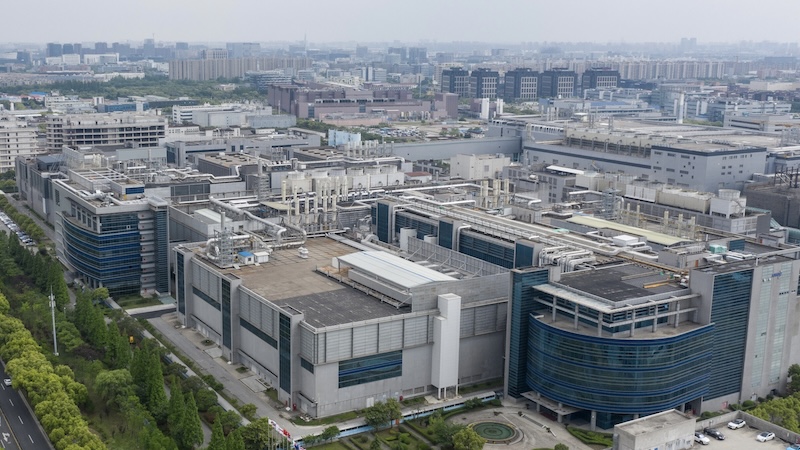
Supply chain integration. Few countries have replicated China’s end-to-end manufacturing ecosystem — raw materials, components, assembly, tooling, and logistics within short distances of each other. China’s manufacturing hubs remain the most concentrated industrial network in the world.
Scale and speed. For many product categories, China still offers a rare ability to move from small test orders to large production runs within months. For businesses responding to demand spikes, this production flexibility has no equivalent elsewhere.
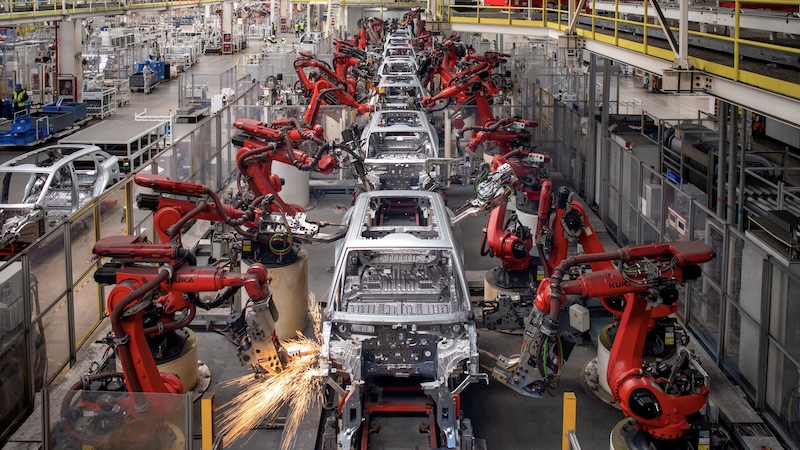
Technical capability. The “cheap but low quality” narrative belongs to 2005. Factories producing for Apple, major apparel brands, and automotive companies for two decades are technically sophisticated. China now has deep expertise in precision components, consumer electronics, medical devices, and advanced textiles. The question is not whether capable factories exist — it is finding the right one and actively managing the relationship to get consistent output.
Cost advantage. Labor costs have risen, but the advantage has not disappeared. Supply chain integration creates efficiencies that competitors in Vietnam, Bangladesh, or Mexico cannot fully replicate for complex, multi-component products.
What Has Changed
Tariffs. For US buyers, Section 301 tariffs added 7.5–25% duties on many product categories since 2018. This is not a reason to abandon China sourcing — it is a reason to model landed cost before placing an order, not after it arrives.
Compliance expectations. Amazon, EU retailers, and US regulators have all raised the bar. Product safety, labeling accuracy, and documentation are now checked before listing — not after customer complaints. Compliance must be specified in the purchase order, confirmed in samples, and verified before shipment. Leaving it until the end is no longer an option for most market-ready products.
Factory polarization. The gap between top-tier and bottom-tier Chinese factories has widened. Good factories are more professional and accessible than ten years ago. Bad factories are better at looking good online. Alibaba Gold Supplier status confirms basic legitimacy — not production capability. Identifying real capability has become harder, not easier.
Supply chain risk awareness. COVID exposed single-source risk. Many brands now want backup suppliers. For most small buyers, this means knowing which products have limited alternative sources and building appropriate inventory buffers.
What Has Become Harder
China is still strong — but sourcing from China is less forgiving than it was ten years ago.
Buyers now manage more variables before placing an order: tariff exposure, product compliance, supplier transparency, quality consistency, documentation accuracy, and backup supplier planning. Each of these was simpler or less critical a decade ago.
The opportunity is still there. The margin for casual sourcing is smaller.
What Buyers Must Now Manage Actively
Quality. It is not automatic. A factory produces excellent quality because someone specified it, monitored it, and enforced it. A pre-shipment inspection before final payment remains essential regardless of factory reputation.
Communication. The 8–12 hour time zone gap has not changed. Buyers who structure communication well — clear milestone confirmations, production photos at key stages, weekly check-ins — get significantly better results than those who only appear during problems. Factories deprioritize buyers who are difficult to reach.
Stakes. A failed $5,000 order in 2010 was a painful lesson. In 2026, for an Amazon seller whose ranking depends on review velocity, or a brand with committed delivery dates, a quality failure sets back a product launch by months — not weeks. The cost of getting sourcing wrong has increased. So has the value of getting due diligence right before committing.
Assessing real production capability before committing — not relying on platform badges — matters more than it did ten years ago. So does verifying suppliers before the first order.
Which Products Still Fit China Best
China remains especially strong for products that require multiple components, tooling or molds, design iteration, stable supplier coordination, and medium to large production runs.
Categories where China holds a clear advantage: consumer electronics, hardware, home appliances, precision metal parts, plastic products, outdoor equipment, packaging-heavy consumer goods, and private label products.
For very simple labor-intensive goods, buyers may find Vietnam, India, Bangladesh, or Mexico competitive on price. But for products where many suppliers and processes come together in a single finished item, China’s ecosystem is still the most efficient option available.
The Apple Example
No company illustrates this better than Apple.
Under pressure from tariffs and geopolitical risk, Apple has shifted some production to India. iPhone 15 and 16 models are now partly assembled there. Vietnam handles some AirPods. The diversification is real and deliberate.
Much of Apple’s most complex supply chain work still depends on the China-centered ecosystem — especially components, engineering support, supplier coordination, and high-volume production know-how. Many of Apple’s major manufacturing partners in China still maintain deep operations there, even as they diversify elsewhere.
Apple’s strategy is not “leave China.” It is “keep the complex parts in China, shift the simpler parts elsewhere for risk mitigation.”
For most buyers sourcing consumer electronics, industrial hardware, or precision goods, the lesson is the same: China often remains the strongest option for technically demanding production. What has changed is the need for smarter risk management around it.
What Buyers Should Do Differently Now
- Calculate landed cost before choosing a supplier. Factor in tariffs, freight, inspection, and compliance costs — not just factory price.
- Put compliance requirements in the purchase order. Do not solve this after the goods are made.
- Verify factory capability, not just company legitimacy. A registered business is not the same as a capable manufacturer.
- Use pre-shipment inspection as standard, not optional. Quality is not self-enforcing.
- Build backup plans for key products. Know which suppliers and categories have limited alternatives, and plan accordingly.
FAQ
Q1. Has Chinese manufacturing quality genuinely improved?
Yes, at the top end. Average quality has improved significantly since 2010. But improvement is not universal — it requires selecting the right factory and managing quality actively.
Q2. Should I move production out of China because of tariffs?
Evaluate based on your specific product’s tariff classification and total landed cost, not general sentiment. Alternative locations often have lower labor costs but lack supply chain integration, leading to longer lead times and less flexibility.
Q3. How do I know if a factory’s capability is real or just good marketing?
Request a third-party factory audit before a first order. Ask for buyer references in your target market. Test production samples against your golden sample. Platform badges are easy to obtain; consistent quality across production runs is not.
Q4. Is the time zone difference still a major sourcing challenge?
It is a reality that structured communication manages effectively. Many experienced buyers send detailed questions at end of day and schedule weekly production calls. The time zone is a constraint — not an insurmountable barrier.
Q5. How should I adjust my supply chain planning given recent tariff changes?
Model full landed cost — factory price, freight, duties, and destination fees — before selecting a product. Confirm your product’s tariff classification with a customs broker before ordering. Some categories have meaningful duty exposure; others are less affected.
Q6. Is physical factory verification still necessary?
For larger first orders or any order with significant quality risk, yes. Platform verification confirms legitimacy, not production capability. A factory visit or third-party audit is the most reliable verification.
Q7. Is China still the right choice for electronics manufacturing?
For most consumer electronics, yes. The Shenzhen ecosystem — component access, prototyping speed, manufacturing depth — remains difficult to replicate. Some buyers are diversifying for specific sub-categories, but Guangdong remains the primary option for full product development.
Q8. What should I do differently now compared to ten years ago?
Model tariffs before selecting a product. Specify compliance requirements in the purchase order. Run pre-shipment inspection as a standard step. Negotiate MOQs on first orders to test the factory before committing to volume. Build more buffer time into production timelines.
Conclusion
China manufacturing remains one of the most capable, integrated, and scalable production bases in the world for many product categories. The advantages have not disappeared. What has changed is that capturing them requires more active management — of quality, compliance, communication, and cost — than it did before.
For importers who want professional support managing China manufacturing coordination, see manufacturing control services.