Inspection Checklist: If You Don’t Write It, They Will
The checklist is the document that turns your spec into a pass-or-fail decision, and if you do not write it, the factory’s version of good enough becomes your standard. An inspector without your rules does not stop working. They judge your goods against somebody else’s.
| If you write it | If you don’t |
|---|---|
| Your defect grades | The factory’s grades |
| Photos of what fails | Opinions on the day |
| A pass worth having | A pass you cannot use |
| Agreed rework terms | A cost argument later |
The checklist costs little to prepare and shapes every inspection that follows.
The Inspector Reads a Document, Not Your Mind
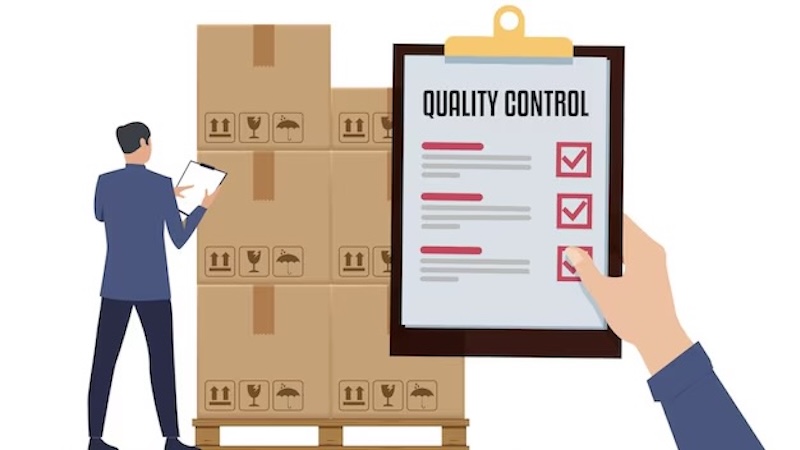
Third-party inspectors check what they are given, in the time they are booked for. Send nothing and they fall back on a standard form: count the cartons, look at the goods, note anything obvious. That form was not written for your product, your market, or the defect that gets your listing pulled.
The gap is not about skill, and hiring a better firm does not close it. Even the best inspection company in China cannot know that your customers send the item back over a crooked logo.
Sampling rules do not fill the hole either. An AQL standard plan sets how many units the inspector opens and how many finds in that sample tip the batch from accept to reject. It never says what counts as a fault, and that part is yours.
Turning “it should look right” into a line an inspector can pass or fail is the first thing purchase management does with a new order.
Whether an order earns one visit or three, the quality control in China plan is only as good as the standard every visit is measured against.
Grade the Defects by What They Cost You
Every defect belongs in one of three boxes, and safety, law, and intended use decide the top box before commercial judgment gets a say. Write the three once, in plain language, and they carry across every order you place.
Critical: someone could get hurt, or you cannot legally sell it. Sharp edges, exposed wiring, a missing safety warning. These never get a discount and never get shipped.
Major: the customer notices and sends it back. Function that fails, a wrong color, packaging that arrives crushed, or label text in the wrong market’s language, as long as the warnings, ratings, and legal marks are still correct. Get those wrong and it belongs in the box above.
Minor: real, but inside your tolerance. A mark inside the base, a slight glue trace where nothing shows, the kind of flaw a customer would generally accept if they ever noticed it.
The grade decides the money, which is why the factory should never be the one choosing it. A minor fault is judged against the minor limit, so the sample can stay inside it and the batch passes. The same fault graded major sits under a tighter limit and can fail the lot, trigger rework, or hold your balance payment.
That pass is a decision about the units opened, not proof about the rest. Agree the grades and the fix before production, or a failed inspection in China becomes a debate about wording rather than a decision about goods.
One desk lamp can carry all three. A live wire near the metal base is critical, a switch that dies after a few dozen clicks is major, and a tool mark hidden under the base plate is minor. The grade you wrote in advance decides which of the three you end up paying for.
“Minor Scratch” Is Not a Standard
Appearance is where checklists collapse, because everyone assumes their own eyes are the standard. The same scratch is minor under a workbench light and major at arm’s length in a shop.
Four lines fix that, and they take one afternoon to write. Set the viewing distance and the light, meaning the arm’s length a customer holds the product at under normal room light, then split the surfaces into the face the customer sees, the sides, and the parts nobody looks at.
Say how big a mark has to be before it counts and how many marks make a pattern, then stop describing and start showing: photos of what passes and what fails, and an approved sample marked up with the zones.
Make the Factory Sign It Before Production
A checklist the factory has never seen is worth less to you than one it has agreed to. Send it before production, ask for written acceptance, and read what comes back: a factory that objects to a tolerance in week one is doing you a favor, and one that signs everything without comment has usually not read it.
Then put the same document in the purchase order, and remember that attaching a file does not by itself make it binding. Name the version and its date, define what a pass is, and set who does the rework, who carries the re-check cost, and which open findings hold the balance payment.
Say what each document controls rather than ranking one above the rest. Drawings hold the dimensions, the approved sample holds look and finish, and the list holds what gets inspected and where the pass line sits, which is the leverage a pre-shipment inspection protects. Fix any conflict before production, and require your written approval for any departure.
Write Less Than You Think
A checklist that lists everything hides the things that matter, because inspectors work through what you gave them in the hours you booked. Anything that stops the sale goes first: safety, legality, the barcode, the plug, the size on the label. Then the things that come back as returns.
Then agree the sampling, the tests, and the man-days that cover that list. If the hours do not stretch, cut the low-value checks yourself rather than leaving an inspector to drop them on the day.
And add the fault you have already paid for. Every defect that came back on your last three orders belongs on the list by name, with the photo, and shipping marks on cartons are the classic omission: seconds to check, expensive to sort out later.
FAQ
Q1: Do I really need an inspection checklist for a simple product?
Simple products fail on labels, quantities, and packing, which are the cheapest faults to catch and the most annoying to fix. A one-page list is enough, and one page is not the same as none.
Q2: Can I use the factory’s own checklist?
Use it as a starting point, not as your standard. It will be accurate about how they build and silent about how you sell, which is the half you actually need.
Q3: What language should it be written in?
Yours for the record, Chinese for the floor, issued as one document with the same version number and date on both. Say which language governs if the translations ever disagree, or the line and the purchase order quietly end up holding different standards.
Q4: Which one wins when the checklist and the approved sample disagree?
Neither wins outright, because they answer different questions: the sample shows what the finish should look like, while the list says which features get examined and at what limit. Settle any real contradiction before production rather than leaving the factory to pick whichever reading suits it.
Q5: Should the checklist say what happens when goods fail it?
Yes, and this is the line most buyers leave out. Who reworks, who pays for the re-inspection, and that nothing ships without your written release are worth more than another page of checkpoints.
Q6: Can I change the checklist once production has started?
You can add a check to gather information. Anything that changes what passes, who reworks, or who pays needs written agreement from both sides, because the factory priced the order against the version it signed.
Q7: Can I reject the lot over something that was not on the checklist?
Two questions, not one: the inspector cannot score it against a limit the list never set, while you can still reject on the purchase order, the drawings, the approved sample, the stated use, or anything unsafe to sell. Have it written up and photographed, then add it to the list before the next order.
Q8: Who is right when the factory’s own QC passes goods my inspector failed?
The signed standard settles which rules apply, not who read the goods correctly. Compare the two samples, the methods, and the defect photographs, and book a targeted re-check before you hold money on a result nobody can reproduce.
Conclusion
Somebody is going to define what your goods have to be, and the only question is whether that person is you or the factory quoting you. It is the cheapest document in the order and the one every other quality decision gets judged against.
Leave the word acceptable undefined and the cheapest available definition is the one you get. We write yours into the order and hold the line to it, through purchase management, so the inspector arrives with your standard instead of theirs.