
Failed Inspection in China: What to Do Before You Pay
A failed inspection is a decision point, not a verdict, and the unpaid balance is your strongest leverage while you make it. Get the defect data first, work out whether the fault is fixable or fatal, then decide. Once the money moves, your options move with it.
| What failed | Your realistic move |
|---|---|
| Labels, packaging, inserts | Rework, then re-inspect |
| Cosmetic, channel allows it | Rework, or agreed discount |
| Function or fit | Rework, sort, or reject |
| Safety or legal | Stop, isolate, re-verify |
| Same fault, third time | Escalate, pause, or move |
Four of those five moves depend on the factory cooperating, and every one of them depends on the balance still being unpaid.
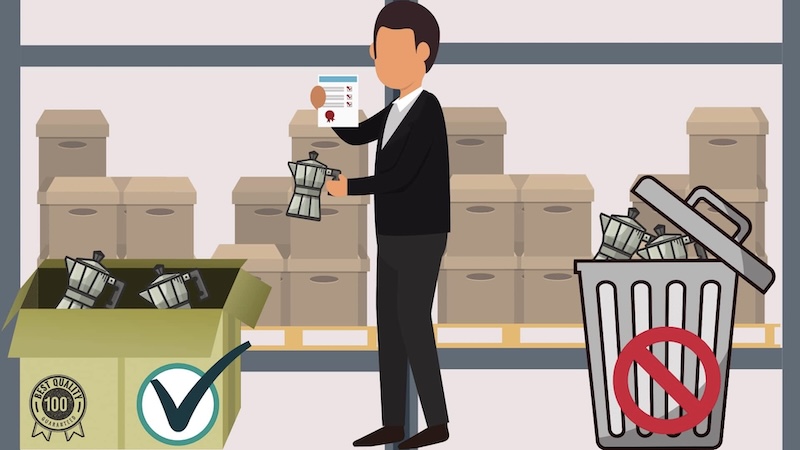
The First Hour: Get Data, Not an Argument
Ask for the full inspection file, not the one-line result. You want defect counts, the sample size, which cartons they came from, timestamps, and photos that show both the fault and how widespread it is. A report that says the batch failed, without that detail, is not something you can act on or argue from.
Then check the findings against your own standard rather than the factory’s opinion. Every fault should map to a defect class you agreed before production, and the pass or fail should follow the sampling plan named in your purchase order. A misclassified fault is what turns a fixable batch into a fight.
Say one thing to the supplier the same day: the balance is on hold until a written fix is agreed. You do not need a plan yet. You need a record, and you need the factory to know the money has stopped moving before they start proposing shortcuts.
What the next order now needs in inspection days is a quality control in China question, and the answer rarely stays where it was.
Turning that answer into somebody actually standing on the line next month is manufacturing control work.
Can the Batch Be Fixed?
Sort the faults by whether a repair is realistic, not by what the defect is called. Labels, inserts, loose screws, dirty surfaces, and repackable cartons can be put right on almost any product.
A function or dimension fault can go either way, and three questions settle it: can the part be reached without damaging the rest, can every affected unit be found, and does a re-check confirm the repair held.
Unsafe materials sit outside that judgment. Hold the whole traceable batch rather than the pieces the inspector happened to open, because a material problem does not show on the surface, and testing the same goods again does not make them safe. The purchase records and a test on the held stock are what draw the real boundary.
The route back is a compliant material and a rebuilt product, with product testing in China run on the corrected build, not on the units that failed.
Ask the factory to name the cause, not just the remedy. How the defect is spread only tells you where to look: evenly across every carton suggests process control, while a run of affected cartons suggests one shift, batch, or setting. Production times, batch numbers, machine records, and subcontractor logs are what turn that hint into a cause, and the cause decides how far the extra sampling goes.
Your Three Options, and What Each Really Costs
Rework is the default when the fault is correctable and you still have time. The factory sorts, fixes, and repacks, then the batch goes through inspection again. The cost is time, a second visit, and the risk that repairs create fresh faults in packing or carton counts. Settle the re-inspection cost and who pays it in the purchase order, long before a batch ever fails.
A discount keeps the schedule, but it holds up only on four conditions. The channel has to tolerate the fault, your listing and packaging still have to describe the goods honestly, the return risk has to be small enough to price, and you accept the fault in writing. Miss one and the price cut means paying twice, once at the invoice and again in returns.
Rejection is for severe, hidden, or repeated faults. You lose the schedule, but shipping goods you cannot sell costs the freight, the duty, the storage, the returns, and the marketplace ranking, and those quietly outgrow the order itself.
What the Unpaid Balance Buys You
An unpaid balance is the strongest lever you have, though what you can actually enforce still rests on the contract, the specification, and the acceptance terms you agreed. It is why a pre-shipment inspection sits where it does, and why rework, discounts, and re-checks turn into things you ask for once the transfer clears.
So do not pay against a promise. Two sentences cost buyers the most here: ship now and we will fix it later, and we will make it up on the next order. Both arrive exactly when your deadline is tightest.
Put the remedy in writing before anything moves. What gets fixed, how, by when, and that nothing ships until it passes. A written plan turns a stalled order into a schedule you can manage.
The Four Objections You Will Hear
The inspector was too strict. Point back to the inspection checklist the factory accepted before production. If they agreed to it then, the disagreement is with the standard they signed rather than with the inspector who applied it.
Most of the units are fine. Probably true, and irrelevant, because a batch fails on the agreed limit rather than on the share of good pieces.
But the approved sample had the same issue. Check whether the fault was visible in that sample and formally accepted, because one defect nobody noticed does not rewrite the specification.
This defect rate is normal for the industry. Normal is not the same as agreed, and the purchase order limit still cannot override safety law, mandatory compliance rules, or a specification you approved.
Stopping the Next One
A second fail with the same cause stops being about the batch and starts being about the supplier. Ask whether the cause sat in the materials, the assembly, the packing, or the factory’s own checks, and whether the answer changes each time you ask.
Move the check earlier so the next fail is cheaper. Catching a drift mid-run with a during production inspection costs the same day rate but arrives while the fix is still small, instead of when the container is booked.
And if the fails keep coming, the problem is not the inspection. A factory that cannot hold your standard will not be fixed by checking it harder, and a supplier quality audit will usually tell you that faster than a third failed report.

FAQ
Q1: Can I bring in a second inspection company to verify the fail?
Yes, when the first report is unclear, the classification is disputed, or the result sits right on the rejection limit. Use the second firm for an independent read, not to shop for a pass.
Q2: Should the factory sort the whole lot or just the failed cartons?
Usually all of it. A narrower sort is fine only when production records show the fault sits inside a traceable run or carton range.
Q3: Should the re-check look only at the failed defects?
No. It should confirm the fixes and repeat the checks that passed the first time, since a re-check aimed only at the original defects can pass a batch that changed somewhere else.
Q4: How do I know the factory actually fixed it?
Photos of repaired units prove nothing on their own. Ask for the corrected quantity, which units were pulled and put right, and a re-inspection that confirms it before anything ships.
Q5: Can I ship the good units now when the goods are urgent?
Sometimes, but only if the passing units can be identified reliably and separated under supervision. Write down which faults you accepted and which stay grounds for non-payment, or the concession quietly becomes the new standard.
Q6: What do I do with a container I already booked?
Tell the forwarder the day the lot fails, not the day it was meant to sail. Ask how long the booking can be pushed back, what the change costs, and whether you keep the rate.
Q7: Is the factory being fair when it blames the defects on my deadline?
Rarely. A tight schedule does not transfer quality responsibility unless you approved reduced checks or changed the specification late, and even then it is a lesson rather than a reason to accept the goods.
Q8: What if the factory refuses a re-inspection?
Get the refusal in writing, then check what your purchase order says. You can hold payment with confidence when the order makes access, a passing result, or a re-inspection a condition of payment, and with much less when it does not.
Conclusion
The expensive version of a failed batch is the fast one. Money released early, an argument started before the defect data arrives, and goods shipped on a verbal assurance all cost far more than the days they save.
The best version of this process is the one you never run, because the fault was caught while it was still a hundred pieces instead of the whole order. We stay on the line through manufacturing control, so the conversation is about a fix rather than about your balance payment.