1688 vs Alibaba: Which Is Better for Importers?
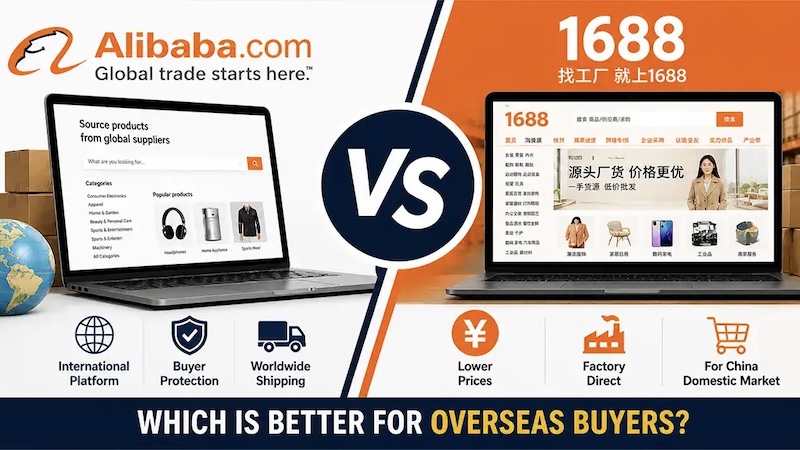
For most importers, Alibaba is the safer platform, and 1688 only wins when you have local support inside China. Both sites belong to the same parent company, yet they are built for two completely different buyers.
| What differs | 1688, domestic site | Alibaba, export site |
|---|---|---|
| Built for | China domestic buyers | Overseas importers |
| Listing language | Mostly Chinese | English throughout |
| Price level | Domestic pricing | Export pricing, often higher |
| Typical minimum | Set by supplier | Set by supplier |
| Payment options | Mainly domestic methods | Cards, wire, Alipay |
| Buyer protection | Domestic channels only | Depends on order terms |
| Export handling | Needs local support | Varies by supplier |
| Best suited to | Buyers with an agent | First-time importers |
1688 shows the cheaper number, but Alibaba is the one you can run on your own from abroad.
Same Company, Two Different Marketplaces
1688 and Alibaba are sister platforms under Alibaba Group, not two versions of the same website. Plenty of suppliers sell on both: the domestic listing shows a bare price, while the export listing may cost more because it carries English communication, export experience, and documentation help, none of it guaranteed until you confirm it. That split runs through the main Chinese wholesale websites as well.
Telling a real factory listing from a reseller, and working out what the domestic price leaves out, is where supplier sourcing starts for buyers who do not read Chinese.
Why 1688 Looks So Much Cheaper
The lower price on 1688 is real, but it is a domestic price rather than a delivered-to-you price. Suppliers quote against local competition and local logistics, so the sticker looks aggressive on screen and incomplete on arrival.
Once you add the missing pieces, the gap narrows fast and sometimes closes. A cheaper unit price means little if you also need a 1688 sourcing agent and a workable way to pay at all.
The Real Barriers: Language, Payment, and Export
Language is the first wall, and machine translation only gets you partway over it. Auto-translation is fine for browsing, but it garbles tolerances, materials, and customization terms, which is exactly where a small wording gap turns into a wrong shipment.
Pull the numbers out instead, since dimensions, weight, and packing counts read the same in any language. Material names, grades, and formulations do not, so have the seller confirm those in writing rather than trusting a translated description.
Payment is the second wall. 1688 is built around Alipay and local bank transfers, and many suppliers have no clean way to take an overseas card or wire.
Alibaba supports international cards and bank transfers, and Trade Assurance attaches to a specific order rather than to the platform. Check that the specific order carries it, what amount is covered, and what the order says about specification, dates, and disputes, since the platform never inspects your goods and anything outside those lines sits outside the protection.
If an inspection result is meant to decide whether the balance is released, write that into the order arrangement before you pay. Even so, the risks of buying on Alibaba stay easier to contain than the payment gap on the domestic side.
A cross-border option now exists, but it stays narrow. World Pay, co-developed by 1688 and WorldFirst, lets buyers in select markets pay in their own currency without a Chinese bank account. Cross-border payment channels change often, so confirm your country, currency, and account eligibility before you settle on a supplier.
Export handling is the third wall, and beginners underestimate it. A 1688 seller usually ships to a Chinese address and considers the job done, which leaves getting those goods inspected, combined, and out of the country on you. A few listings now plug into cross-border services, but the selection is thin and not a default route for most importers.
Minimum Orders: Where Each Platform Wins
1688 tends to allow much smaller minimum orders because it serves domestic retailers who reorder often. You can sometimes buy a single carton, or even a few pieces, which makes it tempting for testing a product. The catch is that per-unit shipping on a tiny order can wipe out the discount you came for.
Alibaba minimums are set by each supplier rather than by the platform, and many will run a small trial batch at a higher unit price. Custom work and heavy factory involvement push the number up, standard stock items pull it down, so ask rather than assume.
A small run of a simple stock item can suit 1688, while a custom or first-time order usually belongs on Alibaba. Either way, verified suppliers on Alibaba still need a proper check, and supplier identity, quote, and order need separate confirmation on each platform.
Compare the Two on the Same Basis
A platform price only means something once both sides quote the same job. Send the identical specification, quantity, packing, and delivery point to each supplier, and ask for the price against that sheet rather than against their standard listing.
Then finish the 1688 number yourself. Add domestic freight, the agent fee, inspection, combining parcels, international freight, and the payment charges, and set that total beside the Alibaba quote. The ranking flips often enough that the arithmetic is worth doing on every order.
Which Platform Should You Actually Use?
Most first import orders belong on the export platform, and ordering from Alibaba gives you a clean baseline before you chase deeper discounts. A first-timer with a reliable agent buying simple stock items can start on 1688 instead. Volume buyers with help inside China should price both routes, since customization, export paperwork, and service fees can still leave the export platform cheaper.
Many importers stop treating this as an either-or once they scale, keeping both open and sourcing some items where the export path is easy and others where the domestic price wins. If you are still comparing marketplaces, Alibaba vs AliExpress and buying from Taobao cover where each of those fits.
FAQ
Q1: What happens to my order during Chinese New Year?
Factories close for weeks and the backlog runs well past the reopening. Work backwards from the current year’s shutdown dates and fix production and shipping in writing before you pay.
Q2: Can I get samples from a 1688 seller before committing?
Usually, though the sample can be charged at retail price or carry a setup fee; only the domestic delivery is cheap. Budget for a second sample after any change.
Q3: Are some products only available on 1688 and never on Alibaba?
Yes, since many domestic factories and niche categories never intended to export. For those, the domestic platform is the only direct route.
Q4: Does 1688 show supplier ratings I can actually trust?
It shows trading history, sales volume, and whether a deposit is posted against complaints. Those say the shop is active, not that it can build your product, so use them only to shorten a list.
Q5: Can I mix several 1688 suppliers into one shipment?
Yes, and that is the main reason to use a domestic address. Have each parcel checked before repacking, because a shortage is hard to trace once cartons are combined.
Q6: Can I use my Alibaba account to sign in to 1688?
No, they are separate accounts, and the rules for overseas registration and payment change, so check the current ones first. If you do order through an agent’s account, agree who the contracting party is and where a refund lands.
Q7: Do 1688 suppliers issue export invoices or customs paperwork?
Often not, since Chinese tax documents cannot by themselves satisfy import clearance, though they do evidence the purchase and its price. Whoever exports produces the commercial invoice and packing list, so settle that role before you order.
Q8: Does using an agent stop me dealing with the factory directly?
It should not. Keep the technical conversation open with the maker while the agent handles payment, combining, and export, and refuse any setup where you never learn which factory built your goods.
Conclusion
The platform you pick is really a decision about how much of the work you want to keep. Alibaba prices in English communication and the option of platform protection, neither of which comes automatically, while 1688 hands the whole list back and discounts the goods accordingly.
A domestic listing is not an export order. We cover the part in between, and supplier sourcing on 1688 means confirming the maker, combining the parcels, and getting the goods out of China.