Electrical Product Compliance for US and EU Importers
Electrical goods are the category where a shipment can be perfect and still be unsellable. The evidence belongs to a market rather than to a product, so the same charger, panel, or light fitting needs a different file in the United States than in Europe.
| Product | Usually Needs |
|---|---|
| Solar panels | Safety and performance testing |
| LED lighting | Safety, interference, materials data |
| Batteries and storage | Cell and system safety tests |
| EV chargers | Safety plus installation approval |
| Cables | Fire and wiring-code ratings |
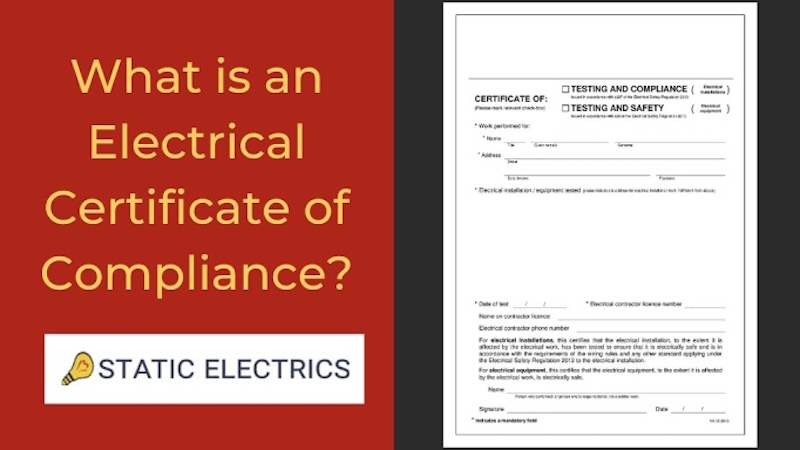
Final approvals do not transfer between the two markets, though the test evidence underneath them often can.
The Two Systems Work Differently
Europe lets you declare compliance, provided somebody can prove it. Which rules apply depends on the product, its voltage, whether it has a radio, and where it gets used. Batteries, cables, modules, and light fittings each pick up frameworks of their own. The combination you meet most often is electrical safety, interference testing, RoHS limits on materials such as lead, and radio rules for anything wireless.
The United States has no single mark that covers everything. Radio transmitters, and many digital devices that count as unintentional radiators, need authorization from the communications regulator. Energy rules apply to many products, and consumer product safety sits with its own agency.
Knowing which of those apply to your exact model, before a factory quotes on it, is where quality control starts on an electrical product.
What buyers call certification is usually a listing from a testing laboratory, which is not always a legal requirement. Whether a listing from a recognized laboratory such as UL or ETL is mandatory varies by product type, installation, workplace rules, and the local electrical code.
For mains-powered goods, permanent installations, and anything going into a workplace, it is close to unavoidable commercially, which is the pattern across energy and electrical products. Such a product can be lawful to import and impossible to sell.
Since July 2026, American importers file more of that evidence up front. Consumer products covered by the safety agency’s rules now need certificate data submitted electronically to customs at the time of entry, rather than produced later on request. Missing data is a customs problem, not a paperwork problem.
Europe Needs Somebody Inside the EU
For CE-marked electrical goods, an EU-based economic operator has been required since July 2021. That party is named on the product or its documents, holds the declaration of conformity, and answers to the authorities who police the market.
The consumer product rules widened that duty in December 2024. The General Product Safety Regulation covers the safety risks that sector rules leave open, and it also expects an EU-established operator behind the product. In most cases the same company can carry both roles rather than a second one being appointed.
A factory in China cannot fill either role. It has to be your own EU entity, your importer, an appointed representative, or in some cases an EU fulfillment service provider. This is the requirement that catches sellers shipping direct to European consumers.
Who Signs, and What You Must Hold
The manufacturer signs the EU declaration and applies the CE mark, and that manufacturer is often the Chinese factory. Your job as importer is to check that work was done, keep a copy of the declaration, confirm the marking and labeling, and add your own name and address.
Putting your brand on the product changes your position entirely. Sell it under your own name, or modify it in a way that affects compliance, and Europe treats you as the manufacturer. The safety assessment and the evidence file become yours.
A supplier’s test report belongs to the supplier and to the exact model it names. It can support your file where the laboratory is competent and the tests are the right ones, and it protects nobody when it was written for a neighboring model.
Three questions settle most documents:
Who commissioned it: the factory, a component maker, or another customer.
Which laboratory issued it: and whether that lab is recognized for the standard shown.
What it covers: your exact model, or something from the same range.
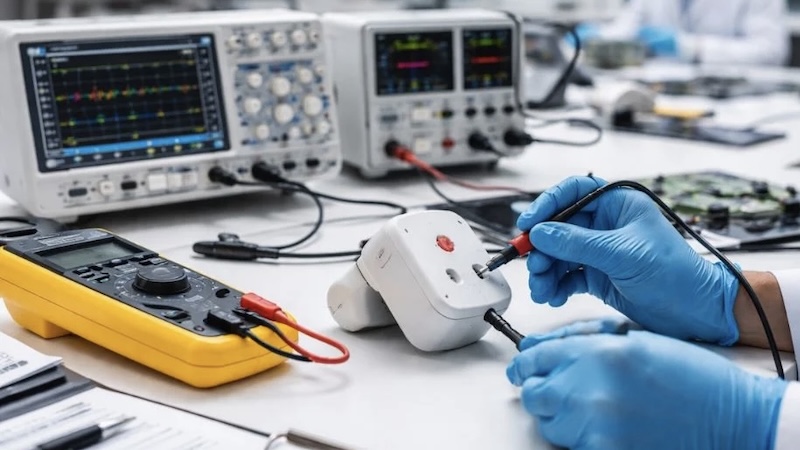
Four changes break a file more often than any others. A different power supply or driver, a different cell or battery pack, a software update that alters how the radio behaves, and a material substitution that undoes the RoHS declaration. Catching them takes three separate checks: read the documents, run product testing in China on sampled units, then inspect production against the components the file names.
What Each Category Actually Needs
Solar panels: modules are assessed for both electrical safety and performance, so expect internationally recognized module testing, plus a laboratory listing for the United States. Warranty length is a commercial promise, not a compliance document. The wider buying checks sit in the guide to sourcing solar panels.
LED lighting: safety, interference, and materials restrictions apply across Europe. Energy labeling attaches to light sources, and a fitting that meets that definition still needs a label and database registration. The United States adds a laboratory listing and its own efficiency rules for many lamp types. The driver is usually where a compliant fitting turns non-compliant, as the guide to importing LED lights sets out.
Batteries and storage: cells, packs, and complete systems are assessed separately, and a cell certificate never covers the pack built around it. Europe’s battery rules bring labeling, material declarations, and recycling duties in stages through 2026 and 2027. Confirm what applies on your shipping date rather than assuming everything is already live.
EV chargers: these carry product safety and installation consequences together, so a unit that cannot be approved for local installation is unusable even where importing it is legal. Connected models bring radio and security requirements with them.
Cables: cable built into a building is treated in Europe like a building material, graded on how it behaves in a fire. The United States works from approved cable types tied to the wiring code. What the wire is made of, and how thick the copper is, are the two claims worth checking yourself.
The Document Set Worth Demanding
Ask for the file before the deposit, not before the shipment. Suppliers who cannot produce it in a week rarely produce it in a day, and a factory quoting cheaply because nothing was ever tested becomes obvious at this point.
| Ask For | Why It Matters |
|---|---|
| Test reports | Show scope, lab, and date |
| Model list | Confirms your exact version |
| Component list | Driver, cell, connector origin |
| Materials declaration | Backs the RoHS claim |
| Label artwork | Marking, ratings, contact details |
Write the requirement into the order. Naming the standards, the model, and the documents in the China purchase order turns compliance into a delivery condition rather than a favor. It also gives you a remedy when a substitution appears.
Separate what documents prove from what a factory visit proves. A supplier quality audit tells you whether the plant has the systems and controls to build consistently, which is a different question from whether the finished product meets a standard.
Marketplace rules sit on top, not instead. Platform requirements are their own layer of evidence, covered in the guide to the Amazon compliance check, and clearing them does not mean a regulator is satisfied.
FAQ
Q1: How early should compliance testing start on a new project?
Before the tooling is cut, not after the first production run. Testing a pre-production sample leaves room to change a component or a marking cheaply, while a failure found on finished stock means rework or scrap.
Q2: A supplier says its goods are “UL certified.” How do I check?
Ask for the file number and look it up in the laboratory’s own online directory, which shows the holder, the standard, and the covered models. A mark printed on a carton proves nothing by itself.
Q3: How long do test reports stay valid?
There is no universal expiry, but a report describes a product at a moment in time and stops being useful once the product changes. Standards get updated too, so an old report may point to a version that no longer applies.
Q4: When do the EU battery rules actually apply to my shipment?
They arrive in stages rather than all at once, with general labeling, digital identifiers, and passport duties phasing in across 2026 and 2027. Check the requirement against your shipping date and product type rather than against the regulation as a whole.
Q5: What if a certificate turns out to be borrowed or forged?
The obligation stays with you, because evidence that cannot be verified counts as no evidence at all, and the goods can be detained or pulled from sale. Check the file number in the issuing body’s own directory before the deposit rather than after the container is booked.
Q6: What identification has to travel with the goods in Europe?
The CE mark, ratings, and safety markings belong on the product or its rating plate, moving to the packaging and documents only where that is genuinely not possible. Manufacturer and importer details follow similar rules, while the consumer-product responsible person can also be named on the parcel.
Q7: Do I need testing for a small commercial trial order?
If the goods will be sold, the obligation does not scale with quantity, so a hundred units carry the same requirements as ten thousand. Samples brought in purely for internal evaluation and never placed on the market are a different case.
Q8: What happens when an authority asks for the file?
You are expected to produce it quickly, and in Europe the EU economic operator is the contact point, or the responsible person where the goods are consumer products. Keeping reports, declarations, and label artwork version-matched to each shipment is what makes that possible.
Conclusion
Electrical compliance is not paperwork collected at the end of an order; it is a set of decisions made before tooling and enforced through the purchase order. Establish what each market requires, confirm who signs what, and check that the file describes the model you are actually shipping.
A compliance file describes one sample built on one day, and the container holds five thousand units built later by different people. We check the goods against the file rather than against a photo, through quality control, because the certificate is only worth what the production run has in common with it.