
Power Banks from China: Real Capacity and Buyer Risks
Power banks are one of the easiest products to buy from China and one of the easiest to lose money on. The printed capacity is what suppliers inflate first. A bank that delivers far less usable energy than its label implies generates returns, bad reviews, and a listing that never recovers. Without proper testing, much of it stays hidden until the goods reach customers.
| The Risk | Where It Bites |
|---|---|
| Overstated capacity | Returns and bad reviews |
| Unapproved or low-grade cells | Failures and safety claims |
| Weak fast charging | Feature does not work |
| Missing certification | Blocked from marketplaces |
| Air shipping limits | Delays and freight cost |
Every one of these is cheap to check before the order and expensive to discover after it.
The Capacity Number Almost Everyone Gets Wrong
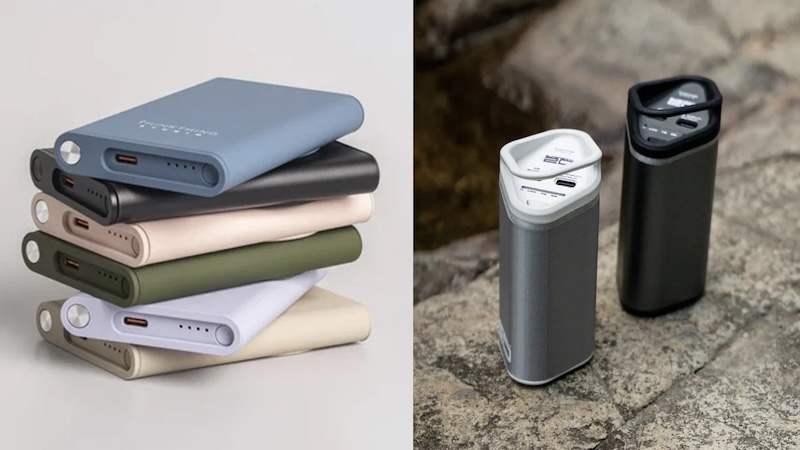
The mAh figure on the shell describes the cells inside, not the energy your customer actually receives. Cells are rated at a low voltage, and stepping that up to what a phone needs loses energy on the way. Even an honest 20,000mAh bank delivers far fewer usable charges than the headline implies.
Dishonest suppliers start from that confusion and make it worse. Some print a number the cells cannot reach, others count capacity the electronics can never deliver. The buyer finds out when reviews say the product dies halfway through its promised charges.
Compare energy, not mAh. Ask for the nominal cell energy in watt-hours and the measured usable output in watt-hours. Those two figures describe what you are actually selling. A sample checked against both is the most valuable step you can take before a first order.
Measuring a sample against both numbers, rather than reading them off a shell, is a standard line on a quality control scope for this category.
Cells Are the Biggest Hidden Variable
Nothing inside a power bank moves cost like the cell, and nothing is harder to see. New approved cells, lower-specification cells, and recycled cells look identical inside a sealed shell. Cell choice is one of the largest swings between an honest quote and a cheap one.
Cells matter, but the protection board and assembly matter too. Swelling, overheating, and the failures behind recalls can come from poor cells, but also from the protection circuit, the charging electronics, weak soldering, or a casing that crushes the cell. All of it belongs in the specification rather than left to the factory.
Pin the cell down by name, not by grade. “A-grade” means little, so specify the cell manufacturer, the exact model, lot traceability, any approved alternatives, and written change control. It is the same discipline that protects every order across energy and electrical products, and where a supplier will not commit to it, the substitution risk simply stays uncontrolled.
Fast Charging Only Sells If It Works
Fast charging is a headline feature, and a headline feature that fails is worse than not having it. Buyers advertise a charging standard, the product half-supports it, and the reviews call the listing a lie.
Name the exact protocols, not just “fast charging.” Several things belong in the specification: the version of USB PD and PPS, any market-specific standard, and the input and output wattage. So does how power splits across ports, and whether wireless charging is real Qi or just a magnet. Each is only worth advertising if a tested unit delivers it.
Match the feature set to the market you sell into. A premium protocol wastes margin on a budget listing and wins the sale on a premium one. Compatibility across the phones your buyers carry matters more than a charging icon on the box. The right build depends on your buyers, not on the factory’s default.
Certification Decides Whether You Can List
A power bank without the right paperwork is not a bargain but inventory you cannot sell. Marketplaces block listings, customs can hold shipments, and the requirements differ by where you sell rather than by where you buy.
Match the certificate to the exact unit you are shipping. What matters is that your model is covered, the standard version is current, the lab is real, and the listing is active, rather than a date stamped on a page. Which evidence each market accepts is laid out in electrical product compliance.
Selling platforms add demands of their own. Amazon, for one, asks for an approved whole-unit and battery safety testing path plus UN 38.3, and may require verification through a designated testing body for US and Canada listings. Confirm the current rule in Seller Central before you order. The Amazon compliance check covers how those platform gates work.
Shipping Is Where Power Bank Orders Stall
Power banks ship as standalone lithium-ion batteries under UN 3480, not as ordinary cargo. By air they must travel on cargo aircraft only and at no more than 30% state of charge. The supplier has to be able to provide the UN 38.3 test summary on request, not tape it to every carton.
Treat transport as part of the buying decision, not an afterthought. The full packing, labeling, and declaration rules sit in the guide to importing lithium-ion batteries, and confirming your supplier can produce the transport paperwork belongs before the deposit.
Plan the timeline around it. Battery shipments move on fewer routes and need more preparation than standard cargo. A supplier who cannot produce the transport documents on request is telling you something about the rest of the order.
Return Rates Are the Number That Decides Profit
A cheap power bank with a high return rate loses more than a dearer one that comes back rarely. Common causes of returns include capacity that falls short of the label, units that die early, and charging that never worked as advertised. Many are driven by design and production choices made before the order ships.
Do the math on landed cost plus returns, not on unit price. A supplier quoting a few cents less through unapproved cells or weaker components can be the expensive option once the refunds, the review damage, and the lost ranking are counted. As an example, a fifteen percent return rate erases a large price advantage quickly.
Catch it across three layers. Lab product testing in China checks capacity, charging, temperature rise, and protection features on samples. A batch checklist then covers appearance, labeling, packing, and sampled function. The cell and the key components stay honest only if every substitution has to come back to you for approval.
Know Who Actually Builds Your Order
Power banks attract resellers because a power bank is easy to put a new name on and difficult to check from outside. The risk is not the word on the seller’s card but losing sight of where the goods are made. Batch-to-batch consistency, traceability, and any recourse when a batch fails all depend on knowing the plant.
Establish where the units are actually made before the order scales. A supplier quality audit shows whether a real line and a traceable supply chain sit behind the quote. That counts for more here than elsewhere, because the cell choice is hidden and the safety stakes are genuine.
Put the whole specification in writing. The China purchase order is where the cell maker and part number, the batch codes you can trace, the substitutes you will accept, and the approval route for any change belong. So do capacity in both numbers, charging standards, casing, cables, certification, and the remedy for a failed batch. A chat message nobody can enforce is not the place for any of it.
FAQ
Q1: What decides the minimum order on a power bank?
The cells, the protection boards, the casing tooling, and any safety testing, which together set a floor under a real production run. Treat a very low minimum as a prompt to ask where the goods are actually made, not as proof of anything by itself.
Q2: Is a higher price a reliable sign of better cells?
Not on its own, since branding and packaging move the price as much as the cell does. The dependable signal is a named cell manufacturer and model in the contract, backed by a unit you had tested.
Q3: Which charging features are worth paying for?
Only the ones your market actually expects, since a premium protocol adds cost that a budget listing cannot recover. Decide from your buyers and your price point, not from the factory’s standard build.
Q4: How do I trace a faulty unit back to its batch?
Require a date code and a cell lot reference printed on the unit or the inner box, and keep the production records that go with them. Without a code every complaint becomes an argument about the whole shipment.
Q5: What does a returned power bank actually cost me?
More than the refund, because a returned lithium unit is rarely worth shipping back or reselling. Budget the full landed cost of each return, plus the disposal route in your own market.
Q6: What order size makes sense for a first power bank run?
Small enough that a capacity or safety problem is survivable, since the low unit price tempts buyers into large first orders. Prove the supplier on a modest quantity, then scale once a tested batch has arrived clean.
Q7: Are power banks hard to ship by air?
They are restricted rather than banned, and they need the correct battery transport documentation to move at all. Build extra time into the schedule and confirm the paperwork before you commit.
Q8: What should I keep if a shipment arrives faulty?
The approved sample, the written specification, the test and inspection reports, and photographs of the units and packing. Those decide whether a claim about capacity or safety holds up.
Conclusion
Power banks reward buyers who treat capacity, cells, and certification as things to verify rather than trust, and punish everyone who buys on the label. Confirm the real numbers, name the cell, check the charging, and settle the shipping paperwork before the money moves.
A power bank that under-delivers is rarely a quality complaint at heart, but a claim on the box that turned out to be false. We measure the output, name the cell, and check the safety documents before the balance is paid, through quality control, so the number you print is one you can defend.