Chinese Wholesale Markets: How to Buy, Pay, and Ship
A wholesale market is the fastest way to see a category and the easiest place to lose money, because everything that protects a factory order is optional at a stall. The buyers who do well treat a market visit as a real purchase order with the same checks, not as shopping.
| Stage | What Protects You |
|---|---|
| Choosing the market | Right category, right city |
| Checking the seller | Maker or trader |
| Agreeing the deal | Written specification |
| Paying | Traceable, staged payment |
| Checking the goods | Inspection before shipping |
| Getting it home | Consolidation and documents |
Skip any one of those and the saving you came for usually goes back out in returns.
Match the Market to the Product First
Every market is deep in one thing and shallow in everything else, so the city decides half the outcome before you arrive. The major wholesale markets in China each own a category, and small consumer goods, gifts, and seasonal lines belong at Yiwu wholesale market, where variety and low minimums are the point.
Electronics are the category where the wrong building costs you the most. Components, boards, and finished gadgets sit in different halls of the Shenzhen electronics markets, and a buyer who walks into the wrong one gets quoted on parts rather than on products.
Category depth also decides how much a trip is worth. Fabric and textile buyers get more from the Guangzhou fabric market in an afternoon than from a week of online sampling. A buyer in the wrong city spends that week finding out the product is not really there.
Confirming a city actually holds your category, before flights are booked rather than after, is the cheapest thing supplier verification ever does.
Find Out Who You Are Actually Buying From
Most stalls are traders, and that is not a problem until you assume otherwise. A trader adds a margin, has limited control over the plant, and often cannot change materials, packaging, or specifications. The same trader can be an excellent supplier for small, simple goods where none of that matters.
Ask four things before any real money moves:
Business license: the registered name, not the shop sign.
Production source: who makes it, and where.
Export records: whether they have shipped abroad before.
Certificates: issued for the exact model you are quoting.
A seller who cannot name the factory is showing how little control they have, and an unusually low price from that position is likely coming out of the goods rather than the margin. If the license, the invoice, and the bank account carry different company names, get each party’s role in writing before you pay. The pattern behind that is documented in the Huaqiangbei market risks that catch price-first buyers.
Negotiate on Terms, Not Just Price
A market price falls easily, which is exactly why pushing on price alone is the weakest move available. The number that drops usually comes back as thinner material, a lower grade of component, or different packing on the second run.
Ask for the price at three quantities instead of asking for a discount. The curve tells you where the real break points are and whether the stall is quoting from a factory sheet or from instinct. Also confirm whether the minimum applies per color, per size, or across mixed styles, since that one question often changes the order more than the unit price does.
Then write the deal down before you pay anything. Specification, quantity, packing, carton markings, delivery date, and what happens if the goods differ from the sample all belong in a short written order that both sides keep. A stall deal remembered from a conversation is worth nothing the moment the goods are wrong.
Pay Without Giving Up Your Leverage
Match the payment method to how easily you could verify what you bought. Small stock purchases you inspected on the spot carry little risk. Anything made after you leave should be paid in stages, with the last part released only once the goods have been checked.
| Situation | Sensible Approach |
|---|---|
| Small stock buy | Pay on collection |
| Made-to-order goods | Staged payment |
| First-time seller | Deposit, balance after inspection |
| Large repeat order | Bank transfer, verified account |
Check bank details using a contact you already had. Account details that change late, arrive from a new address, or come with urgency are the standard setup for a redirected payment, and one call to a known contact settles it. Keep the invoice, the chat record, and the written order together, since a dispute is decided by what you can show.
Check the Goods Before They Leave China
A market purchase is the one order where nobody inspects anything unless you arrange it. Goods from several stalls arrive at a forwarder’s warehouse as a pile of cartons. Short counts, swapped models, and crushed packing are all far easier to prove there than at home.
An inspector works from a written standard, not from your intentions. A short inspection checklist covering quantities, model numbers, and packing turns a vague look at the cartons into something you can act on while money is still unpaid.
Getting It Home
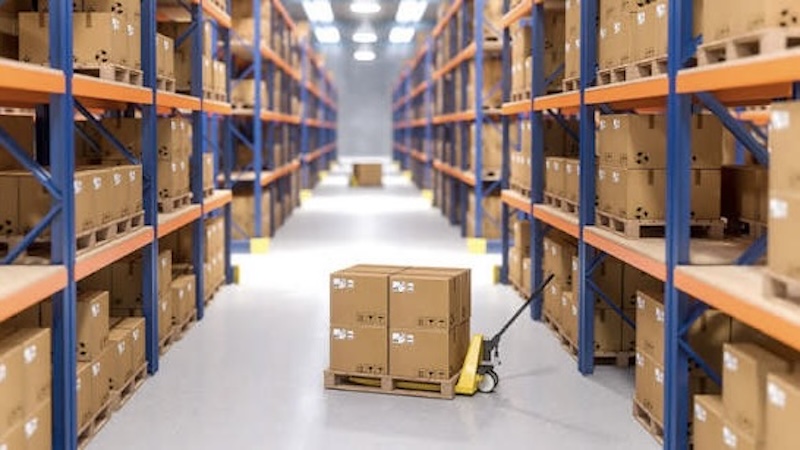
Consolidation is what makes market buying economical. Purchases from a dozen stalls go to one warehouse, get checked and repacked, then ship as a single load. That cuts freight per unit and leaves you one set of paperwork instead of twelve.
Paperwork is where market shipments usually stall. Many stalls cannot export under their own name, in which case a licensed export agent or trading company acts as the exporter of record and issues or approves the commercial documents.
A freight forwarder can coordinate the shipment, but it does not replace the exporter. Making the shipping documents agree with each other before booking prevents the delay that costs the most at the far end.
Market or Factory Direct?
Markets win on speed and variety, but factories win on control and unit cost. A stall often carries stock at a low minimum, lets you buy on the spot, and lets you compare twenty versions of a product in an hour. A factory needs a specification, a minimum, and a lead time, and gives back consistency, customization, and a paper trail.
| Buy at a Market When | Go Direct When |
|---|---|
| Testing a new category | Reordering a proven product |
| Many small mixed items | One product at volume |
| You need stock now | You need it customized |
| No customization needed | Packaging or design changes |
Most importers use both, and the switch happens when volume, customization, or consistency makes buying direct the cheaper route.
FAQ
Q1: Should I contact stalls before I travel, or just turn up?
Message the ones you can find in advance with your specification and quantity, since a seller who has already quoted you is a much shorter conversation on the floor. Turning up cold still works, but it costs you a day.
Q2: Can I buy just a few pieces, or do stalls have minimums?
Minimums vary by market and product. Many stock sellers accept one carton or even a single piece, while custom or factory-linked orders usually need far higher quantities.
Q3: How do I keep track of purchases from twenty different stalls?
Photograph each stall card with the goods, and give every purchase a reference number that follows it to the consolidation warehouse. Without that, reconciling what arrived against what you bought becomes guesswork.
Q4: Will a stall give me an invoice I can use for import?
Often not, since many sellers only issue a domestic receipt and have no export licence of their own. Agree early who will act as exporter of record, because that party is the one signing off the commercial documents.
Q5: Can I return goods bought at a market if they are wrong?
Usually not after the container has left China, unless return or replacement terms were agreed in writing before payment. That is why checking the goods before they ship matters more here than relying on a remedy later.
Q6: Do market goods come with the certificates my country requires?
Rarely by default, and a certificate shown on a phone belongs to somebody else’s model until you see it issued for yours. For regulated goods, treat the market as a place to find the product and a factory as the place to buy it.
Q7: How much of a language barrier is there in practice?
Prices, quantities, and dates travel fine on a calculator and a translation app. Anything involving specification, defects, or terms is where a translator or agent stops the misunderstandings that cost money.
Q8: Can someone buy at the market for me without me traveling?
Yes, and it is how most repeat market buying works once the products are known. An agent walks the stalls, checks the goods, consolidates, and ships, which covers everything except the discovery you get from being there.
Conclusion
Market buying is only cheap when you keep the discipline of a factory order, since nothing at a stall enforces it for you. Pick the market for the product, confirm who is selling, put the deal in writing, stage the payment, and check the goods while they are still in China.
A business license, the real production source, and whether the certificates belong to this product are four questions a stall will answer any way you like. We check them against the records and the plant through supplier verification, so the answer comes from somewhere other than the person selling to you.