Import Jewelry from China: Metals, Testing, and MOQ
Jewelry disputes almost always trace back to a material description nobody pinned down. Most of those words are regulated rather than invented, but none of them is a specification. The gap between a name and a spec is where your margin and your returns rate live.
| Description Used | What It Usually Means | What to Ask For |
|---|---|---|
| Sterling silver | 92.5% silver content | Metal content report |
| Gold vermeil | Heavy gold on silver | Base, karat, and microns |
| Gold plated | Thin gold over base metal | Base, karat, and microns |
| Stainless steel | Grade 304 or 316 | Grade named in order |
| Fashion jewelry | Undefined base metal | Exact alloy, in writing |
Settle the right-hand column before you discuss price, because every later decision depends on it.
What You Are Actually Buying
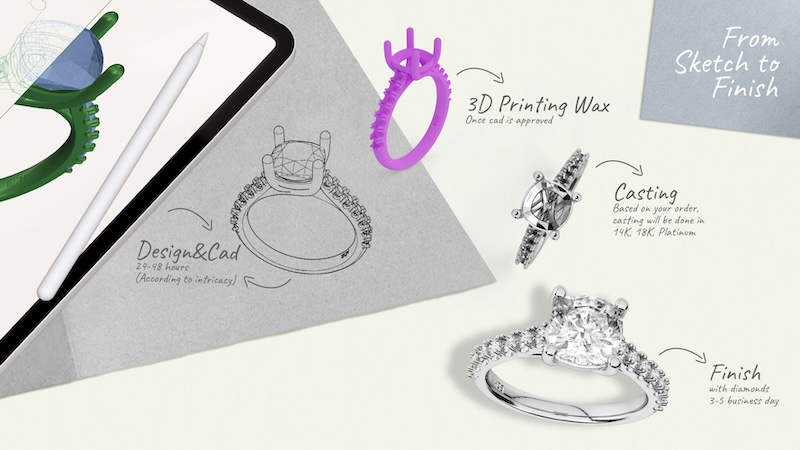
Three things get sold under the same photograph. Plated means a thin coating over something cheaper, and vermeil is a heavier gold layer over sterling silver. Solid is the word that misleads, and gold is where it does the damage. Solid gold means the piece is not hollow, which says nothing about purity. It is still graded 10K, 14K, or 18K, and the lower marks are mostly other metals.
The difference decides what you can claim, what you can charge, and how long it survives a customer’s wrist. A plated brass ring and a vermeil ring look identical in a product shot and behave completely differently after three months of wear.
Vermeil is also a defined term in the US: sterling silver underneath, at least 10K gold on top, and 2.5 microns. Use the word without all three and the claim itself becomes the problem.
Getting a supplier to state, in writing, which of the three you are buying is where an experienced sourcing partner saves you the most money.
Base metals are not a problem in themselves, but hiding them is. Brass, copper, stainless steel, and zinc alloy all make good jewelry at their price point. Customers only get angry when the listing implied something else.
Get the Claim in Writing Before You Sample
A supplier who cannot state the alloy in a sentence cannot hold it in production. Ask for four things: the base metal, what is plated over it, how thick that layer is, and the finish. Thickness is quoted in microns, and there is no universal figure that suits every product. Agree one for your piece and get it into the purchase order rather than the chat thread.
You will meet plenty of traders in this category, and that changes who can answer the question. A trader quotes fast but often cannot say who runs the casting or the plating. Comparing the suppliers on that one answer saves a round of guessing.
Consumer categories punish vague specifications harder than industrial ones. That is the recurring theme in consumer goods sourcing, and jewelry gets caught more often than most.
Testing That Decides Whether You Can Sell It
What has to be tested is set by where you sell, not by what the factory normally does. Build the test plan around the destination market first. The restricted substances, the thresholds, and the evidence you must hold all differ between the US, the EU, and the UK.
Lead and cadmium sit in several places at once, so the test scope has to name materials rather than the product. The EU applies its lead limit to each separate part of a piece, and restricts cadmium in metal beads, clasps and fittings, and components.
The US sets federal limits for children’s jewelry, while adult pieces fall under general product safety law, state rules, and the restrictions on what you may claim. Adult pieces do get recalled, so treat that as a lighter regime rather than an exempt one.
Either way, list the base metal, solder, plating, stones, and any separable part, because scoping the test to the whole item is how restricted substances slip through.
Nickel is a separate question, and the one buyers most often get wrong. Several markets limit how much nickel comes off the surface onto skin, not how much sits inside the alloy. That means testing a finished, plated piece rather than bare metal.
A handheld scanner in a factory and the same technique in an accredited lab are not the same evidence. Waved over a sample it reads the surface in seconds, which helps you shortlist but proves nothing to a regulator or a retailer. What counts is who ran the test, under what method, and whether the paperwork names your exact model. That is what product testing in China buys you.
Children’s jewelry is governed by a separate and tighter set of rules. Whether a piece counts is judged on how it is designed, packaged, and marketed, not on who could physically wear it. In the US the line is products intended mainly for ages 12 and under. Settle that question before you order, since the testing and certification that follow differ by market.
Sample Approval Is Where the Spec Becomes Real
Approve a sample against your written spec, not on how pretty it looks. Weigh it, compare the plating color with a reference, and confirm the stones and the way they are mounted match what the order says.
Keep one sealed reference piece on each side and name it in the purchase order. Doing this properly is what turns sample approval into a standard you can enforce instead of an opinion you can argue about.
Photograph the sample under consistent light before you sign it off. Plating color is the most common thing to drift between runs and the hardest to describe in words after the fact.
MOQ in Jewelry Is Counted by Variant, Not by Style
A quoted minimum of 100 pieces rarely means 100 pieces of your product. Minimums are usually quoted per variant, so metal, color, size, and stone each multiply the count. Ask the supplier to confirm the figure for every combination instead of assuming the headline number covers your whole first order.
Plating is usually the constraint, not the metal. A plating line runs a batch at a time, so a second color often means a second batch rather than a shared one. Keeping a first order to a single finish is the fastest way to find out how much of that minimum is real.
Ask for the minimum broken out by variant before you negotiate anything. The general tactics in negotiating a lower MOQ work here too, but in jewelry the biggest single lever is simply cutting variants from the first order.
What Happens After the Pieces Are Made
An inspector checks what can be seen, weighed, and worked, and the paperwork behind the rest. Plating coverage, how firmly the stones are held, whether the clasps function, the weight, and the packing all get compared with the approved sample.
Ask the inspector to confirm the test reports on file match the model being shipped. A report only covers the sample it was run on, so keep the model, material source, and batch traceable. When a material or process changes, re-test whatever that change could affect.
Pieces that arrive dull or discolored have two very different causes, and only one is cheap. Bare silver and plated metals darken in open air, and sealed bags with an anti-tarnish strip slow that down for almost nothing.
The same symptom can also come from thin plating, poor surface preparation, or contamination. A pre-shipment inspection records how the goods were bagged and how far the problem spreads. Telling those apart takes a lab, not an eye.
Jewelry is light and dense, which makes the freight decision unusual. A full order often fits in one air carton, so compare it against sea freight using China to USA shipping costs before assuming the cheaper mode wins.

FAQ
Q1: Should I buy from a jewelry market or direct from a factory?
Markets like Guangzhou suit small mixed orders and let you handle pieces first, but you are buying someone else’s catalog with no control over the alloy. Go direct once you need a consistent specification across reorders.
Q2: How do I know whether I am dealing with a factory or a trader?
Ask which steps happen in-house, especially casting, plating, and stone setting, since traders typically own none of them. A trader is not automatically worse, but you should know who actually controls the quality you are paying for.
Q3: If I buy a catalog design, will competitors sell the same piece?
Almost certainly, because the factory reuses the same mold for everyone who orders that design. Changing the plating color, the stone, or the clasp separates you cheaply, while paying for your own mold only helps if the contract gives you ownership.
Q4: How do I handle ring and bracelet sizing across markets?
Sizing runs on different scales in the US, UK, and EU, and factories will use whichever one they know unless told otherwise. Name the scale and the exact sizes when you order, and verify them on the approved sample.
Q5: What plating thickness should I ask for?
There is no standard figure, so set it from how often the piece will be worn, what sits underneath, and what your listing claims. Durability also depends on surface preparation, gold purity, and any protective top layer, which is why two pieces at the same thickness can wear differently.
Q6: Do gemstones need their own documentation?
Yes, and the distinction that matters is natural, lab-grown, or glass, since all three turn up in the same price conversation. Name the material and any treatment in the order, since some treatments are not permanent, some need particular care, and some change what the stone is worth.
Q7: Can I trust a nickel-free or hypoallergenic claim without testing?
No, because neither term has a fixed legal meaning and both get applied loosely. If you intend to print the claim on your packaging, you need laboratory evidence from a finished piece to stand behind it.
Q8: The pieces arrived tarnished. Is that a defect or a packing failure?
Photograph the cartons as opened, before anything is separated, and check whether the pieces were individually bagged. Loose packing points one way and a plating or preparation fault points elsewhere, so check the supplier’s explanation against your approved sample rather than accepting it.
Conclusion
Everything expensive in jewelry importing traces back to a description that stayed vague for one round too long. Metal, plating thickness, stone type, and variant count are all cheap to settle in writing and costly to argue about once a container has landed.
Plating measured rather than promised, alloys tested rather than described, minimums counted per style rather than per order. We insist on that sequence before any deposit moves, which is what an experienced sourcing partner is actually for.