
USB-C Charger Sourcing: Watts, Safety, and Quality
Buy USB-C chargers on their real output, their safety protection, and the factory behind them, not the headline wattage. That number is easy to exaggerate and should be one of the first claims you test. Chargers are made by the thousand in China, so the difficulty is never finding a supplier. It is picking a unit that performs as claimed and a factory that can prove it.
| Check First | What to Confirm | Why It Matters |
|---|---|---|
| Real output | Watts per port in use | Charges as promised |
| Standards | USB PD and PPS versions | Fast charging works |
| Safety | Protection and temperature | Reduces failures and safety risks |
| Certification | Right mark, exact model | Meets market and channel rules |
| Supplier | Real factory, not trader | Consistent quality |
Get these right and the price gap between two chargers finally means something.
Match the Watts and Standards to Your Devices
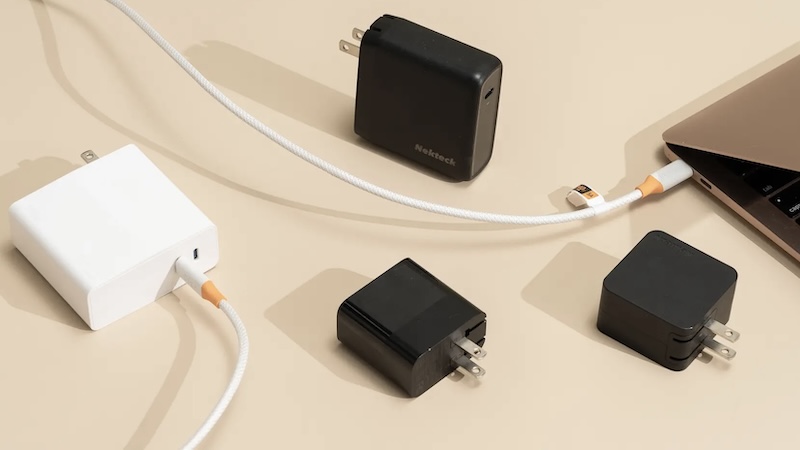
The headline wattage is a ceiling, not a promise, so the real question is how much each port delivers in actual use. A multi-port charger splits its total watts across ports, which means plugging in a second device usually drops the power to the first. Ask for the per-port output when every port is loaded, not just the biggest number on the front.
Fast charging only works if the charger speaks the same standards as your customers’ devices. Confirm which USB Power Delivery version it supports, and whether it handles PPS, the finer voltage control that many modern phones need for their fastest charging. A charger sold as fast can still crawl if its standard support is old, partial, or vaguely documented.
Plugging a sample into the phones your customers actually own, rather than reading the spec sheet, is a normal line on a quality inspection checklist here.
When GaN Is Worth Paying For
GaN is what lets a high-wattage charger be small, and that is the only thing it reliably buys you. It pays for itself on 65W and above, on multi-port units, and on anything sold as compact. On a basic single-port charger you are paying for a word on the box.
A small GaN unit can still run hot, because heat comes from the whole design rather than one chip. Ask for a measured case temperature under sustained output and for the name of the control chip inside, then judge the charger on those two answers.
Where Cheap Chargers Cut Corners
Safety is the part buyers cannot see and the part that turns a cheap charger into a liability. A sound unit protects against power surges, overloads, short circuits, and overheating, while a cheap one quietly drops those safeguards to hit a price.
That invisible cost-cutting is the defining risk across energy and electrical products. Ask for the protection features in writing and check them in testing, because a missing safeguard shows up as a field failure rather than a spec-sheet note.
Heat is the other silent killer, so look at how the charger behaves under a sustained full load rather than for a few seconds. Check the continuous output it can hold, the surface temperature at full load, the point where it starts reducing output to cool, and its over-temperature cutoff. A weak unit may overheat, throttle its output early, lose a steady output, or simply shut down.
Get the Right Certification for Each Market
A charger only sells if its safety marks fit the market and cover the exact model you are buying. These marks work differently. A UL or ETL listing is third-party safety testing, often against UL 62368-1 for wall chargers. CE is a declaration the maker signs after its own assessment rather than an approval from an EU body, and FCC covers electrical interference.
For the EU, ask for the declaration of conformity, the standards it claims, and the key test reports, then confirm the full technical file can be produced if regulators ask. For the US, check the safety standard, the certifier’s directory, and the exact model.
The broader picture sits within electrical product compliance, worth a read before you lock a specification.
Two market rules catch importers off guard. The EU’s common-charger rule currently applies to devices like phones, tablets, and laptops, while rules aimed specifically at external chargers apply more broadly from December 2028. Those cover the USB-C port, a detachable cable, and clear port power labeling, so confirm what your launch date actually requires.
In Great Britain, electrical safety and interference rules still accept either the CE or the UKCA mark, so you are not forced onto UKCA alone.
Watch how a supplier states its USB certification, because the wording hides a lot. USB-IF listing covers specific certified models, and “supports PD” on a datasheet is not the same as being listed. Confirm the specific model you sell appears in the USB-IF product database, or is formally covered by a valid certification. A test ID on its own is not proof.
Vet the Factory and Test the Claims
Many suppliers that look polished online are traders reselling other factories’ chargers, which weakens your control over quality and fixes. A real factory can explain its testing, its components, and how it handles defects, while a reseller usually cannot. Be cautious with vague answers on protection features, mismatched documents, or a company name that changes across invoices and certificates.
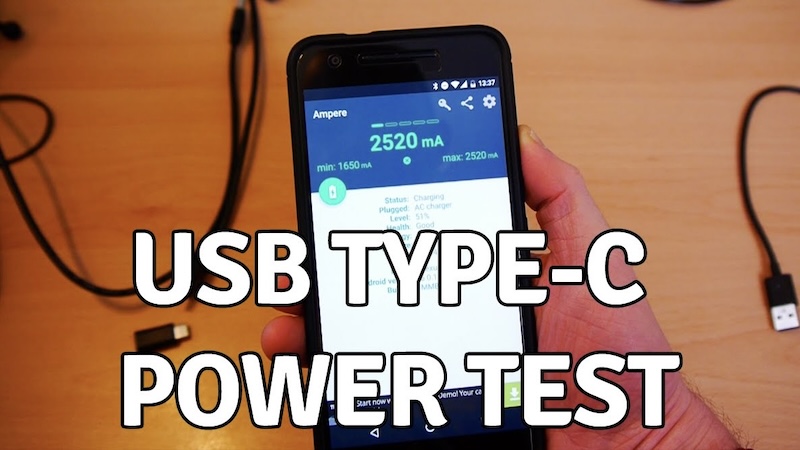
Do not trust a wattage or safety claim you have not seen measured. A basic USB meter only shows what the charger negotiates, so checking every PD and PPS step, the multi-port split, and sustained full-load output takes proper lab gear.
Have a sample checked with independent product testing in China on the points that matter. Then use a supplier quality audit to confirm the factory can repeat that quality across a full run.
If you want your own brand on the charger, decide how far the customization goes before you commit. A logo and box change is simple, while a new housing or port layout raises the minimum order and the lead time. Working with real China OEM factories rather than middlemen is what keeps a private-label program consistent.
MOQ, Duty, and Getting It Landed
The unit price is the smallest part of the decision, and the number that matters is the landed cost. Ask for a line-by-line quote covering the charger, packaging, cables, sample fees, and shipping terms, so nothing hides until the invoice. A wrong HS code or a shaky declared value can move your total more than any price haggling.
Minimum order quantities shape your cash flow as much as the discount does. A factory usually wants larger runs than a trading company, and custom branding pushes the minimum higher still. Confirm where the price breaks start, and model the duty early with a real US tariffs on Chinese imports figure rather than the supplier’s optimistic estimate.
FAQ
Q1: Does a high-wattage charger need a special cable to reach its rated speed?
Yes, charging above 60W needs a cable rated for it, an e-marked 5A cable, and the highest-power units need a 240W-rated cable. Without one the charger quietly delivers less than its rated speed. Decide whether you bundle a suitable cable, since customers otherwise blame the charger for a cable limit.
Q2: Can one charger safely power both a phone and a laptop?
A compliant high-power charger can usually charge lower-power devices like phones safely, but a small phone charger may charge a laptop very slowly or not at all. Confirm the charger steps its output down correctly for small devices, since poor control is where cheap units cause damage.
Q3: Do travel chargers with folding or swappable plugs need extra approval?
The folding or swappable plug is convenient, but each plug type and the full unit still have to fall under the safety approval you rely on. Confirm the certificate covers the exact plug setup you plan to sell, not just the base charger.
Q4: What if the production units no longer match the certified sample?
Certification is tied to a specific design and bill of materials, so a factory that quietly swaps a component can leave you with units that fail inspection. Lock a list of the key components, the approved sample, and a change-control rule in writing. Confirm the internal parts by teardown or lab comparison, since a normal shipment check cannot see a swapped part inside.
Q5: How many units should I have tested before releasing a shipment?
Enough to show variation rather than one lucky piece, so pull several units from different cartons and check output, temperature, and standard support on each. One failure in a small sample is a reason to widen the check rather than to average it away.
Q6: What warranty and defect handling should I expect?
Ask for a clear defect rate allowance, who covers replacement units and their shipping, and how long the supplier stands behind a batch. A supplier that dodges these questions before the order will be harder to reach after a problem.
Q7: What failures show up after chargers reach customers?
The common ones are units that run hot, ports that loosen with use, and fast charging that quietly slows on some phones. Sample testing catches obvious heat and output faults, but port wear needs repeated plug-in cycles and broad phone compatibility needs testing across many devices.
Q8: What mistake do first-time importers make most?
Buying on the headline wattage and the lowest price, then finding the real output, protection, or certification falls short once the goods arrive. A little verification upfront prevents most of the returns and safety worries that follow.
Conclusion
Nothing in this category fails quietly, because a charger that disappoints gets written into a review within a week. Heat, port wear, and a fast-charge standard that only half works are the three faults customers report, and all three are visible on a bench before a container is booked.
A charger that runs hot or charges slowly gets reviewed before it gets returned, and the listing never recovers. We measure output, temperature, and standard support on units pulled from the run, through quality inspection, while the balance is still unpaid.