Print a Logo on Products: What Lasts and What Peels
A logo fails because the method was matched to the artwork instead of to the material, and the failure shows up at the customer rather than at the factory. Pick the process by how the product gets used, then prove it with a sample you abuse on purpose.
| Method | Best on | How it fails |
|---|---|---|
| Silk-screen | Flat plastic, textiles | Cracks, lifts at edges |
| Pad printing | Curved, small parts | Rubs off high-touch areas |
| Heat transfer | Fabric, coated goods | Peels after washing |
| Embroidery | Caps, bags, uniforms | Frays, puckers thin fabric |
| Laser engraving | Metal, wood, bamboo | Cannot add color |
| UV printing | Rigid plastic, acrylic | Scratches, ink lifts |
Nothing in the third column is exotic, and every one of them turns up on a properly tested sample.
The Six Methods and What They Actually Suit
Silk-screen is the workhorse for solid colors on flat surfaces. Setup is efficient at volume, which is why bottles, boxes, and promotional plastics default to it, and why it stops making sense on small runs. It is the method most buyers meet first when ordering custom products from China.
Pad printing reaches what screens cannot. A soft pad carries ink onto pens, lids, buttons, and curved housings, so it wins on geometry rather than on cost.
Heat transfer handles gradients and photographic artwork. It suits apparel and coated goods, and its performance depends almost entirely on the film, the adhesive, and how well the press was set.
Setup quality is not visible in a photograph, which is why whether the logo holds belongs on a quality inspection checklist, not in an email.
Embroidery does not peel, because there is nothing on the surface to peel. Caps, polos, bags, and uniforms get a textured finish that reads as premium, at the cost of fine graphic detail.
Laser engraving marks the material instead of adding to it. Metal, wood, and bamboo take a permanent mark that survives handling. On plastics the result depends on the type of plastic and what was mixed into it, which can darken, foam, or change color rather than simply exposing the material underneath. The only way to know is to run it on your own part.
UV printing puts sharp full color on rigid materials. Plastic, acrylic, and metal panels look excellent straight off the machine, and whether the ink holds on your exact material is the question worth asking before you commit.
Where Each One Fails
Washing kills more logos than anything else. Screen prints hold on cotton when the ink matches the fabric and the drying is controlled, while cheap transfer film cracks and lifts at the edges after a handful of cycles. Embroidery avoids the problem and creates its own on lightweight fabric, where thread pulls and puckers.
Sunlight is the second killer, and it is quiet. Inks fade in car windows, shop displays, and anything stored outdoors, and printed coatings can go powdery or discolor long before they lift. Engraving holds because nothing sits on top to lose.
Rubbing takes out the rest. Bottles, pens, tools, and phone accessories live in bags and hands, and a print sitting on a slick surface that was never prepared wears through at the contact points first.
Surface preparation decides more than the method does. Cleaning, a surface treatment, and a primer coat are what make ink hold on the plastics that naturally resist it. A factory that skips them produces a beautiful sample and a disappointing batch, which is the same gap behind prototype into mass production problems everywhere else.
Prove It on a Sample Before You Order
Ask for the test, not the photo. A picture of a sample tells you the logo was applied, and nothing about whether it stays applied, so specify the abuse it has to survive. Write that requirement into the sample order process before the factory ships the first piece.
Match the test to the life of the product. Textiles get wash cycles at the temperature your customer will actually use, and outdoor goods get sunlight and moisture exposure. High-touch items get an abrasion test, and this is where the conditions have to be written down.
Run the test on the production material, not a stand-in. Plastics differ in how well ink grips them, so a logo that holds on ABS proves nothing about the same logo on polypropylene. Product testing in China is worth arranging independently when a failure would cost more in returns than the test costs, or when you need a result both sides can rerun.
Make the test repeatable or it is not an acceptance standard. Rubbing a sample with a coin tells you something in five seconds and settles nothing later, because neither side can reproduce the pressure or the contact area. Agree the method, the load in grams, and the number of cycles, so a passed sample becomes a standard the production run is judged against rather than a memory.
Artwork and Color, Where the Delays Start
Ask your designer for vector artwork with the fonts turned into shapes. Vector files, saved as AI, EPS, or an editable PDF, redraw cleanly at any size instead of blurring when enlarged. Turning the fonts into shapes lets the factory open the file correctly without having your typeface installed. A low-resolution image produces jagged text and a week of revisions.
Specify color as Pantone, not as a screenshot. Screens work in RGB and production works in inks and coatings, so a bright monitor color arrives flatter on fabric, plastic, and coated metal.
Name the acceptable variation. Different materials shift the same Pantone code, so agree how far it may drift up front and ask for a pre-production sample whenever the material is likely to move the shade.
Send the placement, not just the logo. Size, position, and orientation on the actual product belong in the file package, and every one you leave out is a decision the factory makes for you. Decisions this specific are what separate private label vs white label, because a placed logo and a locked product are different purchases.
What It Costs and What the Minimums Look Like
Setup cost and unit cost move in opposite directions, which is the whole economics of this decision. Screen and pad printing carry an upfront setup charge, covering the screen or steel plate, the holder that positions your part, and the machine setup, and then get cheap per piece. Digital methods start easier and stay higher per unit.
Minimums follow the setup work, and that is not just the screen or the plate. Part holders, the color count, the alignment work, and where you land in the production schedule all move the number. Ask each factory for its real minimum on your product rather than the published one, the same question that decides quantities when sourcing custom products.
Free logo printing is priced somewhere. When a supplier waives the charge, it usually means one position, one color, a higher quantity, or the cost sitting inside the unit price. It is the same arithmetic behind custom packaging minimums.
Ask what is included before you compare quotes. Plate or screen creation, color matching rounds, sample charges, and any packaging change are the four line items that appear later.
FAQ
Q1: Which method lasts longest on plastic?
No method wins across all plastics, so the useful question is which two are worth testing on yours. Narrow by whether the mark has to be in color, whether the area is flat, and whether the part gets handled constantly, then test only those two.
Q2: Can I print a logo on stainless steel?
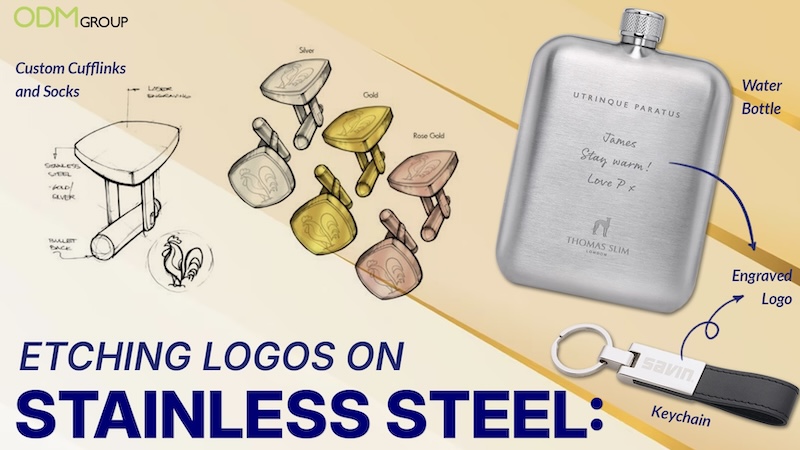
Yes, by laser marking or etching, with UV printing when you need color. Specify the finish, since brushed, polished, and matte steel take a mark differently and show wear differently.
Q3: What if my logo has fine lines or small text?
Test it at the real size on the real material before you approve anything. Thin lines close up in embroidery, fill in on textured plastic, and disappear entirely at small sizes on some materials.
Q4: Should I get third-party testing or trust the factory’s report?
Read the report before judging the source: the method, the conditions, where the sample came from, and whether you could rerun it. A factory report that names all four can be solid evidence, while one that names none is a claim, whoever issued it.
Q5: How long does the decoration add to my lead time?
Sampling and setup are the parts that surprise people, and they run before production rather than alongside it. Get the sample and setup days quoted separately from the production days so your schedule reflects both.
Q6: Does the factory own my artwork once they set up the screens?
The plates and screens are usually theirs and the artwork is yours, and neither is automatic. Say so in writing rather than assuming, because owning a screen does not give the supplier your artwork to reuse.
Q7: Can I change the logo position between orders?
Yes, and assume it costs something until the factory says otherwise. A new screen or plate is an obvious charge, and even a repositioned laser file can need a new fixture or a fresh setup on the machine.
Q8: Can the same logo look consistent across a mixed product range?
Not automatically, and the gap widens as your range spreads across fabric, coated metal, and matte plastic. Approve a separate sample for each material, because each one is the acceptance standard for its own production run.
Conclusion
Name the approved sample in the purchase order, and tie the balance to a batch that matches it. Attach the written test conditions alongside it, so a disputed logo gets settled by repeating the test rather than by comparing opinions.
The approved sample was printed carefully by hand, and the run was printed at speed by somebody paid per unit. We rub, scratch, and wash the finished batch against that sample, through quality inspection, so the logo that peels does it in the factory rather than in your customer’s hands.