Product Labeling Requirements for US and EU Importers
Labels fail at the port and get fixed in a warehouse, so the only cheap moment to get them right is before the printer runs. US and EU labeling rules come down to a short list of items that commonly appear, on the right layer, in the right language, with the exact set fixed by your category. In the EU, both names are the maker plus an EU contact.
| Layer | US Usually | EU Usually | Confirm by Category | Lock By |
|---|---|---|---|---|
| Product itself | Origin, where required | Both names, if room | Ratings, warnings, CE placement | Sample approval |
| Retail box | Name, quantity, responsible firm | Language, both names otherwise | Category warnings and marks | Print proof |
| Export carton | Origin, shipping marks | Shipping marks | Handling marks only | Packing list |
Anything not locked at those three points arrives as your problem, not the factory’s.
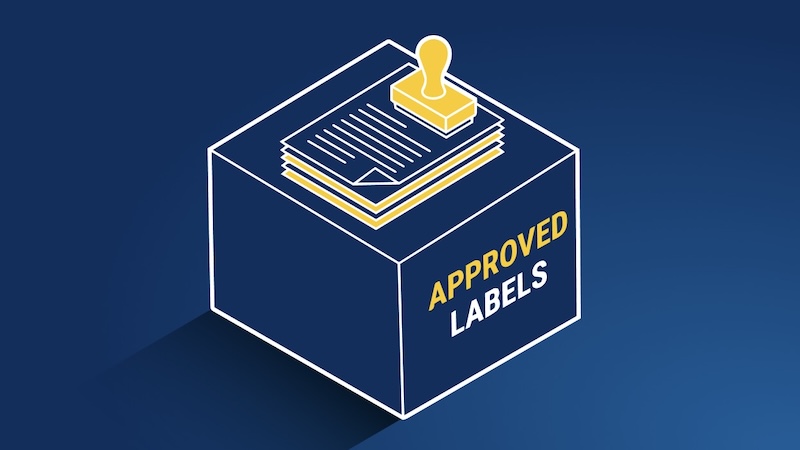
Why Labels Are a Buying Decision, Not a Design Task
The importer, not the factory, answers for what the box says, in both markets. A Chinese label reflects production needs and Chinese rules, and neither satisfies a US customs officer or a German inspector. Once goods leave the factory, the words on them are your statement.
So labeling belongs inside China import compliance as a payment gate rather than an art file. Retailers refuse pallets over a missing address line and marketplaces pull products over a missing warning, and every fix happens after your money has moved.
A quality inspection partner can check the artwork against your list before the packaging line starts.
What Must Appear in Each Market
For most packaged consumer goods the US asks three things: what it is, how much, and who stands behind it. That means a product name, a net quantity in the right units, and the maker, packer, or distributor with an address, though a category may add or drop items. Origin marking applies to most imports, its place and exceptions set by product, as covered in Made in PRC labeling.
The EU wants two names, and they play different roles. The maker is who built it; the EU contact is a business inside the EU that answers for it, usually you as importer or a representative you appoint. Warnings and instructions go in the country’s language, plus the CE mark where a rule calls for it. A box with only a Shenzhen address is incomplete in Europe.
Both markets then add category rules on top. Textiles need fiber content and care, electrical goods need ratings and lasting safety marks, and children’s products carry age grading and hazard warnings, so buyers handling toy imports from China review the label as closely as the toy.
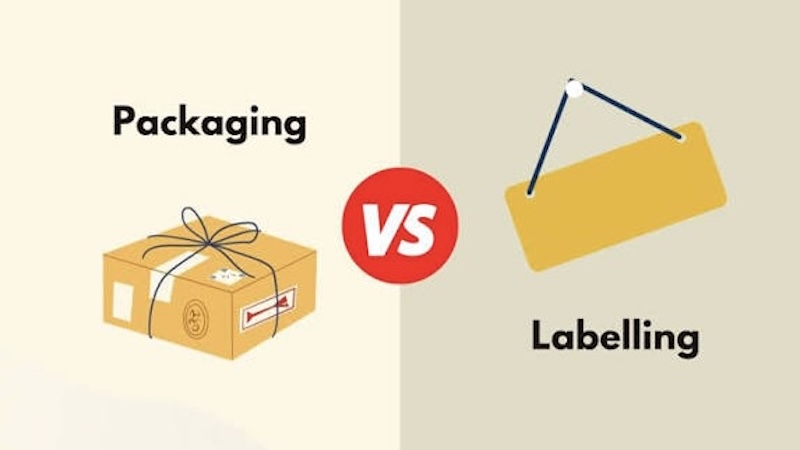
The Three Layers and What Each One Protects
Product, retail box, and export carton each face a different reader, and a claim in the wrong place protects nobody. A warning printed only on a box that gets thrown away is a warning nobody reads in year two. A rule that says permanent means the marking must survive shipping, storage, and sale to the final buyer, which a firmly bonded label can do and a loose one cannot.
The reverse error is just as costly. A CE mark that belongs on the product but appears only on the box, or an EU contact that a rule wants on the item and you put on the carton, counts as missing to an inspector. Confirm where each item must sit before you decide which layer carries it.
The export carton is the layer buyers forget until a receiver cannot match cartons to the order, and that is why carton shipping marks get their own specification rather than a factory default.
Where the Print Proof Comes In
The print proof is the last moment a label error costs a few dollars instead of a shipment. Ask the factory for the artwork of every layer before any packaging is ordered, and read it against your list line by line.
Two habits catch most errors. Have someone who reads the destination language check the translation, because factories reuse warning text across markets and nobody notices until a customer does. Then check the responsible company’s address against your own records, because a factory prints whatever last appeared on a similar box.
Once the proof is signed, hold the factory to it. The first finished units should match it exactly, and that check belongs in your inspection checklist as a named item, not an assumption that the printer followed the file.
What Suppliers Say and What to Do With It
The most common line is that they always print it this way and Europe and America both accept it. Other buyers’ silence is not acceptance, and a label that cleared once may have cleared because nobody looked. Treat the claim as an invitation to check, never as a reason to skip it.
The second is that warnings and translations are the customer’s job. Often true, and never an excuse to ship without them, so decide early who writes the local-language text and put the finished text into the purchase order rather than a chat.
The third is that the packaging is already printed, so changes will delay the order. Sometimes a compliant sticker over the box saves the run and sometimes it does not, depending on the layer and the market. Deciding that after the print run is exactly the position this article exists to keep you out of.
What Sits Just Outside This Decision
Marketplace prep is its own subject, since a compliant retail box can still fail a warehouse’s barcode and bagging rules, and it is covered in Amazon FBA requirements. Whether the label’s safety claims are backed by a real report is the question that comes before this one, and it belongs to how you verify a test report.
FAQ
Q1: Can I use one label for both the US and the EU?
It depends on space, units, addresses, language, and what your category requires. Lay both markets’ items on one artwork and see whether it stays readable; if not, split the box artwork and keep the product markings shared.
Q2: Does the label need to be in the local language everywhere in the EU?
Warnings and instructions generally must be in a language the destination country accepts, and several countries insist on their own. Confirm the language for each country you sell into, since some share one and others may want more than one, and check whether a multilingual insert is allowed for your category.
Q3: Can a brand name replace the legal company name on the label?
Sometimes. What matters is that an authority can identify and reach the responsible business, and in the EU a registered trade name or trademark plus a contact address can do that. A brand alone with no address gives an inspector nobody to contact.
Q4: Does selling through a distributor change who goes on the EU label?
Not by itself. A reseller does not become the EU contact, so both the maker and an EU contact still belong on the label. Settle in the contract who takes each role before artwork is signed.
Q5: What if my product is too small to fit the required text?
Most rules allow the information to move to the packaging or an insert when the product cannot carry it, but the allowance is specific. Ask the lab or your compliance partner what your category permits before you assume.
Q6: Can I put a QR code on the box instead of printing all the text?
Only for information the rules let you move off the label, and mandatory items usually are not among them. Use the code for manuals and support, and keep the required text on the box.
Q7: Who signs off the label if an agent handles my order?
You do, whatever the agent checks for you. The label carries your legal exposure, so an agent’s review is a service, not a transfer of the decision, and the signed proof should carry your name.
Q8: Do I have to reprint everything after changing my company address?
Treat it as a compliance change, not a print run. Update any declaration or file that names you where your category has one, switch new production at the next run, and check with your compliance partner how your category treats stock already made or in the market.
Conclusion
Treat the label as part of the product you are buying, priced and approved with it, because a mislabeled shipment is unsellable stock you have already paid for. Buyers who write the label into the order sell on arrival, and buyers who leave it to the factory pay again to fix it.
Reading artwork against the rules for each market and confirming what actually got printed both need someone at the factory. We do that as your quality inspection partner, so labels are settled before packaging is printed and confirmed before the balance is paid.