Imported Product Fails Compliance: Who Pays the Costs?
When your imported product fails a compliance check, the money leaves your account first, whoever is eventually to blame. How much comes back, and how fast, was mostly decided before production, by what the order said and how much of it was still unpaid. Who is legally on the hook may take months to settle; the storage bill, the refunds, and the pulled listing do not wait for that.
| Layer | Who Is Named | Who Pays First |
|---|---|---|
| Market rules | Importer or brand, often | You, then recover |
| Platform or retailer | Seller of record | You, immediately |
| Recall, return, destroy | Whoever holds the stock | You, then claim back |
| Contract claim | Party the clause names | Factory, if it applies |
Three of the four layers reach your account by default; the fourth is where money moves back, and clear terms make it move faster.
Why the Bill Reaches You First
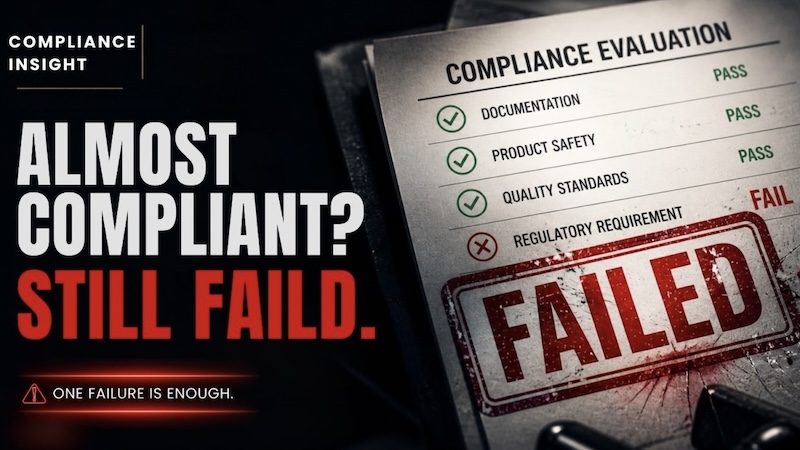
Regulators and platforms act against a company they can reach and an account they can see, and for an importer selling its own goods or brand, that means you, not a factory on another continent. The forwarder and the customs broker do not carry it either; if they answer for anything, it is their own paperwork, not whether the product meets a safety rule.
Filing the customs paperwork correctly does not turn the goods legal. The work that decides this sits in China import compliance, and all of it happens before the deposit.
On-site factory audits can check, before you order, whether the supplier controls changes and keeps records well enough for the terms below to mean anything.
What the Costs Actually Look Like
A compliance failure rarely arrives as one bill; it arrives as five or six, and the largest ones come last. Goods held at port or in a warehouse run up storage from day one. Testing to find out what is wrong, relabeling or rework if the goods can be saved, and return freight or destruction if they cannot, all follow.
Then come the costs outside the container. Refunds and replacements to customers, a listing down for weeks while you rebuild the paperwork, and, where stock has already sold, the cost of getting it back. Fines are possible in the worst cases, but for most small importers the recall logistics and the lost selling season cost more than any fine.
When the Factory Shares the Loss
A factory can be held to a failure that traces to something it did without your approval, and holding it is fastest when the order already says so.
Material swapped without telling you, a certificate that fails when you verify the test report, parts that do not match the approved sample: those are causes a supplier answers for. Goods built outside the spec belong there too, while a failure caused by your own instruction, or a rule you never passed on, is yours.
You may have rights without a clause. A fake certificate or a swapped material can break a warranty on its own, and when the sum is big enough they are worth pursuing. Across a border, on a small order, they are slow. A written clause plus an unpaid balance is the cheapest lever you hold; “we take responsibility” in an email is whatever the factory decides it meant.
A buyer we worked with lost a season’s stock to a recall over a component the factory had changed. The factory offered a discount on the following order, because nothing in the paperwork obliged it to do more and the balance had already been paid. China supplier payment terms that hold the balance until inspection and paperwork clear would have changed that conversation.
Five Clauses Before the First Order
Put these into the purchase order and hold the deposit until the factory signs the page.
| Clause | What It Does |
|---|---|
| Compliance spec named | Ties goods to a rule |
| No change without approval | Makes swaps a breach |
| Documents before shipment | No paper, no release |
| Who pays for a failure | Costs, triggers, proof, notice |
| Balance after inspection | Keeps your leverage |
The first clause names the market rules and the test standard the goods must meet, so “compliant” has a definition. The second and third are covered under China purchase order terms; here they matter because a breach you can point to is what turns a shared problem into the factory’s.
The fourth clause needs four parts written out. Which events trigger it: an unapproved change, a false document, goods that fail a named test, goods made outside the approved spec. Which costs it covers and how each is counted: rework, return freight, destruction, replacement stock, and refunds at actual cost against receipts; recall handling as a fixed share of documented cost.
Then the clause states what proof you owe and by when: the inspection or a lab report, scoped the way product testing in China sets out, with written notice inside a set number of days. Last, how the money comes back: taken off the balance first, then a refund, then replacement goods.
The fifth ties the balance to passing inspection and complete paperwork. A supplier who will sign the first four but not the fifth is telling you it expects to be paid before the question of who pays ever comes up. That is the signal to stop and walk.
Two Places Buyers Leave the Door Open
Labels and platform rules are the two failure causes most often traced back to the buyer. Usually the factory printed what it was sent and listed nothing. If your artwork left off a warning and the factory printed it faithfully, that mistake is yours; if it printed something else or changed the material, it is back in play. Check product labeling rules before the print file goes.
Platform enforcement is the other. A marketplace can suspend a listing on its own standard, often stricter than the law, and unless your order names that standard the factory has nothing to answer for. What an Amazon compliance check covers is exactly the layer a plain contract leaves out.
FAQ
Q1: Does buying through an agent or trading company change who I claim from?
You claim from whoever signed your order, so the same five clauses go on the agent’s or trader’s paperwork, and you check that its own contract with the factory passes them down. A middleman with a thin margin and no matching terms behind it is the weakest link in the chain.
Q2: Should I ask for a penalty clause or a make-good clause?
Make-good first, meaning the factory replaces, reworks, or credits you for actual cost tied to receipts. A fixed penalty invites a fight over whether it is a fine or a real loss, and who wins depends on the law behind the order; if you want one, have it drafted for that law.
Q3: Can I make the factory carry product liability insurance?
You can ask, and some export-oriented factories have it, but it usually covers injury claims, not recall logistics or a pulled listing. Count it as a bonus on top of the clauses, not a replacement.
Q4: Will an escrow or trade-assurance scheme refund me for a compliance failure?
Check yours before you count on it; the schemes differ by platform, version, and product. What they share is a design around a shipment that arrives wrong. Ask in plain terms whether a recall or a suspended listing months later is covered, and get the answer in writing before you treat it as your safety net.
Q5: Does a passed third-party inspection move responsibility to the inspector?
No. An inspection report says what was checked that day against your spec; it does not make the goods legal or pick up the loss if a rule was missed. It gives you evidence, and evidence is what the cost clause runs on.
Q6: What if the failing part came from the factory’s own subcontractor?
It changes nothing about who you pursue. Recovery from a subcontractor is that company’s problem, and it is another reason the no-change clause and the parts list earn their place: both put the supplier on the hook for what it bought.
Q7: Do I have to tell the factory the moment a complaint or recall starts?
Yes, in writing and inside whatever notice period the order sets, and sooner is better. A late notice does not always kill the claim, but it hands the factory its first excuse and lets the evidence go stale, so send it on day one.
Q8: Can I deduct recall costs from the balance on the next order?
Only if the contract lets you take one order’s costs out of another’s payment; without that, the factory can call the short payment your breach and stop shipping. Write that right in before you need it.
Conclusion
Release the balance only when the goods passed the named test, the documents named in the order are in hand, and the factory has signed the clause that says who pays if any of that later proves wrong. Release it earlier and every cost in this article turns from something you hold into something you chase, and a goodwill discount next time is what most buyers end up with.
Getting a factory to sign those clauses up front, and confirming it can actually meet them, is a visit and a conversation, not an email. We handle that through on-site factory audits, so what your supplier will and will not stand behind is settled long before a recall notice arrives.