Private Label vs White Label: Which Should You Choose?
Choose white label while demand is unproven and speed matters more than difference; move to private label once sales prove the margin can carry a higher MOQ, development cost, and lead time. Both models put your brand on a product a Chinese factory already makes or can build to your specification. The difference is how much you lock, and how much you commit before the first carton ships.
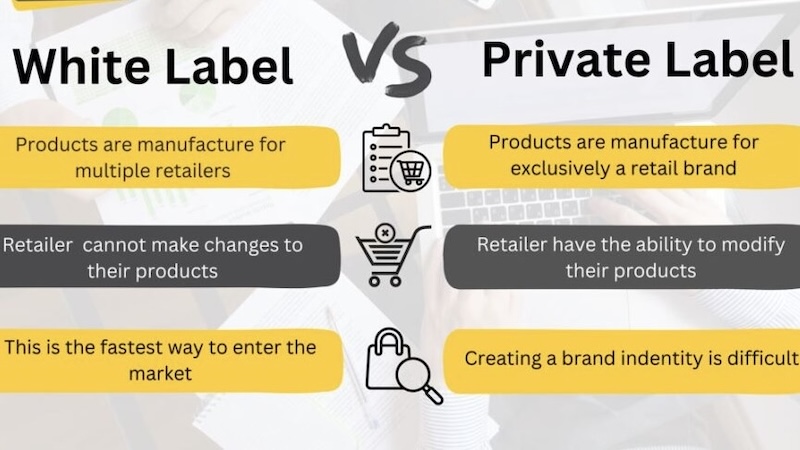
| Factor | White Label | Private Label |
|---|---|---|
| Time to first order | Weeks, from stock | Months, after samples |
| MOQ | Factory catalog minimum | Higher, often per color |
| Upfront cost | Branding and packaging | Samples, tooling, testing |
| Freedom to modify | Logo, box, color | Materials, features, spec |
| Competition risk | Same product elsewhere | Only what contract locks |
| Switching factories | Resample, retest, requote | Mold transfer, resample, retest |
Read down the right-hand column and ask whether your sales so far can pay for it.
What Actually Changes Between the Two Models
The two names sit on one range, not in two boxes. At one end the factory sells a stock product with your brand on it; at the other it builds to a specification locked to you. The further you move, the more you pay in MOQ, development fees, and testing. Running such an order is covered in private label sourcing from China.
The names cause more confusion than the orders do. Own label is the UK term for the same thing, and OEM covers both. Ask what you may lock and what you must buy, never what the model is called.
An experienced sourcing partner can tell you which of the two a given factory is really offering before you quote it to your customers.
Ownership is where most sellers misread private label. A specification in your name gives you a document, not a monopoly; unless the contract says otherwise, the factory can build the same design for the next buyer who asks. What a custom order costs and who owns the result is the subject of custom products from China.
How Cost, MOQ, Lead Time, and Control Move Together
Every step along that range usually raises one or more of the MOQ, the upfront cost, and the lead time, and which one moves depends on the change. A new box, an extra colorway, or a translated manual often leaves the product minimum alone and lands on a packaging minimum or a one-off development fee instead.
Change the material or the shell and all three move at once. The factory must buy new inputs or cut a mold, so the minimum climbs and the deposit climbs with it.
Lead time stretches for its own reasons. Stock goods wait only for packaging and a production slot. A specified product first goes through samples, revisions, testing, and often tooling, and product development in China walks through those stages when you buy, modify, or build.
Control is what the extra money and time buy, and it is narrower than the sales pitch suggests. You control the specification, the packaging, and the claims on the box. You do not automatically own the tooling, and China mold ownership shows how even a mold you paid for can stay in the factory’s hands unless the order says otherwise.
White label does not mean lower quality. The catalog product has been made more times than anything you would design, and its faults are known. What it lacks is difference, and a logo added by any method in print a logo on products cannot supply that.
Three Products, Same Move from Catalog to Spec
A Bluetooth speaker shows the move most clearly. White label is the factory’s standard 10 W unit with your logo and box art. Private label keeps the inside but changes the case, the charging port, and the start-up sound, and some of those trigger a retest.
A vitamin C serum starts from a stock formula in a stock bottle. Under white label only the label changes. A new strength, pump, or scent means fresh testing, a new ingredient list, and a bottle mold if the stock shape will not do.
A kitchen scale makes the same journey in metal. The catalog unit is a stock 5 kg model with your logo on it. Change the platform size, display, or weighing range and you pay for a new housing mold, new software, and fresh testing.
In all three the factory could build either version, and the second exists only if you fund it. A rival has to reproduce the product itself, not the box, and your contract binds your factory rather than the rival, so protect your product idea covers how far a design registration slows a copy down.
Which Model Fits Which Stage of a Seller
A first product with no sales history belongs on white label by default, unless the brand’s whole claim is a formula, feature, or shape no catalog carries. You are testing whether anyone buys the category from you, and a catalog product answers that in weeks. A failed test costs one small run, not a mold.
A product with proven sales and a competitor selling the same shell is the private label moment. You know the volume, so the higher MOQ is not a guess, and the margin has already shown whether it can pay for a specification of your own. The change buys distance from the seller next to you.
A seller building a range usually needs both. Run white label on the slow sellers and private label on the two or three items that carry the brand. Sellers who private label everything at once pay for difference on items nobody was comparing.
What to Lock Before You Pay, Under Either Model
Testing, labels, and legal responsibility stay with you whichever model you pick. A white label speaker still needs test evidence that clearly covers the model and configuration you sell, and a private label serum still needs its label checked against the destination market. Ready-made means the factory has done it before, not that it has done it for you.
Under white label, lock the exact model number, test evidence for the version you are buying, and the packaging proof before the deposit. Ask which other buyers sell the same unit and where, so you hear it from the factory now, not from a listing later.
Under private label, lock the specification, the sample the factory must match, and mold and design ownership, all in writing. Those three shorten a later factory change, though mold transfer, resampling, and retesting still apply.
Confirm which changes need your approval as well. A spec the factory can quietly change is a catalog product with a longer wait. Building to yours is walked through in using OEM factories in China.
FAQ
Q1: Can the same factory quote me both models for the same product?
Ask for both, and most catalog factories will price the stock unit and the modified version side by side. The gap between the two quotes is what difference actually costs you.
Q2: How do I tell from a quote which model the factory has priced?
Not from the fee lines, because white label quotes often carry sample and test charges too, while a private label order that reuses an existing mold shows no tooling line. What settles it is whether the quote prices a catalog model or the specification and approved sample you locked.
Q3: Why does a private label quote come in higher than a catalog quote?
Because it prices work the catalog quote does not: new materials, time to switch the line over, samples, and sometimes tooling. Factories that mainly run custom orders may price either model similarly, so read the changes, not the label.
Q4: Can I pay a factory to stop selling its white label product in my market?
Sometimes, against a volume commitment or a fee, and only for the markets the contract names. Get it in writing, because a verbal promise ends with the next buyer’s order.
Q5: Can I start private label with formula and packaging changes only, and add a mold later?
Yes, and it is the cheaper way in. Keep the stock shell, change what a mold does not touch, and pay for tooling only once sales support it. Use the same factory so it prices just the changes.
Q6: What should I check on the first private label run?
The approved sample against what comes off the line, because a first run can drift from it. Confirm in writing that no material or part was swapped after you approved that sample.
Q7: What happens if the factory discontinues the catalog model I branded?
You lose continuity of supply for that model, not the business. Ask how long the model has been in the catalog and whether the factory gives notice, and when you reselect, check whether your existing test evidence still covers the replacement before paying for a fresh one.
Q8: When should I move a product back from private label to catalog?
When its volume no longer clears the MOQ that paid for the tooling. Sell down, retire the specification, and put the item back on white label rather than carrying a mold that runs twice a year.
Conclusion
Release the deposit only when the quote, the sample, and the contract describe the same model, and walk if the factory will not put it in writing. Under white label that means a named model number and testing that reaches it; for a specified product it means a locked specification and ownership terms, which shorten a factory change without making it simple.
Telling a real private label offer from a relabeled catalog item, and checking which changes a factory can actually make, takes someone at the plant. That work is what our experienced sourcing partner service does before your money moves, so the model you choose is the model you get.