
China to Australia Shipping Cost: What Raises the Bill
Your freight bill sits inside the GST calculation in Australia, so a bigger freight number pulls a bigger tax figure with it. Whether that ends up as a cash flow problem or a permanent cost depends entirely on whether you can claim it back.
| Charge | When It Appears | Main Driver |
|---|---|---|
| GST on landed value | At clearance or deferred | The GST rule |
| Terminal and port fees | After arrival | The terminal |
| Biosecurity inspection | On arrival | Product, route, and packing |
| Inland leg to your city | After clearance | Your address |
Three of the four are set by someone other than your forwarder, which is why the cheapest quote and the cheapest shipment are usually different things.
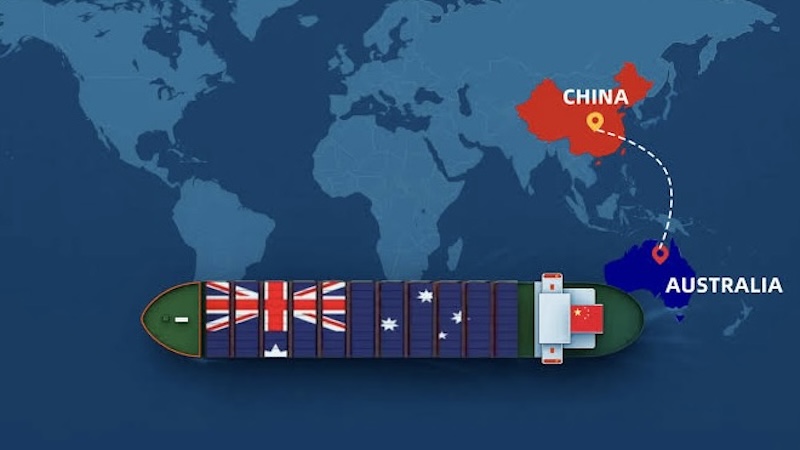
GST Is Charged on Your Freight, Not Just Your Goods
Australia charges the 10% on the whole landed value, not on your supplier’s invoice. The base is the customs value plus international transport, plus insurance, plus any duty, which means freight and insurance sit inside the figure the tax is calculated on.
What that actually costs you depends on your registration, not on the freight rate. A registered business claiming the credit funds the payment at the border and recovers it later, so the effect lands on cash flow. An importer who cannot claim it carries the extra as a permanent cost, and on a bulky product that belongs in whatever number you use to protect your profit margin.
Shrinking that base starts at the carton, which is why packing efficiency is a standing item on a quality control scope for bulky goods.
When you pay it comes down to how you are set up. Most importers settle the GST at clearance and recover it in a later return. An importer approved for the deferred scheme reports it on the same monthly return that carries the credit.
Where the credit fully covers it the two cancel out and no separate payment is needed. For everyone else it lands alongside the other costs of importing from China that arrive before a single unit has been sold.
The Charges That Land After the Vessel Does
Australian terminals charge their own fees for handling your container on the ground, and those fees have nothing to do with your ocean rate. They are set by the terminal, changed on the terminal’s own schedule, and passed on to you by whoever collects the container from the port.
Ask for them by name before booking rather than after invoicing. Terminal handling, an infrastructure charge, the import processing charge, and your broker’s fee all follow the freight. Asking for them in writing costs nothing before you book and everything afterward.
Compare quotes on the number that reaches your warehouse. Run each option through your landed cost per unit rather than the rate sheet, because on this route the rate sheet is the smaller half of the story.
Biosecurity Is a Cost You Can Prevent at the Factory
Australia inspects for pests harder than almost anywhere, and the bill for failing lands on you. A container held for treatment picks up the treatment fee, the storage while it waits, and the delay behind it. None of that is recoverable once the container is sitting at the port.
Solid wood pallets, crates, and bracing timber have to meet the international timber treatment standard. Heat treatment and fumigation both qualify, and processed materials such as plywood or particleboard generally fall outside the requirement entirely. A plastic or processed wood pallet avoids the treatment and certification that raw timber drags behind it, though it does not put your container beyond biosecurity attention.
Extra seasonal pest measures run from September to April, and the country lists change every season. They reach particular goods, countries, and shipping routes rather than everything from everywhere. Check this year’s list against your own product and route before you book, because an answer that was correct last year is not evidence about this one.
Four things are worth checking on the floor before it is sealed. Whether the timber is solid or processed, whether the treatment mark is present and legible, and whether pallets are free of bark, soil, and seeds. The fourth is whether the packing declaration matches what is actually loaded. A mark on a pallet is evidence, not proof, so the checks that pay are the physical ones.
Australia Is a Long Way From Its Own Ports
Most cargo lands at Sydney, Melbourne, Brisbane, or Fremantle, and almost nothing is close to all four. Picking the port that suits your supplier’s preferred sailing rather than your own warehouse is one of the more expensive habits here. The road leg is priced by the kilometer, and Australian kilometers add up fast.
Regional and remote delivery surcharges are real money here, not a rounding error. A warehouse a few hours beyond a capital city can cost more to reach from the port than the container cost to cross the Pacific. Quote the final leg to your actual address before you compare anything.
What Actually Lowers the Bill
Packaging pays back differently depending on how you ship, so check which basis you are on first. On shared containers, air, and express, trimming dead space helps only when volume is the charging basis. It does nothing for cargo already dense enough to be billed on weight.
On a full container the rate is fixed, so denser packing pays by fitting more units in or keeping you out of a second container. Work out how to calculate CBM from finished carton sizes before the first production run.
A second container into Australia does not just double the freight but repeats the whole Australian side of the bill. Every arrival brings its own terminal, processing, and brokerage charges, and another long haul inland on top. Put several suppliers’ goods in one box before it sails and that set is paid once, which is the whole argument for shipment consolidation in China.
Know which product is carrying the cost before you decide what to change. A freight cost per unit figure tells you whether the problem is one bulky product or the whole load. The answer decides whether you repack, reorder differently, or stop selling it.
The freight market itself moves between orders. Rates behave much as they do on China to USA shipping, rising with season and capacity, so a budget built in a quiet month will not survive September.
FAQ
Q1: What if I am not registered for GST?
Then the 10% is a real cost rather than a timing issue, because there is no credit to claim it back against. Whether registering makes sense depends on your turnover and how you sell, so put that question to your accountant rather than settling it on import cost alone.
Q2: Do I need a customs broker in Australia?
Not legally for every shipment, but almost every commercial importer uses one. The processing charge applies either way, and a classification error costs considerably more than the fee you avoided.
Q3: Can I delay paying the GST until after the goods arrive?
Approved importers who file monthly report it on their monthly BAS instead of paying it at the border. The GST figure itself does not change, but where the import is fully claimable the credit in that same return can offset it. That is what removes the separate cash payment.
Q4: Are plastic pallets worth the extra cost?
Often, though it is a calculation rather than a rule. They remove the treatment and paperwork risk that solid timber carries, so weigh the price difference and the load rating against what a treatment or hold would cost you.
Q5: Does the supplier’s packing declaration protect me?
It is the document the authorities read, but the responsibility stays with you as the importer. A declaration that does not match what is in the container is your problem to pay for, not the factory’s.
Q6: Does the AUD 1,000 threshold help a commercial importer?
Rarely, since a normal wholesale order passes AUD 1,000 easily and goes through a full customs declaration. Splitting one order into smaller consignments is not a workaround either, because the authorities can treat related consignments as a single importation and require the full declaration anyway.
Q7: My supplier offered a delivered price to my door. Should I take it?
Only after seeing it broken down. A single delivered figure hides which charges are included, and on this route the Australian side is where the surprises are. Ask for the line items before you compare it to anything.
Q8: How far ahead should I book for Christmas stock?
Earlier than the transit time suggests, because space tightens from around August and a missed sailing here is expensive to fix. If your goods or lane fall under this year’s pest measures, allow for that in the same plan. Recheck the list each year rather than carrying last year’s answer forward.
Conclusion
The Australian half of this bill is yours to decide, and the Chinese half is decided on the factory floor. Your port, your delivery address, your broker, and your tax position set most of the total. The factory controls carton sizes, the pallet material, how clean the load is, and whether the paperwork describes what is actually inside.
Timber packing, undeclared contamination, and cartons packed loose are all visible in the factory and invisible from Australia, and biosecurity is not a queue you want to join. We check them before the container closes, through quality control, which clears the failures you can still do something about.