
Shipment Consolidation in China: Cut Freight Costs
When you buy from several Chinese factories, shipping each order on its own often costs more than combining them, once the volume adds up to something close to a container. Shipment consolidation gathers everything at a single warehouse before export and sends it as one shipment.
| Three suppliers, 18 CBM total | Separately | Consolidated |
|---|---|---|
| Ocean bookings | 3 loose shipments | 1 full container |
| Handling fees | Charged 3 times | Charged once |
| Customs coordination | 3 separate processes | 1 coordinated process |
| Document sets | 3 separate sets | 1 coordinated set |
| Delivery appointments | 3 delivery slots | 1 delivery slot |
The freight gap is why buyers try it, and the single checkpoint is why they keep doing it.
What Consolidation Actually Is
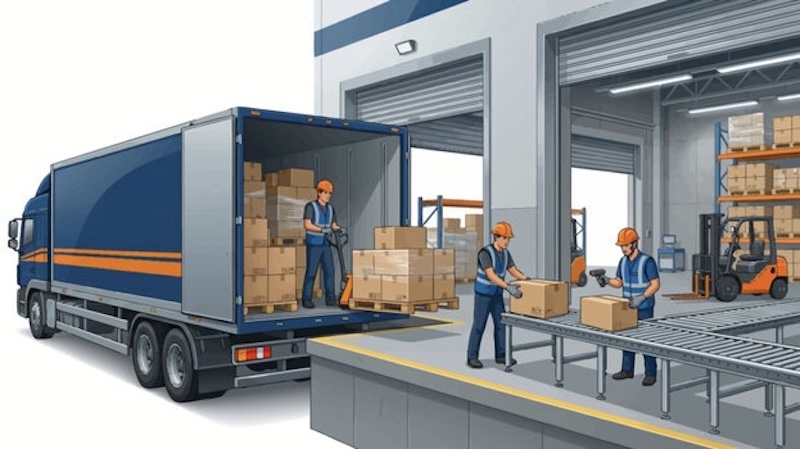
Consolidation means every supplier delivers to one warehouse in China, and one container leaves for you. You keep buying from as many factories as you like. Only the shipping changes.
The meeting point is usually a sourcing agent’s warehouse or a forwarder’s hub near a major port. Goods are received, counted, held if needed, and loaded together. Smaller orders can be combined into one shared container instead, though this article deals with volumes close to the point where a full container starts to win.
Most importers end up with several suppliers whether they planned to or not. A factory that is good at electronics rarely does fabric well, and China’s clusters spread those capabilities across different regions. That is also where the quieter costs of importing from China start multiplying, because every extra supplier means another booking, another document set, and another delivery to receive.
The warehouse where those deliveries meet is also the only place to open every carton before it disappears into a container, which is why quality control belongs in the consolidation plan rather than after it.
Where the Freight Saving Comes From
Loose cargo is billed on whichever is higher, its volume or its weight. A full container is billed at one rate for the whole box, so each 6 cubic meter shipment is billed separately, with booking and handling fees repeated at both ends.
Put the same 18 cubic meters in one container and the handling is charged once. On most lanes the crossover sits somewhere near 15 cubic meters, and the exact point moves with the route.
Work out the combined figure before you decide anything else. Add up the volume across all suppliers, calculate your combined CBM from their packing lists rather than their estimates, and compare it against a full container on your lane. If you land close to the line, pricing FCL vs LCL shipping for the same week turns the decision into a number instead of an argument.
How to Run One Without Losing the Saving
Consolidation is a scheduling job disguised as a logistics job. Give every supplier the same target ready date when you place the order, not after. Pick a warehouse that can receive, count, and hold goods rather than one that only stores and forwards. Then let each factory deliver, confirm the quantities against the packing list, and load once everything has arrived.
A late factory can erase the saving. While you wait, the goods already delivered sit in storage on your account, and a missed vessel pushes the whole shipment to the next sailing.
Build the buffer against each supplier’s real record rather than its promise. Factory lead time tends to slip in the same direction every time, and a supplier with a history of running late does not belong in a consolidated shipment at all.
The Check You Only Get Once
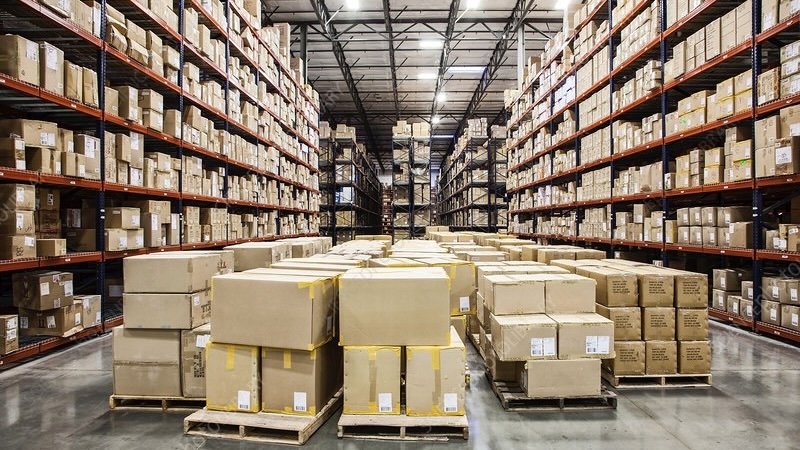
When every supplier’s goods sit in one warehouse, you get a single moment to look at the whole order before the doors are sealed. A container loading inspection at that point covers quantities, carton condition, visible damage, and how the cargo is loaded, in one visit instead of three.
What it does not cover is function, materials, or anything inside the box. Function and appearance need a separate product inspection before loading, at the factory or at the warehouse. Some material and compliance claims require laboratory testing, which has to be arranged earlier.
It is also the best point to confirm the combined gross weight before the container reaches the port. Heavy goods from one factory plus bulky light goods from another can push a container over its payload limit even when the volume fits.
That is why gross and net weight belong in the plan before loading rather than after, since catching it in the warehouse costs a repack and catching it at the port costs a rebooking.
When Consolidation Is Not Worth It
Skip it when one supplier already fills a container, or when production dates sit more than 2 or 3 weeks apart. Storage on the early goods eats the freight saving, and the wait costs you selling time you cannot buy back. Suppliers scattered across distant provinces are the other common case, since the inland trucking to a single hub can cost more than the ocean saving returns.
Run the comparison as a per unit number rather than a per shipment one. A container that saves $900 on freight but arrives 3 weeks later has not saved anything if the goods were needed in stock. Converting both options into a freight cost per unit figure, then setting that against the delay, is the only version of the math that answers the question.
FAQ
Q1: How many suppliers make consolidation worth setting up?
Two is usually enough if their combined volume approaches a container, and the count matters less than the volume. A single supplier shipping 4 cubic meters and another shipping 14 is a stronger case than five suppliers shipping 1 each.
Q2: Can I mix different product types in one container?
Yes, as long as the products can share a container without odor, moisture, contamination, or damage passing between them. Keep food, scented goods, and chemicals away from anything absorbent. The packing list has to itemize each product separately, because classification and duty rates differ by item.
Q3: How do I choose a consolidation warehouse I can trust?
Ask whether it will check received quantities against your packing list and send photos and a receiving report, not just confirm arrival. A warehouse that cannot tell you what turned up is worth nothing at the moment a supplier sends fewer units than ordered.
Q4: What should each supplier send to the warehouse?
Your order number, carton count, carton dimensions and weights, the packing list, the shipping marks, and the date they expect to deliver. Without the order number and the marks on the cartons, the warehouse cannot tell whose goods arrived, which is where most receiving disputes start.
Q5: How long can goods sit before storage charges start?
It varies by warehouse, and some charge from the first day. Get three numbers in writing before the first factory delivers: the free period, the billing unit, and the storage rate once that period ends. Those decide what a late supplier actually costs you.
Q6: What if some goods are urgent and others can wait?
Split it. Send the urgent items on their own and consolidate the rest, which costs more than sending everything in one consolidated shipment but far less than rushing all of it.
Q7: Who is liable if goods are damaged at the warehouse?
That depends on the storage terms, the liability cap, and whether the goods are insured while stored, so read those before the first delivery. The receiving report and its photos are what separate damage that arrived from the factory from damage that happened in the warehouse, which is the argument you will actually be having.
Q8: Who should book the container, the warehouse or my forwarder?
Normally your forwarder or sourcing agent, since a plain storage warehouse cannot take ocean space unless it also acts as a forwarder. The warehouse confirms the ready date and the final volume and weight, while the forwarder confirms the booking, the cut-off, and the move to the port. Put both sets in writing when you set the schedule.
Conclusion
The freight saving is easy to calculate and easy to lose, because it is only ever as good as the ready date of your slowest factory. Everything else in this article is arithmetic you can do once; that date is the part you have to manage every time.
Five suppliers means five chances for something to arrive wrong, and by the time the container is sealed you are looking at photographs instead of goods. We open the cartons at the consolidation warehouse, through quality control, so a problem from one factory does not travel with the other four.