Guangzhou Fabric Market: Where to Go and What to Check
Zhongda is not a market; it is a textile district of dozens of buildings, and turning up without a category is how buyers lose a day. Knowing which building holds your fabric and what to check at the stall turns a confusing sprawl into a fast trip.
| Common Mistake | Do This Instead |
|---|---|
| Arriving with no target fabric | Decide the category first |
| Starting on the wrong floor | Read the entrance directory |
| Judging by a swatch | Cut, wash, and test |
| No record of the stall | Log building, stall, code |
| Ignoring minimums | Ask before you negotiate |
Every one of those costs hours in Zhongda and nothing at all to prevent.
What Zhongda Actually Is
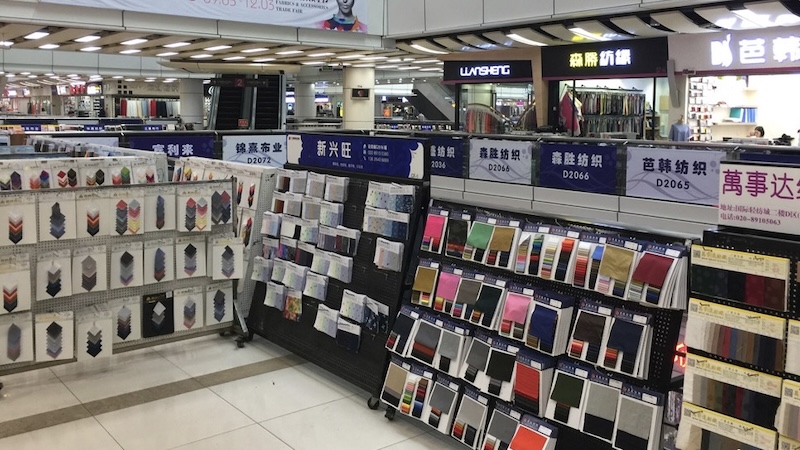
The district sits around Ruikang Road in Haizhu, near Sun Yat-sen University, and runs for several kilometers. Connected buildings hold stalls, showrooms, and specialist wholesalers.
Clothing fabric is the core, with home textiles, lace, trims, and faux leather spreading out around it. The city’s leather goods trade sits in its own districts elsewhere, which is the usual pattern across the wholesale markets in China: each one runs deep in a category and thin outside it.
The Guangzhou International Textile City is the usual place to start. It carries the widest mix under one roof, which makes it useful for a first orientation before you go looking for whichever building actually specializes in your fabric.
The district serves garment makers first and visitors second. That is why minimums, pricing, and attention all improve sharply once a vendor believes you are buying rolls rather than meters.
Turning a stall visit into an order that arrives as specified is where quality control starts, because the roll you were shown and the roll you are sent are two different things until somebody checks.
How the Buildings Are Organized
The main complex is loosely stacked by function, and the pattern is a guide rather than a rule. Trims dominate the lower levels and fabric the middle ones, but cotton, linen, knits, and womenswear fabrics also trade on the ground floor, so the entrance directory is the only map worth trusting.
| Level | Broadly |
|---|---|
| Lower levels | Trims, accessories, some fabric |
| Middle floors | Knits, wovens, denim, specialty |
| Upper floors | Showrooms, trading offices |
Around the main complex, buildings specialize. Wool and suiting cluster near the tailoring trade, and denim has its own sections covering every wash and weight. Home textiles sit in Yinling Textile City and its neighbors, while lace and embroidery concentrate around Ruikang Lace World.
Stock fabric markets are the district’s bargain corner. Surplus and off-season lots sell well below current stock, which suits flexible projects and rules out exact reorders, since what is there is whatever is left.
What to Check by Fabric Type
The same fabric name covers very different products, so specify measurably. Every category here has its own way of disappointing a buyer who bought on appearance.
Cotton and blends: ask for yarn count, weave density, and any certification claimed, then get shrinkage and color-fastness reports for bulk rather than trusting the swatch.
Silk and blends: pure mulberry silk sits beside polyester that looks identical. Specify the fiber content and the fabric weight in momme, the standard silk weight unit, and treat a burn test as a rough screen rather than proof.
Synthetics and performance fabrics: give the requirement a number, such as a waterproof rating in millimeters, and insist that test reports match the exact fabric, coating, and batch.
Denim: specify weight in ounces, what it is made of, and the wash, since ten ounces and fourteen ounces are different products for different seasons.
Lace, embroidery, and trims: samples matter more than descriptions here, and accessory sections are usually the fastest starting point for bag and accessory makers.
Verification beyond a burn test needs a laboratory. Exact fiber percentages, performance claims, and certification all need product testing in China, not a stall’s word. That matters most when the label is part of what you sell.
Minimums, Makers, and Traders
Ask about the minimum before you spend twenty minutes on a fabric. Retail floors sell by the meter, wholesale pricing starts at a roll, and custom dyeing or weaving commits you to far more per color.
The gap between makers and traders shows up in the terms. A mill has lower base prices and higher minimums, a trader takes small quantities and adds margin, and both are legitimate depending on the size of your run.
Minimums are a negotiation, not a wall. Showing a credible reorder pattern is what moves them, and the approach in negotiating a lower MOQ applies to fabric as well as to finished goods.
Sampling Is the Whole Job
A swatch tells you what the fabric looks like, not what it does. Cut it, wash it, dry it, and compare it against your reference before any bulk conversation, because shrinkage, hand, and color shift are what ruin a garment run.
Custom colors drift between the swatch and the roll. Dye lots and raw materials change, so approve a production cut against your own reference, not the sample that won the order. Keeping sample orders documented is what makes that comparison possible months later.
Write it down at the stall, not that evening. Photograph each fabric beside a card showing the building, stall number, fabric code, and quoted price, and save the vendor’s contact at the same time. Forty rolls look identical by dinner.
Before the Goods Leave
Fabric shipments fail in ways finished goods do not. Short rolls, mixed lots, unlabeled bolts, and moisture damage are the usual four. All are cheap to catch in Guangzhou and expensive to argue about at home.
Agree the defect tolerance in writing before production. Color-fastness rating, acceptable shrinkage, and faults per roll all belong in the order, with fabric faults scored against a points-based inspection standard rather than counted loosely. Agreeing what happens after a failed inspection matters as much as agreeing the threshold.
Confirm packing and handover with the forwarder. Roll length, labeling, outer packaging, moisture protection, and carton marks all need agreeing with each vendor. What happens after collection is set out in buying from wholesale markets.
Fitting Zhongda Into a Guangzhou Trip
Fabric buyers rarely need only fabric. Apparel, leather, beauty, and jewelry each have their own districts. Which district holds what, and how to sequence them in one trip, is mapped across the Guangzhou wholesale markets.
FAQ
Q1: Can vendors send swatches before I travel?
Many will, once you have named a fabric type and a rough quantity, and a swatch pack in advance narrows the buildings you actually need to walk. What they cannot send is the range, which is the reason to go.
Q2: Is the fabric in stock, or made after I order?
Both exist in the same building, and the answer changes your timeline completely. Ask whether the roll you are holding is current stock, a reorder from the mill, or a sample of something that has to be woven.
Q3: One vendor quotes per meter and another per kilo. How do I compare?
Convert both using the fabric width and weight, since a price per kilo hides how many meters you actually get. Ask for width and grams per square meter alongside every quote.
Q4: How do I combine several fabrics into one shipment?
Each fabric carries its own minimum, so a mixed order means meeting several at once. A forwarder or agent consolidates the cuts from different stalls into a single consignment.
Q5: Can I have fabric dyed to my own color?
Yes, above the dyeing minimum, which is usually far higher than the fabric minimum. Approve a lab dip against your reference under the same light conditions before the bulk lot is run.
Q6: The bulk roll looks different from my swatch. Is that normal?
Slight variation between a swatch and a full roll is common, while a visible difference in color, weight, or hand is not. Sign off a length from the real run before the balance is paid.
Q7: Can vendors handle finishing like printing or coating?
Many arrange it through partners rather than doing it themselves, which adds a step you cannot see. Ask who performs the process and how a failure gets corrected.
Q8: Can I reorder the same fabric next season?
Sometimes, though ranges change and a new dye lot rarely matches the old one exactly. Record the mill reference and fabric code, and buy enough of any critical color to cover the whole program in one run.
Conclusion
Zhongda rewards buyers who arrive with a category, a specification, and a way of recording what they saw, and overwhelms everyone else. Decide the fabric before the trip, work the right buildings, test what you are given, and settle tolerances in writing before the rolls are cut.
Matching bulk rolls against the cutting you approved, checking the dye lot, and catching a substituted composition all have to happen before the fabric leaves Guangzhou. We do that on the ground through quality control, so the problem is a conversation with the vendor rather than a write-off in your warehouse.