
Foshan Furniture Market: What to Check Before You Buy
Foshan has more furniture than anywhere in China, and no reliable way to tell who made it. A showroom is a sales floor, not a production line, and treating the two as one turns a good price into a bad order.
| Common Mistake | Do This Instead |
|---|---|
| Showroom price as factory price | Confirm who actually produces |
| Assuming they own a plant | Ask for license and address |
| Trusting a solid wood claim | Check hidden surfaces, cut samples |
| Paying before inspection | Release balance after inspection |
Each of those is a conversation in Foshan and a write-off once the container lands.
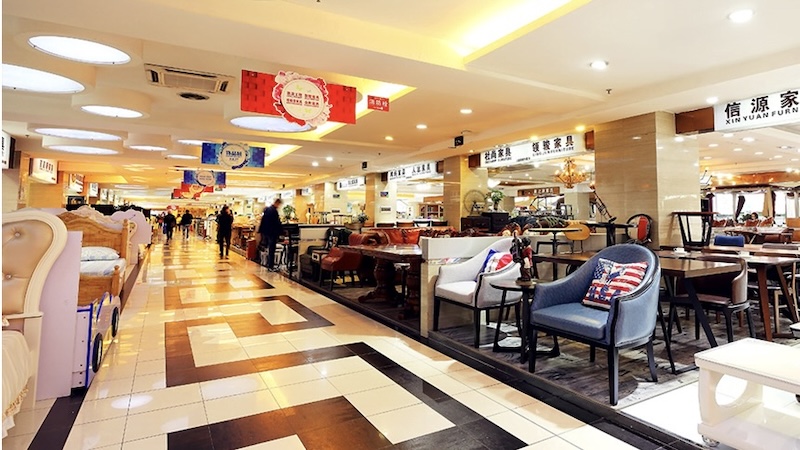
How Foshan Is Laid Out
Almost all of the trading happens in Lecong, a town in Shunde district strung along Highway 325. Buyers say Foshan and mean Lecong, where a run of malls sits close enough to walk between, and the malls are not interchangeable.
Louvre: the top of the range and the place to set a design benchmark, with prices that match the setting.
Sunlink North: mid to high across living room, bedroom, and office, and the usual second stop once Louvre has shown you what good looks like.
Sunlink South: cheaper and heavier on sofas and beds, and the oldest stretch of the strip.
Tuanyi: the one to walk if office furniture is what you came for, since that is where its range runs deepest.
The factories are somewhere else, many of them around Longjiang. Selling and making happen in different towns, which is the single fact that shapes how a Foshan trip should be planned.
That split is also why the showroom piece and the container piece can differ, and closing that gap is what manufacturing control does between approval and shipment.
Cover both halves or the trip only half works. A day in the malls tells you what exists and what it sells for, while the factory visits tell you what it costs to make and who can actually make it. Foshan is the specialist stop among the wholesale markets in China, which is why buyers come here for furniture rather than sourcing it alongside everything else.
Factories and Trading Companies Sit Side by Side
Both occupy the same showrooms, and both will describe themselves as manufacturers. Neither is a problem in itself: a good trading company pulls several factories’ ranges together and takes smaller orders, while a factory prices better on volume and controls what happens on the line. What matters is knowing which one you are dealing with before you price the order.
Who is who: which company runs the showroom, which company produces the goods, and how the two are related.
Production detail: what machinery runs this item, how the timber is dried, and the lead time on this exact model.
Access: whether you can visit the plant this week, and who will meet you there.
None of this is settled by conversation alone. Experienced trading companies know production in detail and answer these questions fluently, so a plant visit or a documented plant address is what actually decides it. Before a significant first order, a supplier quality audit confirms what a showroom cannot.
What to Check by Category
The same premium claim covers very different builds, so judge each type on its own terms.
Sofas and seating: ask what the frame is made of and how the timber was dried, since kiln drying lowers the risk of warping without removing it. Get the foam density, what supports the cushions underneath, and the leather grade in writing.
Tables and cabinets: establish which parts are solid wood and which are board with a thin wood surface, then inspect back panels, drawer interiors, and undersides, where the substitutions hide.
Outdoor furniture: material decides lifespan. Powder-coated aluminum or another weather-resistant frame, wicker treated for sunlight, hardware that will not rust, and fabric that will not fade.
Children’s furniture: the compliance load is heaviest here, and test reports have to match your destination market and the exact product rather than a similar model from last year.
Moisture is the failure nobody photographs. Timber that was not properly dried cracks and warps weeks after arriving in a drier climate, so ask about moisture content, the drying method, and how the wood is stored.
Lock the Sample Before Production Starts
The showroom piece is the factory’s best work, built carefully and kept indoors. What ships is made at production speed, which is why an approved reference has to exist before the run rather than after the complaint.
Approve one piece, document it, and reference it in the order. Wood species, foam grade, finish, hardware, and packing all belong in that record, because those are the items that get quietly substituted when a price was pushed hard.
Check Production, Not Just the Finished Goods
Furniture defects are cheapest to fix while the batch is still in pieces. An initial production check confirms the materials on the floor match what was agreed, which catches the wrong foam, board, or hardware before the whole run carries it.
The final check confirms the batch, and loading confirms what leaves. Dimensions, finish, function, and packing get sampled against your standard, and a container loading inspection then confirms the inspected goods are the ones that went into the box.
Keep the balance payment behind the result. Once the money has moved, a report only records what went wrong instead of fixing it.
Shipping Furniture Costs Volume, Not Weight
Furniture fills a container long before it reaches the weight limit, so volume is the whole cost conversation. Flat-pack design that assembles on arrival can cut the space a piece takes to a fraction, and it is worth asking for wherever it does not hurt the structure or the customer’s experience.
Work out the volume before you finalize the order. Running the numbers on CBM for ocean freight tells you which container size fits and whether adding pieces to fill it is worth doing.
Packing decides how much of it arrives sellable. Corner protectors, edge padding, cushioning between pieces, and strong outer cartons all belong in the written specification, and the container itself has to be clean and dry.
When an Agent Makes Sense in Foshan
The case for an agent here is specific: showrooms and plants are in different places, and the gap between them is where orders go wrong. Someone who can walk into the plant mid-run and check the timber and the foam against your approved piece is doing work you cannot do from a hotel.
The case against is equally clear. A single model from a supplier you have already visited and reordered from does not need one, and the fee on that order buys nothing. Whether it is worth it comes down to the same test as anywhere else, which is where finding a China sourcing agent starts.
Fitting Foshan Into a Southern China Trip
Foshan sits about an hour from Guangzhou, which makes pairing the two straightforward. Buyers combining furniture with apparel, textiles, or accessories usually add the Guangzhou wholesale markets to the same trip. The mechanics do not carry over unchanged, since furniture runs on an approved sample, a traceable factory, and packing designed around volume.
FAQ
Q1: Can I order one piece to test before committing to a run?
Usually yes, and it costs more per unit than the quoted price because a single build carries setup. Take it anyway on a new model, since a sofa or cabinet is one of the few products where the sample is the only honest preview of the batch.
Q2: What minimum order should I expect?
Minimums are set per model, material, or color, or as a total order value, not by the container. Whether the goods then fill a container is a shipping question, and mixed loads across several models are normal.
Q3: How do I confirm a piece is really solid wood?
Ask for species documentation and a cut sample from the actual production material, then check drawer interiors, back panels, and undersides. Where the claim carries real value in your market, lab verification is worth the cost.
Q4: Can Foshan factories supply certified timber if my market asks for it?
Many can, though the certificate has to cover the material in your order rather than the factory as a whole. Ask which specific components are covered and get the paperwork before production, because a claim added afterward is worth nothing.
Q5: Is the fabric or finish on a standard model changeable?
Usually yes, though each fabric or finish carries its own minimum, so two options on a small order can cost more than one. Ask whether the material is held in stock or ordered in, since that decides the wait.
Q6: Who owns the design if the factory develops it with me?
Settle it in writing before development starts, since a piece adapted from the factory’s own model is a different position from one drawn by you. Ambiguity here becomes a competitor selling your design.
Q7: What happens if pieces arrive damaged?
Photograph everything before unwrapping, keep the packing, and check the claim against the loading photographs. Packing, handling, or manufacturing each point to a different party, and the evidence decides which.
Q8: Should I ask for spare parts with the order?
Yes, and doing it during the run costs almost nothing. Extra hardware, touch-up finish, and a small quantity of cushion covers turn most warranty problems into a same-week fix.
Conclusion
Foshan makes the finding easy and the verifying hard, which is the opposite of how most buyers plan the trip. Confirm who produces the goods, put the approved piece in the order, check the batch inside the factory, and design for volume before agreeing a price.
The showroom is in one town and the line is in another, so nobody sees the batch unless somebody drives out to Longjiang and looks at it. We make that trip through manufacturing control, so what leaves the factory is the piece you approved rather than the one that was easier to build.