
Supplier Quality Audit in China: What to Check and Why
A factory audit answers the one question a sample cannot: is there a system behind the good sample, or just a good day. The sample shows the best a factory can do. The audit shows what it does on an ordinary day.
| Audit Area | What Good Looks Like |
|---|---|
| Management | Managed, not just declared |
| Quality system | Rules the floor follows |
| Process control | Written method, not habit |
| Materials | Inputs checked, not counted |
| In-process checks | Defects caught early |
| Data and improvement | Problems fixed, not logged |
A weak row here is not a detail to fix later but a reason to keep looking.
What an Audit Is, and What It Is Not
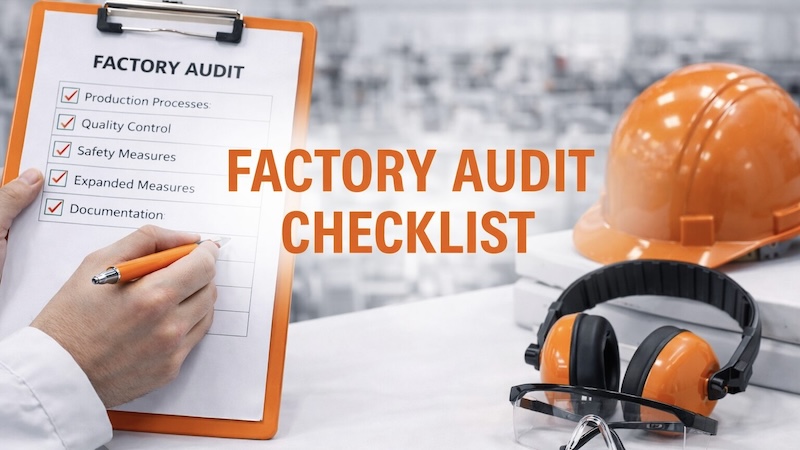
A factory audit checks the supplier’s quality systems, processes, equipment, and people, on site. Your own representative, a third-party auditor, or a sourcing company’s quality team can run it, but the target is always how the goods get made rather than the goods themselves.
It costs real money per factory, so run it once the list you built to find Chinese suppliers is down to two or three names. Learning to verify a Chinese company matters first, because a sales office is often at a different address from the plant that will build your order.
Getting into the right building, with somebody who knows which records to ask for, is what a factory audit buys.
An audit is not an inspection, and confusing the two leaves a gap. A pre-shipment inspection judges goods from one finished run, while an audit judges whether the factory can produce well before you commit at all. Whether the plant has room for your volume is a separate question that a factory capacity check answers.
Start With Management, Not Machines
The first signal is whether management treats quality as a process to run or a cost to cut. That decides how the whole system behaves under pressure, because a factory can own modern equipment and still ship defects if the people running it see quality as an expense.
Most factories have a quality policy, so the real test is whether it is alive on the floor. Ask whether operators can explain the defect risks at their own station, and whether quality targets are specific enough that somebody could miss them.
Ask for last month’s defect rate. A factory that manages quality produces it in minutes, while one that has to build the number for your visit is not tracking it.
The System on Paper and on the Floor
A quality system is only worth what the factory practices, not what the certificate claims. ISO 9001 is a common benchmark, but certification shows the system met the standard on the day it was checked, not that every process is still followed today.
Verify any certificate directly and check that its scope matches your product, because one for metal stamping means nothing if you are sourcing electronics. Then ask how the factory makes sure the current drawing is the one on the line, since production from an outdated spec is a common and quiet source of defects.
The single most revealing check is how they handled a real problem. Ask the supplier to walk you through one quality issue from the past six months. A weak factory sorts out the bad units and moves on. A strong one finds the cause, fixes the process, and checks the fix held.
Follow the Product Through the Line
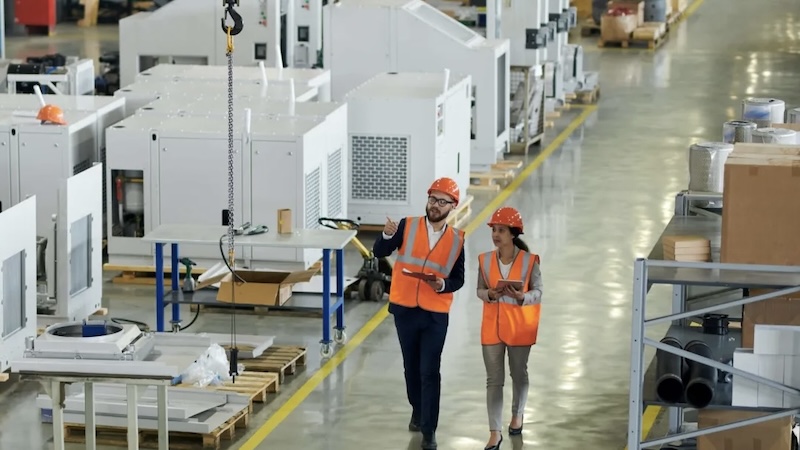
Walking the line from raw material to packaging is where an audit pays for itself, because paperwork hides what the floor reveals. This is the most detailed part of the visit, and the physical state of the plant is a signal on its own.
Look for written work instructions at each station. If operators work from memory, consistency depends on individuals who may leave. Where molding temperature, mixing ratios, or curing time drive quality, ask whether those settings are logged or just set once and trusted.
Check that defects are caught during production, not only at the end. Checkpoints after assembly or surface treatment catch problems where they are cheapest to fix, and there should be a marked-off area for rework and scrap. Then pick up two or three of the measuring tools and ask when they were last calibrated, because if those are out, every number the factory reports is out with them.
| On the Floor | Good Sign | Red Flag |
|---|---|---|
| Work instructions | Posted at each station | Missing or unwritten |
| Process settings | Monitored and logged | Set once, never checked |
| Defective units | Segregated and marked | Mixed with good stock |
| Measuring tools | Calibration current | No certificates on hand |
Check the Inputs, Not Just the Output
A factory’s output is only as good as the materials going in, and a surprising share of defects arrive with the materials. How a supplier handles incoming materials tells you how many problems it stops before they reach your product.
Ask to see incoming quality control in action, not just described. That means somebody checks materials against written criteria before they reach the line. Ask whether the factory keeps its own list of approved suppliers, because a plant that buys on price alone cannot promise consistent inputs.
Test whether they can trace a defect back to a material batch. Ask them to demonstrate it on a finished unit already on the shelf. A factory that can connect a fault to the exact batch behind it contains a problem fast, while one that cannot will rework far more than it needs to.
Does the Factory Improve, or Just Log Data?
Mature suppliers measure their own performance and act on it, and this is what separates a reliable partner from a lucky one. Ask to see trend charts for internal defect rates, customer returns, and on-time delivery.
Data with no action is theater, so read whether the trends actually move. A factory that does not track its own quality cannot improve on purpose, and one that collects numbers but changes nothing is just filing them. The useful question is whether last year’s recurring defect is still recurring.
How to Score and Use the Result
Most professional audits score each area and roll it into one result that sorts suppliers into three groups. Where the line falls varies by firm and by product, but the group a factory lands in tells you what to do next.
| Result | What It Means | Your Move |
|---|---|---|
| Approved | Minor gaps only | Standard monitoring |
| Conditional | Fixable gaps found | Corrective plan first |
| Not approved | Serious problems found | Re-audit before ordering |
A conditional result is where the audit proves its worth, if you follow up. A factory that closes its gaps in two weeks is a different supplier from one that sends vague updates for two months, and you now know which one you have.
Make closing the serious findings a condition of approval, so a conditional pass does not quietly become a production order. The report also reads better beside the sample and the quote, which is why it belongs in how you compare shortlisted suppliers.
When you do order, China supplier payment terms that release on a passed inspection keep the same discipline running through production.
FAQ
Q1: How much does a factory audit cost?
A standard one-day audit often runs a few hundred dollars, more for a distant plant or a wide scope. Set that against the order at risk, because the audit is almost always cheaper than finding the problem after the deposit is gone.
Q2: Should I audit before or after ordering samples?
Sample first, audit second, because a factory that cannot make an acceptable sample is not worth a visit. Once the sample proves the product is possible, the audit tells you whether the system exists to repeat it.
Q3: What is the difference between a quality audit and a social compliance audit?
A quality audit checks production systems, process control, and equipment. The social kind, ordered under names like BSCI or SMETA, checks labor conditions, safety, and ethics instead. A factory can pass one and fail the other, so run both if your market requires it.
Q4: Can I rely on an audit report the factory already has from another buyer?
Treat it as background, not proof, since you cannot see the scope, the date, or who paid for it. A report commissioned by somebody else may have checked a different product line or skipped the areas that matter to you.
Q5: Who should attend the audit from my side?
Nobody, in most cases, since a competent third party sees more in a day than a visiting buyer does. Go yourself when the product is unusual enough that you are the only person who knows what a defect looks like.
Q6: Can a factory stage things to pass an announced audit?
Up to a point, which is why a good auditor probes what is hard to fake: calibration records, material traceability, maintenance logs, and whether operators know their own acceptance criteria. A clean floor is easy to arrange for a day, and a paper trail is not.
Q7: What if the factory keeps delaying or refuses the audit?
Treat persistent avoidance as an answer. A capable factory has little to hide from an announced visit, so repeated postponement or a flat refusal usually signals either problems or inexperience with disciplined buyers.
Q8: The auditor found problems the factory disputes. Now what?
Ask for the evidence behind each finding, then let the factory answer in writing rather than on a call. A disagreement you can read side by side usually settles itself, and the ones that do not show you how this supplier will handle a defect claim later.
Conclusion
An audit is the last check that happens before your money is committed. After it, you are choosing between a deposit already paid and a supplier you have started to like, and neither of those leaves you objective.
Getting a straight answer on a finding the factory disputes, and going back weeks later to confirm the gaps actually closed, both need somebody who can be at the plant that week. Our factory audit includes that second visit as standard, because a list of problems nobody revisits changes nothing on the floor.