
Risks of Buying from Alibaba and How to Pay Safely
Most of what goes wrong on Alibaba traces back to four controls: who you pay, how you pay, what the order says, and what you do when it fails. None of them removes the risk, but skipping them is what turns an ordinary order into an expensive lesson.
| The stage | Where buyers lose money | How to stay safe |
|---|---|---|
| Who you pay | Scam posing as factory | Verify before any deposit |
| How you pay | Off-platform, personal account | Pay via Trade Assurance |
| What you sign | Vague terms, no sample | Specification in the order |
| When it fails | No proof, no channel | Dispute on the platform |
The first three stages are settled before you pay, and the fourth only works if you kept the evidence.
Know Who You Are Actually Paying
The first risk is not knowing who is on the other end of the payment. Many storefronts are traders reselling factory goods, some overstate their capacity, and a few are outright scams that collect a deposit with no intention to ship. A trader can be a perfectly good partner. A scam never is, and no badge on the profile separates the two for you.
Read the Alibaba Verified Supplier badge as a filter, not as proof. It reflects an independent on-site assessment of the company’s registration, facilities, and processes, which is a useful signal, but it never promises that your specific product, order, or batch will meet the agreed standard.
The real check is to verify the company yourself through its business license, registration date, and export history before any deposit moves. Ask who actually makes the goods, and ask for a live video walk-through of the line rather than a staged photo. A supplier who treats that request as an insult is telling you something before you have paid a cent.
Running those checks in Chinese, on Chinese records, is the everyday work of supplier verification, and it is far cheaper than any dispute later.
Choose a Payment Method That Protects You
How you pay decides how much you can recover when an order goes wrong. The same supplier can be reached through a protected channel or an exposed one, and the difference only becomes visible the day you need your money back.
| Payment route | Protection level | Watch out for |
|---|---|---|
| Card via Alibaba order | Platform, maybe card route | Issuer rules, fees |
| Official wire via Alibaba | Platform protection may apply | Use Alibaba’s bank details |
| Direct company-account wire | Little platform protection | Hard to recover |
| Personal or off-platform | Highest risk | Stop and verify |
The dividing line is not wire versus card, but whether the payment runs through the Alibaba order. Going through the Alibaba ordering process ties your money to the written order, and paying by card can add your bank’s own dispute route on top of it.
What that protection covers is set by your order terms and the current policy, so check the protected amount, the shipping date, what proof a claim needs, and the deadline before you pay. A discount for stepping outside the system, on Alibaba or any of the other Chinese wholesale websites, is the most expensive one on offer.
Put the Protection Into the Order
Trade Assurance and any later claim rest on what the order actually says, so the written order is where protection is won or lost. A detail agreed in chat but missing from the order is hard to enforce once a batch is wrong.
Move every point that decides acceptability into the order: model, material and grade, size and tolerance, the production deadline, the inspection requirement, and the payment milestones. Packaging needs the same treatment, meaning the retail pack, how strong the export carton has to be, the label and barcode placement, the shipping marks, and the condition the cartons must be in at handover.
Damage in transit is judged separately, against the delivery term, the carrier’s liability, and your insurance, though a supplier still answers when the packing failed the order or the term leaves the risk with them.
Then close the substitution gap. State that no material, component, packaging, or production site changes without your written approval, because an equivalent material is exactly how a cheaper build arrives with a clean conscience.
Name an approved sample as the standard, and tie the balance to a pre-shipment inspection rather than to a ship date. A vague term like “same as sample” with no signed reference sample is exactly what disputes turn on.
Treat a pass as one input, not a payment instruction. Release the balance when the result sits inside the acceptance limits you wrote in, the labels and documents your market needs are in hand, and the payment details still match the order.
A fail resets that list, and every other release condition in the order still has to be met before money moves. The balance waits until the rework has been re-checked by your inspector rather than closed by the supplier’s own note.
Warning Signs to Slow Down Before You Pay
Most bad orders send a signal before the deposit ever leaves your account. The ones below tend to appear in the days when money is about to move, which is exactly when a buyer is least inclined to slow down.
| Signal before payment | What it usually means |
|---|---|
| Unexplained price jump | Quote may be bait |
| New company on invoice | Identity may differ |
| Bank details change late | Classic account swap |
| Deposit demanded today | Pressure over evidence |
| Sample fee sent personally | Money outside the order |
A price that rises after you add material, packing, or testing requirements is normal, and only an increase nobody can explain belongs on that list. Changed bank details or a request to pay a personal account are different again, and either one stops the order on its own until you confirm it through the platform’s own channel.
For a tiny, one-off order, all this care can cost more than the goods, and a retail-style platform that ships a finished item keeps the money at risk small. Pushing the other way, onto the domestic platforms, buys a cheaper listing by giving up the claim channel entirely, which is the trade weighed in 1688 vs Alibaba.
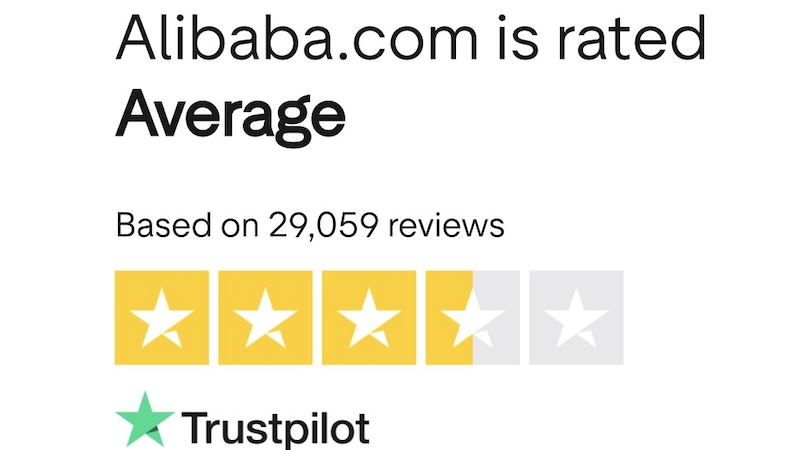
What to Do If the Order Goes Wrong
Your records decide whether the claim stands up at all, while the coverage, the eligibility, and the deadline decide what comes back. Keep the chat thread, the order and its terms, the approved sample, the inspection report, dated photos, and every payment and shipping record in one place, and screenshot the key approvals before production starts.
Watch the deadline more closely than the argument, since every route has its own window: the platform claim period on the order, your card issuer’s dispute limit, and any deadline in your own terms. Raise the problem the moment you inspect.
When the problem is quality rather than fraud, the path runs through a failed inspection and how you handle the report. Escalate to Alibaba’s own mediation if the supplier stalls, and let the documented gap between the sample and the batch do the arguing for you.
FAQ
Q1: Can I split one order across two suppliers to reduce the risk?
Yes, though it doubles the vetting, the samples, and the inspections. Keep the specification identical for both so you can compare the output.
Q2: Can I pay the deposit and balance from different company accounts?
Pay from the account that matches the buyer named on the order, since a mismatch can complicate a later claim. If you must use another entity, get it recorded on the order first.
Q3: Is it a problem when the registered address and the production address differ?
It is common, since the license address is often an office. Get the production address written into the order and confirmed in person before a large run.
Q4: What should I do the week the goods land?
Count the cartons, check labels and documents against the order, then open cartons from different parts of the load rather than whatever sits on top. Record how many units you opened and how many failed, since a rate is what carries an argument.
Q5: What if the goods pass inspection but fail once they reach me?
Sampling cannot catch every latent fault, so keep arrival records and report defects fast. A documented failure rate from real sales beats a single damaged unit as evidence.
Q6: Can I keep working with a supplier after a dispute?
Plenty do, since one bad batch handled honestly says more than a clean record never tested. Judge them on how they behaved when it cost them money, then tighten the milestones.
Q7: If I already paid off-platform and got scammed, can I recover anything?
Recovery is hard once money leaves the platform, though a bank recall on a fresh wire or a card chargeback is worth trying at once. Report the account to Alibaba too, since it can act against the seller even when it cannot refund you.
Q8: Does buying through a sourcing agent change my payment protection?
An agent can run the checks, inspections, and payment milestones, but your protection then rests on the agent’s contract and legal responsibility, not on the platform. It does not automatically replace Trade Assurance or guarantee you get your money back.
Conclusion
Before each payment, run the same three checks: the company is still the one you vetted, the account matches the order, and the goods have cleared the condition you set for that stage. Any one of them failing is a reason to hold, and holding costs a few days against an order you may not get back.
Confirming who is behind a listing, keeping the payment on the order, and getting the goods checked before the balance goes out are all hard to run from another timezone, in another language, on Chinese records. We handle the first through supplier verification, and the staged payments and the check before shipment come with managing the order.