
Trending Electronics from China: What to Buy
The electronics worth importing are rarely the novel ones; they are the ones that fix a daily annoyance at a price low enough to try. What separates a profitable import from a dead one is rarely the category; it is whether the claim on the box survives a meter, a lab, and a carrier.
| Category | The Sourcing Check |
|---|---|
| Smart home devices | Radio approval, platform support |
| Wireless audio | Battery life, firmware updates |
| Health monitors | Clinical validation, device class |
| Fast charging | Measured output under load |
| Home office gear | Real resolution, real wattage |
| Automotive and power | Battery rules, safety listing |
Six categories, and in each the check costs less than one container of returns.
Prove the Category Is Still Growing
A category that trended last year can be dead by the time your container lands, so verify the trend before the supplier. Four signals are free and take an afternoon.
| Signal | What It Tells You |
|---|---|
| Search interest over 12 months | Direction, not just level |
| Review growth on top listings | Whether units still move |
| New competing listings | How fast the shelf fills |
| Price drift in the category | Whether margin is eroding |
Read them together rather than one at a time. Rising searches alongside falling prices and a crowded shelf describe a maturing category, not an opening one, which should set your order size. It is the difference between finding the best products to import and picking one off a trend list.
Smart Home Devices
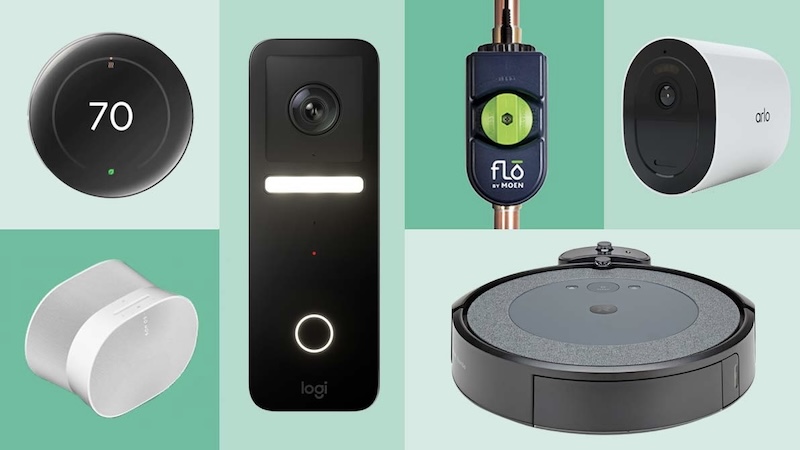
Smart plugs, sensors, cameras, and keypad locks now sell to people upgrading a home rather than building a system. The signal worth watching is how far platform support has spread down the price tiers, since budget models joining the same ecosystems brings new buyers in.
Compatibility decides the review score more than build quality does. Confirm which ecosystem the device joins and whether it runs on the 2.4 GHz band, which reaches further through walls and is all many sensors support. A device that cannot join the buyer’s setup gets returned even when it works.
Getting a real unit onto a real network before the order, not after the reviews arrive, is routine consumer electronics sourcing work.
Cameras and microphones carry a second problem unrelated to hardware. Where the video goes, which server stores it, and who can reach it are questions buyers and marketplaces now ask, so confirm the data routing first.
Wireless Audio
Audio has split into features buyers can hear and features they can only test, and the second group is where suppliers overstate. Noise cancellation, open-ear designs, and live translation now ship well below premium prices, and that spread is the trend worth tracking here.
Battery claims need a real drain test, not a datasheet. Play at normal volume with noise cancellation on and time it. Ask separately how firmware updates are delivered, since any feature that improves over time needs a supplier still updating next year.
Translation and voice features have to be tested on your own language pair. Performance varies enormously between pairs, and a feature that fails for your customers cannot be fixed after the order.
Health Monitors Carry the Highest Bar
Home health devices command better prices and carry a compliance burden unlike anything else on this list. Blood pressure monitors, pulse oximeters, sleep trackers, and glucose accessories sell steadily, and the signal to watch is how many now list outside pharmacy channels.
Ask what evidence sits behind the accuracy number. In the EU many fall under medical device rules; in the US they sit in a device classification with its own route.
A blood pressure monitor should arrive with a clinical validation report naming the protocol used, usually ISO 81060-2, and covering the exact model you are buying rather than a sibling product with a different sensor.
This is where supplier verification pays for itself fastest. Some factories describe compliance they cannot evidence, so check every document against your own model number before any deposit moves, working from the framework set out in electrical product compliance.
Fast Charging and Power
Major changes to charging standards can push buyers to replace hardware that still works, which keeps this category moving. Watch how fast a new connector or wattage tier reaches mainstream phones and laptops, because that is what dates the stock you are buying.
Test the wattage rather than believing it. A unit sold at 65W has to hold close to 65W under load rather than sagging after a minute, and how the total splits across ports matters as much as the headline. The detail to pin down sits in the guide to USB-C charger sourcing.
Cables fail on more than construction. A USB-C cable rated above 3A, or built to a high-speed specification that requires one, carries an E-marker chip declaring what it can handle. Check the chip, the wattage, and the real data speed rather than the print on the sleeve.
Work From Home Gear
Home office hardware sells to people replacing something that disappointed them, which sets a low tolerance for inflated specifications. Webcams, clip-on lights, USB microphones, cooling stands, and hubs keep moving now that hybrid work has settled in.
Two numbers here are inflated often enough to check every time. Webcam resolution and frame rate often describe an interpolated output rather than what the sensor delivers, and hubs advertising 100W pass-through often deliver less. Both are cheap to measure on a sample.
Automotive and Portable Power
Dash cams, cable organizers, emergency chargers, and power stations sell to drivers and to anyone wanting power away from a socket. Only the charging hardware is tied to electric vehicles, since dash cams serve every car on the road while power stations mostly go to camping and backup.
Anything with a large battery changes your freight before it changes your margin. State-of-charge limits, packing rules, and documentation may apply depending on how the battery ships and which carrier takes it, which narrows the routes and often forces sea freight. Settle it before you quote a delivery date, using the guide to importing lithium-ion batteries.
Dash cams are judged at night, so test them at night. Daytime footage looks fine from almost any sensor, while low light and parking mode generate the complaints.
Where These Products Are Made
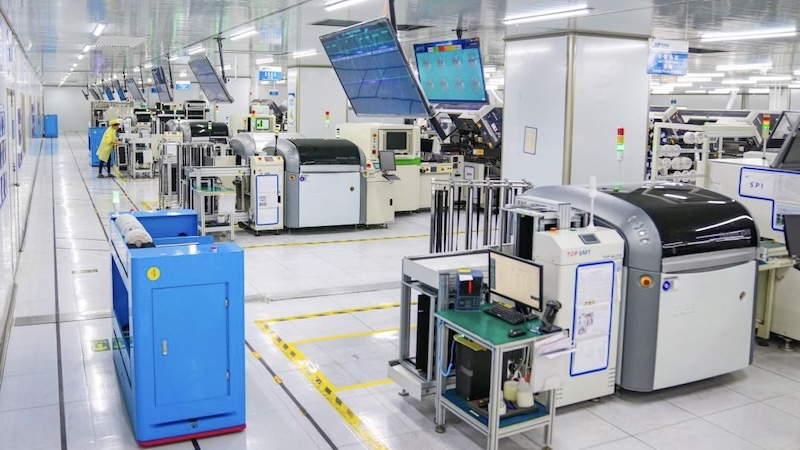
Most of the consumer electronics here cluster around the Shenzhen and Dongguan corridor, though medical devices and automotive products are often built elsewhere. Components, assembly, tooling, and testing sit within a short drive of each other, so sampling rounds move faster.
Proximity matters most when something has to be measured in person. Shenzhen electronics sourcing gives you same-week factory access and an inspector who can put a meter on the product, which beats a lower quote from a supplier nobody has visited.
What to Check Before the Bulk Order
Four steps turn a trending category into an order you can stand behind, and each one costs a fraction of a container you cannot list.
| Step | What It Settles |
|---|---|
| Test three to five samples | Early screening, not compliance |
| Request model-specific documents | What the file covers |
| Confirm capacity and current schedule | Whether the line is free |
| Inspect before final payment | Whether sampled units match |
Run the commercial check alongside the technical one. A category can be growing and still suit your channel badly once returns and fees are counted, which is why you validate the product before scaling. Marketplace sellers should also see where the margin goes, since consumer electronics on Amazon carry return rates that punish thin pricing.
FAQ
Q1: Do I have to be early into a category to make money in it?
No, since these categories reward execution more than timing, and a late entrant with a tested product and honest specifications often outsells an early one that shipped defects. What you cannot afford is entering late on price alone.
Q2: Does a lower factory price usually mean different parts inside?
Often yes, since the component is where cost comes out first in this category. Ask which cell, chip, or module the quote assumes and get it named in the order, because two identical-looking units can differ entirely inside.
Q3: Does a factory building for a known brand make it a safer choice for me?
It shows capability but says nothing about how they will treat a small order, since the line, the components, and the attention may all differ. Judge them on what they build for buyers your size.
Q4: Does adding wireless change the approval work on a product?
Yes, since a transmitting product has to meet the radio, electromagnetic, and other requirements of each market you sell into, and those routes differ. An approved module can often be carried into your product when the integration conditions are met, so ask which module the factory fits and whether a change means reassessment or fresh testing.
Q5: Does it matter whether the certificate is held by the factory or by me?
Holding it yourself gives you more control, but it does not make production portable on its own. Moving to a new factory can still mean updating the production site, getting the certification body to agree, and in some schemes an audit or extra testing.
Q6: What do I do with units that come back from customers?
Sort them by packaging condition and reported fault first, since most opened returns cannot be resold as new and testing every unit costs more than the margin on cheap goods. That sorting decides what is worth testing, refurbishing, stripping for spares, or scrapping, and the factory’s share belongs in writing as a replacement quantity, a credit, or free spares.
Q7: How long does one model stay sellable?
It depends on what the product depends on. Anything tied to a connector standard, a platform, or an app can age within a year, while cables and simple unconnected accessories often sell for several.
Q8: When is it worth moving from a stock model to a custom one?
When you have a specific reason: a recurring complaint, a compliance or channel requirement, a brand you are building, or a long-run cost you can only reach with your own tooling. Customizing without one of those is guessing with a higher minimum attached.
Conclusion
Nothing on this list is hard to buy, and everything on it is easy to buy badly. The importers who make money here hold a meter, a document, and an inspection report before the balance moves; the ones losing money hold a datasheet.
A cell that is not the cell on the datasheet, firmware that never gets updated again, a device that will not join the buyer’s network: none of these show up in photos, and all of them show up in reviews. We put a meter on the units and read the documents in Shenzhen under consumer electronics sourcing, so what you shortlisted is what actually ships.