
China Supply Chain Advantage: Why It’s Hard to Replace
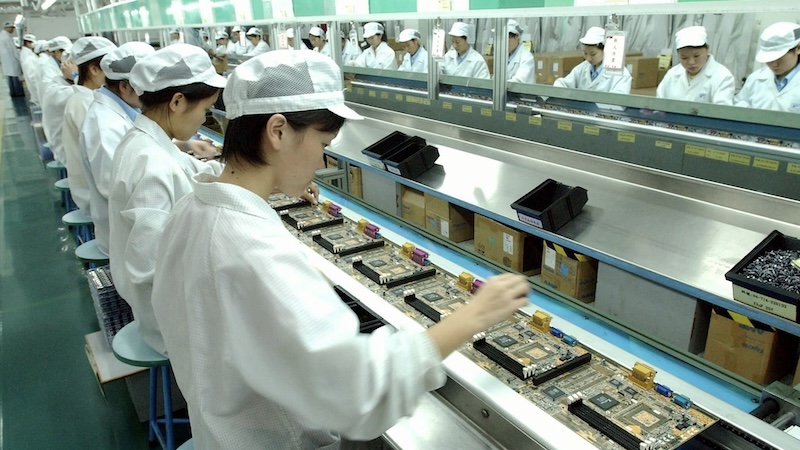
China’s manufacturing advantage is ecosystem density rather than cheap labor, which is why a cheaper wage somewhere else so rarely produces a lower landed cost. Parts, tooling, packaging, and freight all sit within reach of each other, and that took decades to assemble.
| What China has | What it means for you |
|---|---|
| Component clusters | Parts a short drive apart |
| Local tooling shops | Mold changes handled locally |
| Category specialization | Suppliers who know your product |
| Export infrastructure | Ports built for volume |
| Automated lines | Repeatable quality at scale |
Not one of those is the wage, and not one of them can be installed in a year.
The Density Is the Advantage, Not the Wage
Chinese wages have risen for two decades, and several countries now beat China on labor for simple goods. Vietnam, Bangladesh, and Cambodia all do. The center of gravity stays with manufacturing in China anyway, because the hourly rate is a small slice of what a finished, delivered unit actually costs you.
The number that decides your margin is landed cost and reliability, not the sticker wage. A cheaper wage elsewhere is routinely eaten by imported components, longer lead times, and a thinner supplier base. Those are the hidden costs of importing, and counting them usually closes most of the gap on its own.
Seeing which of those a particular plant would actually hand you means walking it, which is what a factory audit is for.
What the Closeness Actually Buys You
Take a smart air-quality monitor: a custom enclosure, a sensor board, a rechargeable cell, and retail packaging. In a market without China’s density those parts come from four or five suppliers, sometimes across borders, each with its own minimum, lead time, and shipping to arrange. In the Pearl River Delta they sit inside one regional chain, made by companies that already build exactly those parts.
The difference shows up in weeks, not days. A fragmented multi-country chain can run several weeks longer than a tight regional one, and on a seasonal product that gap is the difference between launching and missing the window.
Proximity matters most when something goes wrong. A part that measures a fraction off, a failed drop test, or a flat color needs a cause before it needs a quote, because the answer might be process, material, packaging, a mold repair, or a new tool. All of it moves faster with the toolmaker next to the line, which is what rapid prototyping in China is really buying you.
Automation Kept the Gap Open
As coastal wages climbed, many factories automated instead of relocating, and that changed what buyers are actually buying. Robots took over more of the line, so unit cost held while pay rose, and tight-tolerance work became repeatable rather than lucky.
It is a large part of why the manufacturing cost comparison still favors China once a product stops being a single molded piece. For any product that has to come out the same on order five as on order one, that consistency beats a slightly lower quote.
Made Elsewhere Might Still Mean Made in China
When a supplier says the product is made in Vietnam or Mexico, ask where the components and tooling come from. Moving final assembly out of China rarely moves the parts, the molds, or the materials. A China versus Vietnam comparison lands in the same place once the whole chain is counted.
Origin depends on your destination market, your product, and the specific processing done, so there is no single rule to apply. What is broadly true is that final packing, and often simple assembly, does not by itself create a new origin. Get it in writing from customs or a licensed broker before you build a tariff saving into your price.
A tariff decision is where this gets expensive. Ask for the parts list with origins, and request evidence of real local production rather than a photo of a building. A China Plus One move can look cheaper on paper and still leave the same dependency underneath, only with an extra border in the middle.
Turn That Depth Into Your Advantage
Stop shopping for China and start shopping for a cluster. Suppliers concentrate by category, so the region you search in shapes your price and lead time before you have spoken to anyone. Match your product to the right manufacturing hub first, because a factory working outside its own cluster is buying the parts in from one anyway.
Then work out how much of the product your supplier actually controls. A company that names its component sources, manages its tooling, and can explain what happens when a part changes is showing you its boundaries. Outsourcing is normal and good trading companies answer clearly, so settle who you are dealing with on the business license, the equipment on the floor, which steps run in house, and the production records.
Use the proximity where it earns the most, which is revision speed. Ask how long a tooling change takes, how fast a corrected sample reaches you, and whether the mold shop is local or contracted out. Judge the answers against your own tool, because a simple aluminum tool can move in days while a hardened steel one runs into weeks.
Repairing an existing mold is a different job from cutting a new one, but some dimensional and structural faults cannot be repaired at all. Ask for the cause, the proposed fix, and the evidence that a repair was ruled out before you accept a new tooling charge.
Density also lets you buy insurance cheaply, though two kinds of backup solve two different problems. A second maker in the same cluster covers one factory failing you on capacity, quality, or price. An option outside the region covers what a neighbor cannot: a power cut, a flood, a lockdown, or a port that stops moving. Keep your specifications, tooling records, and approved samples in your own files either way.
One more thing the cluster gives you is a cheaper way to ship. Because the suppliers sit close together, combining their goods into a single load beats collecting them from a scattered chain.
FAQ
Q1: Does this apply if my product is not electronics?
Yes, and the cluster simply moves. Furniture, textiles, hardware, and packaging each have their own regions with the same depth behind them, so what changes is where you should be searching rather than whether the effect is real.
Q2: Which products are better made outside China?
Mainly simple labor-only goods, where nothing needs tooling or a component chain. The advantage concentrates on multi-part, tooling-heavy, or quality-critical products, so match the product to the place rather than defaulting either way.
Q3: What if my product needs parts from two different clusters?
Put one plant in charge of final assembly and of coordinating the parts from both regions. That is a scheduling job, not ownership of the design or the tooling, so write down the bill of materials, the part specifications, and the approved sub-suppliers. No source change without your written approval, and keep incoming inspection and documentation on the parts that matter even though someone else is buying them.
Q4: Should a growing brand build around one cluster or several?
Start concentrated in the cluster that fits your main product, and only add a second cluster when a new category genuinely belongs somewhere else. Spreading across regions to survive a flood or a port closure is a different decision from spreading to make a different product, and it should not wait for one.
Q5: How do I reach cluster suppliers that never appear on Alibaba?
Many capable factories sell mainly to domestic buyers and never list in English. Reaching them usually takes a local partner with relationships in that cluster, a trade fair, or a referral, and that hidden layer is often where specialist capability sits.
Q6: How should Chinese New Year change my order timing?
The official closure is one to two weeks, but the disruption runs far longer: workers leave early, freight jams before the break, and staff return in waves afterward, so output can take several weeks to reach normal. Place orders well ahead of that window, get the closure dates in writing, and carry enough stock to cover a slow restart rather than a two-week gap.
Q7: Does the cluster advantage cover testing, or only parts?
Services cluster too, so testing labs, certification agents, and packaging designers sit near the manufacturing regions. That shows up when a sample fails, because the retest loop runs locally instead of shipping units across a border twice.
Q8: What should I check before agreeing to move production to a different factory?
Treat it as a new supplier, since sharing a parts network proves nothing about the equipment, the process controls, or the quality records at the new site.
Check separately whether your reports still cover the exact product version, whether a certificate or quality system tied to the production site needs updating, and whether the process, materials, structure, or a key component changed enough to need retesting. Approve on a factory verification and a pre-production run, not on a sample.
Conclusion
For products that depend on this ecosystem, the useful question is not whether to leave but how to use what is there while building realistic backups. Decide that product by product, and the yearly relocation debate stops eating your planning time.
A quote tells you nothing about whether the equipment exists, whether the line is busy, or whether the company behind it makes anything at all. We go and look, so a factory audit turns a shortlist into a supplier you have actually seen working.