Made in PRC: Will US Customs Accept That Label?
“Made in PRC” means made in China, and US customs will not accept it on its own. CBP has ruled repeatedly that the abbreviation does not tell an ordinary American buyer where the goods came from, so the label needs a form buyers recognize.
| Wording on the goods | US customs |
|---|---|
| Made in China | Accepted |
| Made in P.R. China | Accepted |
| Product of China | Accepted |
| Made in PRC | Not accepted |
| Made in P.R.C. | Not accepted |
| No origin mark | Needs an exception |
Fix the wording before the artwork goes to print, because once cartons exist the only remedies left are stickers, re-marking, or a held container.
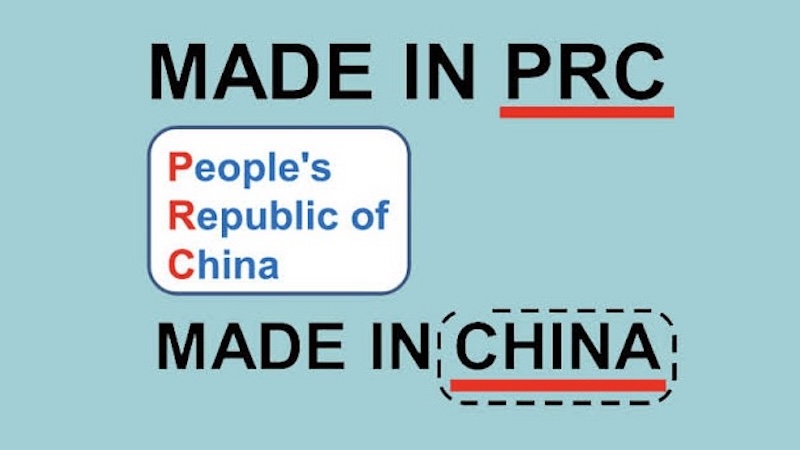
Will US Customs Accept “Made in PRC”?
Imported goods must carry the English name of the country they came from, printed clearly and durably enough to reach the buyer intact. The abbreviation fails that on the first count, and it is the same bar every other wording choice has to clear.
Suppliers default to their own house wording. Nobody in the plant is checking US marking rules for you, so the US version of the label has to come from your side and be stated in the order. That gap is normal in manufacturing in China, where a factory builds to the specification it is handed and nothing beyond it.
Reading the wording off a printed box, while the cartons are still in the factory, is one of the cheapest lines on a quality inspection checklist.
Which China Origin Labels Are Accepted?
“China” on its own is enough, and the “Made in” prefix is a habit rather than a requirement. A shopper who reads it without translating has everything the law asks for. The prefix only becomes mandatory when another place name on the pack could suggest a different source, which is the next section.
Should the Mark Be on the Product or the Packaging?
The default is the article itself, though the container can carry the mark in more cases than buyers expect. Where the container is what reaches the buyer and shows the origin clearly, marking the container can satisfy the rule. Which side of that line your product sits on is a question for your broker.
On molded or machined goods this is a tooling decision, not a printing one. A mark cut into a mold costs money to change and weeks to redo, which is why it belongs in the specification rather than in the artwork review two months later.
Decide the surface and the method in the same brief as your carton shipping marks, since both get sent to the factory once and are awkward to change afterward. A print method that scuffs off in transit fails at the point where it matters.
What If “USA” Appears Elsewhere on the Label?
A US address or city name on the packaging triggers a second rule. When a US place name appears and could mislead the buyer about where the goods were made, the origin has to sit close to it and in at least comparable size. It also has to be introduced by “Made in” or similar wording.
This is what catches brands using “Designed in California” or a head office address. You may keep the line. What you may not do is print it large on the front and hide “Made in China” in small type on the back panel. Where the US name is part of a trademark the rule is looser, so have your broker say which case your artwork falls into.
What to Tell the Supplier Before Production
Send the exact string you want printed, not a description of it. Putting “Made in China” inside quotation marks removes the guesswork, and it stops a well-meaning factory from filling the gap with its own.
Say where it goes and how it is applied. Product or package, printed or molded, which panel, and what minimum type size, all written into the purchase order alongside the packaging specification.
State that the invoice and the carton have to agree. Customs compares the origin you declared with the mark on the goods. A mismatch you created yourself is an avoidable way to stall your own customs clearance from China.
How to Check the Mark Before Shipping
Ask for photographs of the actual printed packaging, not the artwork file. Approved artwork and printed cartons differ more often than anyone expects, and the difference is only visible on a real box.
Have someone read the mark in the factory. A pre-shipment inspection can include the origin wording, its position, and its legibility in the checklist, which turns a compliance question into a line somebody physically verifies.
Remember the label says nothing about the goods themselves. The same three words appear on throwaway gadgets and on flagship electronics, so the wording is a customs question and everything else belongs to quality control in China.
What Happens If Customs Rejects the Mark?
The shipment is held until the wording is fixed, and the bill is yours. You arrange the re-marking, customs supervises it, and you are doing it on cargo whose freight you have already paid.
A marking duty of 10% of the value sits behind that. It applies only when nothing gets done in time, meaning the goods are not corrected, exported, or destroyed under customs supervision before your entry closes. There is no discretion to waive or reduce it.
The label wording never changes what you owe in duty. Your rate comes from the HS code from China and the legal origin of the goods, so relabeling fixes a marking problem and does nothing about US tariffs.
FAQ
Q1: What do I mark if my goods are assembled in Vietnam from Chinese parts?
Not necessarily Vietnam. CBP asks whether the work done there gave the goods a new name, character, or use, judged on all the facts rather than on how much labor went in, and simple assembly usually falls short. Falling short does not by itself tell you which country to name, so get a written determination for your specific product before anything prints.
Q2: Does the origin mark have to be in English?
For US-bound goods, yes. The country name has to appear in English even when everything else on the packaging is in another language, and a translation elsewhere on the box does not substitute for it.
Q3: Does a Hong Kong office address on my packaging matter?
It can, because the rule covers any place name that is not the country of origin, not only US ones. An address that points somewhere other than the real origin pulls the mark into the same treatment.
Q4: What do I do if my product is too small to carry legible wording?
Marking rules bend for size, and the usual answer is to move the mark to the packaging the buyer opens. Settle that in writing before tooling, because “it did not fit” is not a defense at the border.
Q5: Do the parts and accessories inside the box need their own mark?
Usually not. If the pieces stay in a correctly marked retail pack that reaches the buyer unopened, the pack can carry the origin for everything inside. Where the set mixes countries, or holds items a buyer would treat as separate products, each origin has to be visible to that buyer, though listing them on the outer pack is normally enough. Marking the pieces themselves is the last resort.
Q6: What if my supplier offers to print a different country?
Refuse it. The offer itself tells you what kind of supplier you have, and misdeclaring origin is illegal, with the liability landing on you as the importer and penalties far larger than any duty saved.
Q7: Can a sticker fix wording that is already printed?
Often yes, if it is durable enough to stay on and placed where the buyer will see it. Arrange it before the goods leave the factory, not after they land.
Q8: Who is responsible for the origin mark if a retailer repackages my goods?
You are, and it lands in three places. First, the goods have to be correctly marked when they arrive, which is true whatever happens to them afterward.
Second, if you already know they will be repacked after clearing customs, CBP wants a certification from you that either the new packaging will carry the mark or the repacker will be told to carry it. Third, that notice goes to the retailer in writing when you hand the goods over. A contract can move the reprinting and the filing to them, but not those three duties.
Conclusion
Origin marking is a printing decision made months before it becomes a customs decision, so it goes wrong cheaply and gets fixed expensively. The version that costs money is always the one nobody was asked to confirm.
Getting the string right, confirming it reached the printed box, and catching a mismatch before the goods sail all happen in China rather than at your port. Our quality inspection team reads the label with the rest of the checklist, so the first person to examine your marking is not a customs officer.