
US Tariffs on Chinese Imports: What You Actually Pay
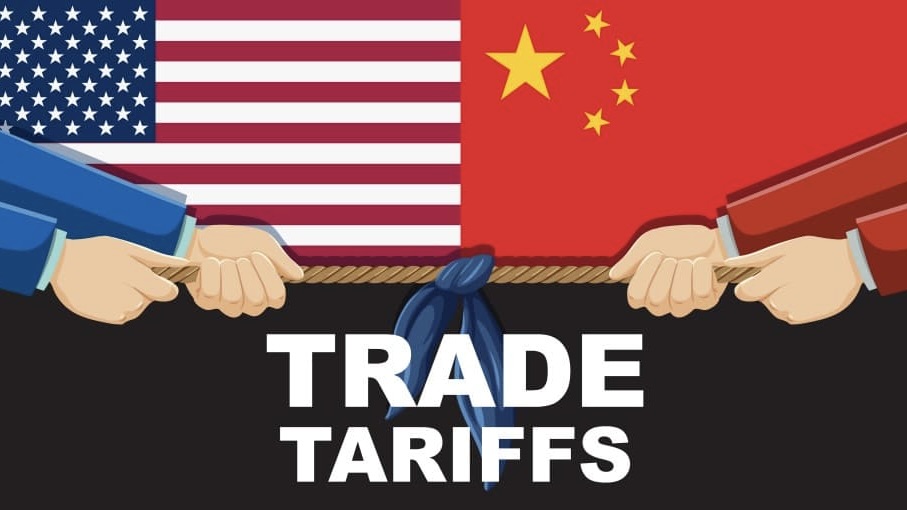
No single rate answers this, because a Chinese product now clears customs through several tariffs at once. Miss one layer and the shortfall shows up in your margin, not in the quote you were comparing.
| Layer | What It Adds |
|---|---|
| Customs value | Base, near FOB price |
| Base duty | Set by your HTS code |
| Section 301, 2018 lists | 7.5% to 100% |
| Section 301, forced labor | 12.5% unless exempted |
| Section 232 | Listed metal codes only |
| Anti-dumping, countervailing | None, or above 200% |
| Entry charges | Percentages, broker, and bond |
Rates were checked in August 2026, and an ordinary consumer product now picks up most of that list rather than one line of it.
Start With the Customs Value, Not the Factory Quote
Every percentage below is applied to your customs value, so getting that number wrong multiplies through the whole stack. It usually sits close to your factory-to-port price, before freight and insurance are added.
Two things catch people here. If the supplier quoted a delivered price with freight inside it, you strip those costs back out. Tooling or molds you paid for separately get added on, spread across the units they produce rather than dropped onto one shipment.
You already hold half of this. You know what the tooling cost, your forwarder can prove the freight, and the factory only has to confirm what its own quote covers. Ask while you are still negotiating, not during shipping week.
Holding a supplier to that breakdown while the terms are still open is routine China purchase management, and it is far easier from inside China than over email.
Your HTS Code Decides Almost Everything
One ten-digit code sets your base duty and pulls in most of the extra tariffs, making it the costliest detail in the entry. Look it up at hts.usitc.gov, and treat your supplier’s code as a starting point rather than an answer.
The factory’s code was written for Chinese export paperwork, not for your duty bill. The two systems share only their first six digits, which is why an HS code from China rarely survives US customs unchanged.
Get it wrong and the bill comes back to you. Back duty and penalties follow the importer on the entry, which on most orders is you. A shaky code also stalls the goods, and customs clearance from China slows down every time an officer has to ask what the product really is. The right code needs facts a factory rarely volunteers: exact materials, component weights, and intended use.
Section 301 Is Still Here, and There Are Now Two of Them
The original Section 301 lists from 2018 are still in force. Most covered products sit at 25% and List 4A consumer goods at 7.5%. Strategic categories run far higher, with electric vehicles at 100% and solar cells at 50%.
A second Section 301 action took effect on July 24, 2026. It is aimed at countries that fail to block goods made with forced labor, so nobody is accusing your factory of anything. You pay it anyway, 12.5% on top of the base duty, unless your code sits on that action’s own exemption list.
The jump is smaller than the headline suggests. That 12.5% replaced a 10% surcharge which expired the same morning, so for goods already paying it the real change is 2.5 points, not 12.5.
The 2018 lists have their own exclusions, and matching the code is not enough to use one. Those 178 exclusions cover the older layer only and expire on 10 November 2026. Code, product description, and date all have to line up.
The Tariffs That Were Struck Down, and the Money You May Be Owed
On February 20, 2026 the Supreme Court held that the emergency powers law does not let a president impose tariffs. That killed the reciprocal and fentanyl-related charges Chinese goods had carried, which show up on entries as IEEPA duties.
The money is real, but it is neither automatic nor universal. Whether an entry still qualifies depends on when it was closed, and the refund goes to whoever was named as the importer rather than whoever paid the invoice.
Ask your broker three questions this week. Which entries carried those duties, whether each one still qualifies, and whether a claim has actually gone in. Long-closed entries may be past reach, so start with the ones that are not.
Section 232, Anti-Dumping, and the Charges Nobody Quotes
Steel, aluminum, and copper carry their own tariff under Section 232, and it reaches well past raw metal. Rates run to 50% on the metals and 25% on listed finished goods, charged on the full customs value rather than on the metal inside.
The list decides this, not how metallic the product looks. Your code is either on it or it is not. Goods that are caught get left out of the new forced-labor duty, one of the few places the layers do not compound.
Anti-dumping and countervailing duties are the layer that kills a product outright. Most goods never meet one, but where an order already covers your product and country the rate can pass 200%, which turns a working margin into a write-off.
Mattresses, steel, solar, some furniture, and paper are the usual suspects. Rates are set supplier by supplier, and what you pay at the border is only a deposit. Ask your broker before you sample, not after you order.
Then the entry charges arrive, and nobody quotes them. There is a processing fee, a harbor fee on ocean freight, the broker’s charge for each entry, and a bond that runs per shipment or by the year. Consolidating shipments spreads the per-entry ones across more units.
The 800 Dollar Exemption Is Gone
The cheap sample is now an import. Chinese goods lost the 800 dollar duty-free allowance in 2025 and all other origins followed, so every parcel now needs a declaration and pays whatever its code attracts.
Plan on it staying gone. A courier parcel and a container follow different paperwork but the same principle, and choosing between a pro forma or commercial invoice now matters on a $50 sample.
What This Does to Your Numbers
A consumer product that once landed at 7.5% over the base rate can now carry 20% or more before freight. Here is that arithmetic on a $20,000 ocean shipment of a consumer good with a 3.4% base duty and no exemption from either 301 layer.
| Layer | Amount |
|---|---|
| Customs value | $20,000 |
| Base duty, 3.4% | $680 |
| Section 301, 7.5% | $1,500 |
| Forced labor, 12.5% | $2,500 |
| Processing fee | $69 |
| Harbor fee, ocean | $25 |
| Total to customs | $4,774 |
That is 23.9% added to the factory price, and it is the easy case. No metals tariff, no anti-dumping order, no broker fee, no bond. Add those and the freight and you have your landed cost, which is the only number worth pricing from.
Some products stop working, and that is useful information. Run the arithmetic before the sample rather than after the container, because repricing early is the difference between protecting your margin and absorbing the change. When the stack eats the margin, the answer is a new specification, a new category, or a China plus one strategy. Waiting for the rate to fall is not a plan.
FAQ
Q1: When do I actually pay the tariffs?
On import, not on sale. Your broker will want the money at or around release, so the cash goes out before you have sold a single unit.
Q2: Does finishing the product in another country remove the China tariffs?
Only if the work done there changes what the product actually is. Light assembly, testing, or repackaging leaves the goods Chinese and the tariffs in place.
Q3: How long can I hold a landed price for my own customers?
Shorter than you would like. Quote against a review date rather than a season, and keep a clause that reopens the price if the duty on your code moves.
Q4: If I buy DDP, does the supplier absorb the tariffs?
They price them in rather than absorb them, and the real question is whose name goes on the entry. Ask to see the paperwork, because on an entry in somebody else’s name you have no power to correct it or to claim anything back.
Q5: Does a bonded warehouse cut what I pay?
It moves the payment, not the amount. Duty falls due when stock leaves the warehouse for sale, which helps cash flow on slow-moving stock and does nothing for a fast seller.
Q6: Can I recover the tariffs if the goods leave the country again?
Often yes, through a drawback claim, provided the goods go out much as they came in. The record-keeping only pays off on repeat volume, so set it up before the first export rather than after.
Q7: A competitor lands the same product cheaper. What are they doing?
Usually a different classification, an exclusion you have not checked, or a second origin running alongside China. Compare their product to yours in detail before you assume they simply buy better.
Q8: My freight forwarder offers to handle customs. Is that the same as a broker?
Many forwarders hold a broker licence or subcontract one, so ask who signs the entry and whose licence sits on it. That name is who answers to customs, and it should be someone you can reach directly.
Conclusion
The stack changed three times in five months, and the rate you memorized last year is now the expensive part. Pricing from a number you have not rechecked is the fastest way to give the margin away.
Getting a clean price breakdown, exact materials and weights, and the shipping documents out of a factory on time is hard from another continent. We do that through purchase management, so the duty is priced in before the order rather than discovered after it.