Amazon Compliance: Check It Before You Pay the Factory
Get the paperwork right before your deposit leaves the bank, because after that you are just paying for a problem you already own. A document that takes one afternoon to chase today turns into a pallet of stock you cannot sell four months from now.
| When You Spot the Gap | What It Costs | Remaining Options |
|---|---|---|
| Before the deposit | A few emails | All of them |
| After the deposit | Retesting, new artwork | Most of them |
| After production | Rework or scrap | Few and costly |
| Once it hits FBA | Per-unit fees, storage | Costly and uncertain |
The problem is the same on all four rows, and only the price tag moves.
The Factory’s Paperwork Was Never Meant for Amazon
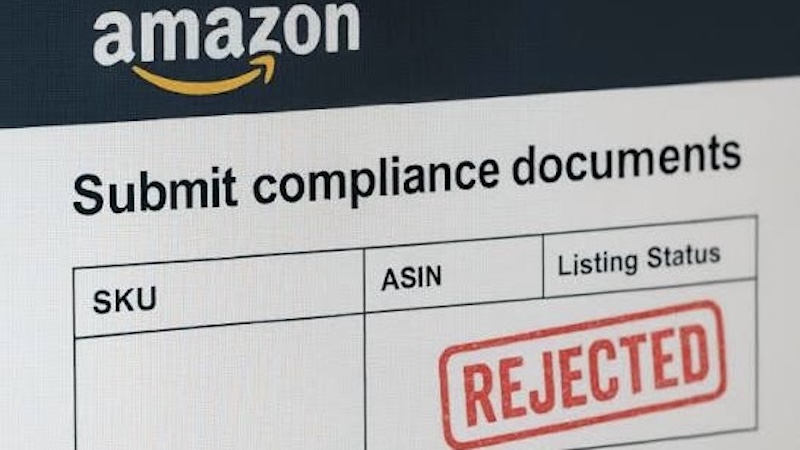
Your supplier’s documents were made to win your order, not to pass an Amazon review. Nobody in that building gets paid on whether Amazon accepts the file, which is why sourcing from China for Amazon is a process rather than a purchase.
So the same three gaps show up, over and over. Your SKU is not named anywhere in the report’s scope, or the report predates a change to the product or the standard, or the manufacturer named on it cannot be tied back to the plant building your order.
Confirming a factory can produce documents that match the product it is building is what supplier verification does before the deposit.
A supplier badge is not evidence of compliance. An Alibaba verified supplier check confirms the seller exists and trades, and says nothing about whether your product’s file will hold up.
Read the Report Against Your Own Order
A test report proves the configuration that went into the lab, plus whatever related models its scope names. Sit down with the report and your purchase order side by side.
Start with what the report covers. Does your SKU appear in its scope, or only the factory’s standard version, and does it cover the materials and the color you ordered, since pigments are chemistry and some results travel across a range while others do not?
Then check the report itself. A scan of the factory’s own pass sheet is not a report, and being a third party is not enough either. The lab has to be accredited for the standard you are claiming, and some Amazon categories only accept reports from providers they name.
The standard has to be the one in force now, and the report has to cover the parts the requirement reaches, which for an electrical product means the unit with its power supply rather than the retail box. Packaging text is a separate review.
Confirm the requirement and the existing file before the deposit, test and approve a representative sample before production runs, and check the goods against that approved version before the balance. Food-contact items follow the same sequence with a narrower gate, which is why household goods on Amazon get pulled for material proof more often than for defects.
Your Own Box Can Get You Pulled
Plenty of listings die even though the product itself was fine, because of a word the seller printed on the package. The product was never the problem, and neither was the factory.
Some words pull scrutiny on their own. A chemical claim like “non-toxic” or “BPA-free” needs a chemical report behind it. “For babies” or “for kids” drops your product under children’s safety rules, whether you meant that or not.
“Antibacterial” or “sanitizing” is the dangerous one. A claim that the product protects itself may sit inside a narrow exemption, while a claim that it protects the user or kills germs can push it into pesticide registration. “Organic” and “natural” are controlled words in several categories, and “medical grade” or any health promise is the quickest way to lose a listing.
You wrote those words, not the factory. They printed the artwork you approved, so put your marketing copy next to your test reports before it goes to print and cut every claim the paperwork cannot back up.
The risk rises where the claim is the product. That is the whole of beauty and healthcare products, and the reason the decision starts back at choosing profitable products.
Add One Accessory, Change the Whole Answer
Amazon looks at the box you ship, not the main item on its own. A product that passes easily by itself can fall under completely different rules once you add the freebie that was supposed to help your listing.
| What You Add | What It Can Trigger |
|---|---|
| Lithium battery | Battery shipping tests |
| Small magnet | Child safety review |
| Liquid or gel | Safety data sheet |
| Glue or solvent | Dangerous goods check |
| Aerosol part | Carrier restrictions |
| Free kids’ item | Children’s product rules |
Bundles get decided after the deposit, so run the check again on the final box or accept that your file describes a product you no longer sell.
For liquids, coatings or batteries, the deciding factor is not how good each document is. It is whether the safety data sheet, the carton and the spec sheet all say the same thing, since reviewers and carriers compare them and one mismatch delays an ordinary shipment for weeks.
Two Lines to Put in the Purchase Order
A promise made on a call is worth nothing on the day you need it. Two things belong in writing, in the order itself, before any money moves:
Who books the lab, and which unit goes in it. Write into the order who selects the test sample, how it is marked and sealed, and how production units are to match the version that was tested.
No unapproved changes. Materials, coatings, packaging, labels, manuals and markings cannot change without your written approval, because a switched resin supplier puts your report’s coverage in question and you find out at the next request. Whether the factory can hold that line looks more like a supplier quality audit than a paperwork exercise.
The UK and the EU Are Two Different Jobs
Some test results may be accepted in the UK, the EU and the US alike, but your labels have to be checked market by market. What goes wrong is language, importer details, or a warning required in one market and missing on the other.
All of it lives on the artwork, so pick your target marketplaces before the artwork is final and check whether one box can legally cover them all. Fix it later and you are paying a relabeling crew in a warehouse, and the FBA prep requirements will not rescue a product that was never allowed on the platform.
FAQ
Q1: Does buying from a trading company instead of the factory change the paperwork?
A trading company can pass reports along, but often cannot tell you which factory ran the order or whether that changed between shipments.
Q2: Is a factory’s history of selling to Amazon sellers good enough?
No, because Amazon reviews the seller’s file, not the factory’s sales history. Ask which buyer, which marketplace, and whether that buyer was ever asked for documents, and the answer usually gets very short.
Q3: Can I start the listing while the documents are still being sorted out?
You can usually build the listing, but do not let the goods ship on the hope that the file catches up.
Q4: Is a test report in Chinese a problem?
Ask the lab for an official English version from the start, since a translation you produce yourself is not part of the report.
Q5: Do I still need reports when reselling an existing brand?
Often yes, because the platform asks whoever is selling, not whoever made it. Get the brand owner’s documents in writing before you buy the stock, not after the request lands.
Q6: Do I need new reports after switching factories?
Not automatically, but the file has to be re-examined. Whether you need a new one depends on changes to materials, components, process, or the maker named on it, and a change often means retesting only the affected part.
Q7: Why did Amazon ask for more after my product passed a lab test?
A lab result only proves the tests listed on that report. The platform may want a signed declaration, packaging photos, or manufacturer details on top of it, so ask which document is missing before you buy another full test package.
Q8: Why bother when my competitor sells the same item with no paperwork?
You cannot see that seller’s file, their product version, or whether a review is already open. Judge your own product on your own documents, and pay on those.
Conclusion
The paperwork is not the hard part, and neither is the testing. The hard part is asking while the factory still needs something from you, which stops being true the moment your deposit clears.
The listing comes down first and the explanation comes later, which is the wrong order when the stock is already sitting in an Amazon warehouse. We ask on site, match the model numbers to your order, and confirm who issued the file, through supplier verification, before your deposit is the thing holding the deal together.