
Best Stores for Retail Arbitrage: Where to Source
The sellers who last in retail arbitrage are not the ones who scan the most barcodes; they are the ones who find sources competitors have not shared yet, and who move up the supply chain toward inventory they can reorder. Clearance aisles teach you how demand and fees work, but a source you cannot repeat is a job rather than a business.
| Source | Margin Potential | Scalability | Best For |
|---|---|---|---|
| Big-box clearance | Moderate | Low | Learning the model |
| Discount retailers | Variable, occasionally high | Low | Brand-name outliers |
| Online arbitrage | Moderate | Medium | Scaling without driving |
| Wholesale clubs | Lower, steadier | Medium | Bulk repeat inventory |
| China direct | Highest, if landed cost works | High | Repeatable supply |
The pattern is consistent: the easier a source is to access, the faster the margin gets competed away.
Physical Retail: Where Most Sellers Start
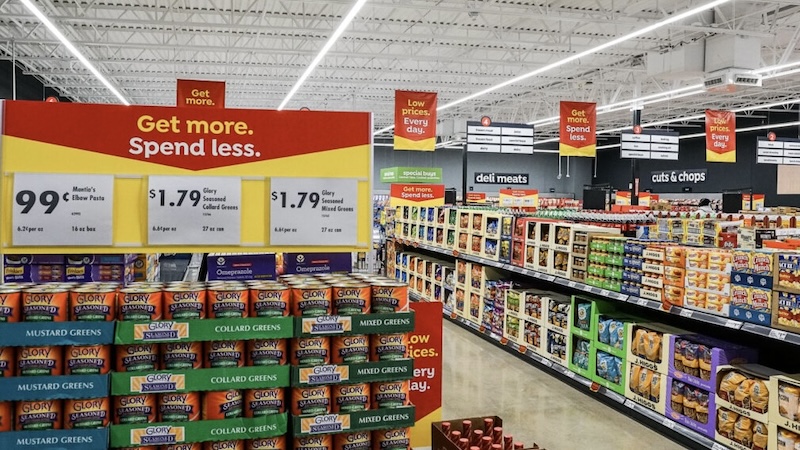
Big-box clearance at chains such as Walmart and Target is where almost everyone begins, because the markdown cycles are frequent and the stock turns over constantly. Items are often reduced in the system before the shelf tag catches up, so disciplined sellers scan the whole clearance area rather than trusting the label, and store apps will usually show the real current price.
Electronics, toys, and sporting goods tend to move fastest, though knowing which trending electronics from China are actually selling tells you whether a clearance gadget is genuinely underpriced or simply obsolete. Scanning tells you the price, not whether the category still sells, which is the judgment behind picking the best products to import in the first place.
Off-price retailers such as Ross, TJ Maxx, and Marshalls are harder to systematize and often produce the best single finds. These chains buy brand overstock and cancelled orders, so premium shoes, luggage, and beauty products surface well below retail without any predictable pattern. That unpredictability is the point, since stock nobody else can replicate is also stock nobody can undercut.
The moment you want that same product again next month, the question changes from where to find it to who makes it, and that is where supplier verification takes over.
Dollar stores and craft chains are underrated for a different reason. Individually the items are too cheap to be worth listing, but combined into a themed set, a party kit, or a storage bundle they become a listing that no other seller is competing on. Coupon and clearance policies at craft retailers can push the effective cost lower still.
Wholesale Clubs: Buying What You Can Buy Again
Wholesale clubs such as Costco and Sam’s Club trade a lower margin for something arbitrage rarely offers, which is repeat availability. Because the same items stay in the range for months, a product that works can often be bought again rather than hunted again, which is the opposite of how clearance sourcing behaves.
Splitting a multipack is not always an option. Some are marked as not for individual sale, and the inner units may lack their own packaging, labeling, or barcode, so check the pack and the listing requirements before you plan to break it. Membership cost and pack sizes belong in the calculation, since a large pack that sells slowly ties up both cash and space.
Online Arbitrage: Scale Without the Driving
Online arbitrage solves the movement problem, since you can check dozens of retailer sites in the time it takes to drive to a handful of stores. Work from price history rather than the current price, because a listing that looks profitable today may be sitting at a temporary spike that corrects the week your stock arrives.
The weakness is that the same data is available to everyone. When a deal reaches an aggregator or a sourcing group, hundreds of sellers see it simultaneously, and the race to the lowest price starts immediately. Niche retailer sites and flash sales stay profitable longer precisely because fewer people are watching them.
The Ceiling Every Arbitrage Seller Hits
The structural problem with arbitrage is that you are hunting rather than farming. You find a profitable item, sell through it, return for more, and discover the stock is gone or the season has ended. The work resets every cycle, which caps how large the business can get regardless of how good you are at finding deals.
The documentation problem tightens the ceiling further. Reselling genuine goods is generally lawful, but marketplaces run their own authenticity and supply-chain checks, and during brand approval or an account review they may ask for supplier invoices that meet their format and volume requirements. Retail receipts frequently do not satisfy that standard, which is why a profitable arbitrage line can become unlistable without anything going wrong with the product itself.
That risk is what pushes sellers closer to the factory. Buying direct improves traceability and usually produces cleaner documentation. Whether an invoice satisfies a given review, and whether brand authorization is needed at all, still depends on the product and the platform. Sellers who want something durable eventually stop buying from a retailer who bought from a distributor several steps removed from the factory.
China Direct: Where Arbitrage Becomes a Supply Chain
Buying closer to the source is the same arbitrage logic applied geographically: buy where goods are made, sell where they are consumed. The gap is real, but it only survives once landed cost, compliance, inspection, and marketplace fees are calculated properly rather than assumed. Score the category before you commit cash, not after the first container is paid for.
Alibaba is where most buyers start, and checking who you are dealing with is the skill that matters there. Filters for verified status, order quantity, and export experience narrow the field. They do not tell you whether the company manufactures directly or simply resells, which is why understanding what an Alibaba verified supplier badge actually covers matters more than the badge itself.
Domestic Chinese platforms price differently, though not automatically lower. A fair comparison of 1688 vs Alibaba has to hold specification, order quantity, packaging, tax treatment, and shipping constant, and the domestic site generally needs an agent because of language, payment, and export handling. For small commodities like toys, party supplies, stationery, and jewelry, the Yiwu market is often the more practical route.
What Changes When You Buy Direct
The biggest adjustment is that you pay before you see the goods. In a store you inspect the box in your hands; in China sourcing you commit money against a specification, which makes a pre-shipment inspection before the balance payment the difference between a supplier problem and your problem.
Order quantity is the other adjustment, and it is more flexible than most first-time buyers assume. Factories quote minimums for good reasons, but a first order is frequently negotiable if you can show a credible path to repeat business, and learning to negotiate lower MOQ is what keeps that first commitment from swallowing your working capital.
Mistakes That Quietly Kill the Margin
Calculating gross profit instead of net is the classic error. A ten dollar cost against a twenty dollar sale price is not a ten dollar profit once referral fees, fulfillment, storage, placement charges, returns, and inbound shipping are subtracted. Run the current fee tools on every item before buying, not after.
The rest are avoidable with two minutes of checking. Confirm whether a brand requires approval before you buy it, since unsellable inventory is the most common beginner loss, and build a returns allowance into categories that generate them. On direct orders, check the tariffs on Chinese imports that apply to your category first, because the rate changes with trade policy.
FAQ
Q1: Is retail arbitrage still worth starting?
It remains a low-cost way to learn pricing, fees, and demand with real money at stake, which is genuinely valuable. Treat it as training for a sourcing business rather than the business itself, since the margins tighten as more sellers find the same deals.
Q2: How do I find sources other sellers are not already working?
Look where the scanning crowd does not: smaller regional chains, store sections away from the obvious clearance racks, and retailer sites with no following in deal groups. Any source that gets shared publicly should be assumed to be finished.
Q3: What do I do with stock I can no longer list?
Liquidation, a second marketplace, or a local sale usually beats holding it, since storage cost keeps running while the value does not. Build a small write-off allowance into arbitrage buying so one blocked brand does not stall your cash.
Q4: Does buying direct from China always beat retail sourcing on price?
No, because the factory price is only the starting point once freight, duty, inspection, packaging, and fulfillment are added. Some low-value items genuinely cost less on domestic clearance than they do landed from overseas.
Q5: When should I move from arbitrage to buying direct?
When you have a category you understand, sales history that shows steady demand, and enough working capital to fund a first production order and the wait. Moving earlier usually means guessing about demand with far more money at risk.
Q6: Can I keep arbitrage running while sourcing direct?
Yes, and many sellers do, since arbitrage cash flow can fund the first direct order. The risk is attention rather than money, because sourcing needs consistent follow-up that constant deal hunting tends to crowd out.
Q7: What changes about returns once the product is yours?
You absorb them instead of writing the unit off against a cheap clearance buy, so a defect rate you ignored at ten units becomes a real cost at a thousand. Price the returns allowance into the landed cost before the first production order.
Q8: What happens to my arbitrage listings once I sell my own version?
Your own product normally needs its own listing, and control over that listing depends on holding the trademark and brand registration rather than simply importing the goods. Many sellers run both for a while, then let the resold lines lapse as the branded product builds its own reviews.
Conclusion
Arbitrage is a real education in how a marketplace prices and punishes you, but the clearance aisle can never be a supply chain, because nothing you find there is guaranteed to be there again. Direct sourcing swaps the hunt for something you can reorder, forecast, and improve, which is the difference between finding margin and owning it.
The first order from a factory is the one where you cannot walk the aisle and see the goods, and a low quote from an unverified company is how most sellers lose that money. We check the license, the plant, and the production behind the price through supplier verification, so your first repeatable product is not also your most expensive lesson.