
Shenzhen Consumer Electronics Sourcing: Speed to Market
Many electronics hubs can quote a lower price than your home market, but very few can match Shenzhen’s speed, and for consumer electronics that speed is often worth more than the price. Being first to market, first with a design update, or first to prove a new product creates advantages that a few cents off the unit cost cannot.
| Where Shenzhen Is Fast | What It Wins You |
|---|---|
| Finding components | Prototype in days, not weeks |
| Prototyping | Test and iterate before you commit |
| Design changes | Adjust without restarting the clock |
| Small-batch runs | Validate demand without overstocking |
| Scaling up | Catch a demand spike before rivals do |
The Five Speeds That Set Shenzhen Apart
Finding components fast: the component markets clustered around Huaqiangbei hold chips, battery cells, displays, connectors, sensors, and motors within walking distance, and you can browse them yourself in the Shenzhen electronics markets. A factory can often start building soon after a design is set, instead of waiting weeks on a supplier lead time.
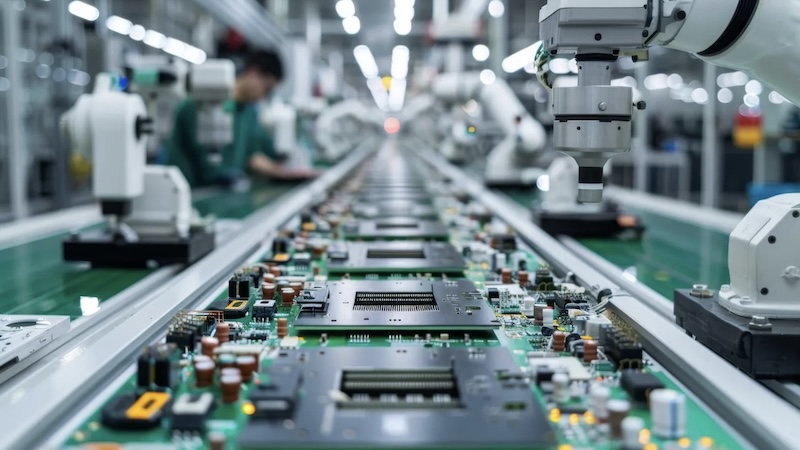
Prototyping in days: circuit board fabrication, 3D printing, machining, molding, and assembly all sit close together, so rapid prototyping in China runs as a coordinated chain rather than parcels crossing cities. You can test two or three concepts in the time one would take elsewhere, so you validate more and guess less.
Design changes without restarting: when a part is discontinued or a tester wants a different layout, a revised prototype can often come back within the same week. Products that go through several iterations before launch are usually better products, and Shenzhen makes those iterations affordable.
Small-batch validation: a higher density of factories willing to run small orders means you can produce a few hundred units, list them, watch how they sell, and then decide whether to order thousands. That turns a launch from a guess into a measured bet.
Scaling when demand hits: a factory that already made your test run can usually scale faster because the components, capacity, and logistics are in place. It pays to check factory capacity first, since a plant already running near full cannot easily absorb a big reorder.
When Speed Beats Price
Speed creates the biggest edge when your product cycle is short. A wireless earbud that sells well early in the year can face a wall of competition months later, so a buyer who develops, tests, and launches in a quarter competes, while one who takes most of a year reaches a market that has moved on.
It matters just as much for platform launches and seasonal demand. On Amazon and similar marketplaces, landing in a category early builds reviews and ranking that compound, and a product live months ahead of a rival banks months of head start. For holiday electronics, validating demand in summer and scaling in early autumn beats making a guess in February about December.
Faster does not have to mean looser on quality. The speed comes from ecosystem efficiency, not from cutting corners, so quality still rests on which factory you choose. Take the time to verify the factory and keep an inspection in place, and the pace works for you rather than against you.
How to Actually Capture the Speed
Speed only pays if you are organized enough to use it, and that starts with a clear brief. A factory that gets a vague request on Monday cannot begin until midweek, while one that receives detailed specs, component preferences, and performance targets can often start the same day. Have your specification ready before you make contact.
Keep the fast-moving parts close to the ground. Design changes, part substitutions, and prototype coordination move quickest when someone is physically present, so a Shenzhen sourcing agent with existing factory and component relationships can compress the timeline significantly.
Do not let shipping undo the speed you paid for. Book your inspection before production finishes rather than scrambling after, and weigh air freight vs sea freight as a competitive choice, not only a cost one. A sea-freight saving means little if you reach the market two weeks behind a competitor.
FAQ
Q1: Which consumer electronics categories is Shenzhen deepest in?
Wireless audio, smart home devices, portable chargers and power banks, lighting products, drones and cameras, wearables, and other connected devices are all well served. These categories sit right on top of the local component and manufacturing base. The deeper the local supply, the bigger the speed advantage.
Q2: If my product needs specialty parts sourced outside Shenzhen, does the speed still apply?
Partly. The local advantage is strongest when the components are already in the ecosystem, and it shrinks to whatever the outside part’s lead time allows. For a product built around a hard-to-source chip or a specialized sensor, plan the timeline around that part, not around Shenzhen’s usual pace.
Q3: Is Shenzhen’s speed advantage fading as other regions grow?
Not significantly in consumer electronics. The density around Huaqiangbei and the nearby manufacturing districts is the result of decades of compounding specialization. Other regions have built real electronics capacity, but few match the component-sourcing speed and ecosystem depth at the center of Shenzhen.
Q4: How do I find a factory that makes my specific product type?
Platform search and electronics trade shows are a starting point, but they can be slow and hit-or-miss. For categories where component sourcing and production are tightly linked, a local partner with existing factory relationships usually finds the right maker faster than a cold search. Match the factory to your exact product, not just the broad category.
Q5: How do I tell a genuinely fast factory from one just promising a fast timeline?
Ask for their last few prototype delivery dates and compare them against what was promised, since a real track record is easy to show. Ask whether they fabricate circuit boards in-house or outsource them, because in-house work is usually faster and easier to control. A factory that dodges both questions is selling a timeline it may not hit.
Q6: How do I protect my design when factories iterate this fast?
Share full design files only with a shortlisted, verified factory, and put a confidentiality and tooling-ownership agreement in place before detailed work starts. Hold the most sensitive parts back until you are ready to commit. For a genuinely novel product, get professional intellectual property advice before the drawings go out.
Q7: What are the extra costs of moving fast?
Air freight instead of sea when a launch date is on the line, expedited fees for the quickest prototype turnarounds, and rework if an error surfaces in a later prototype rather than the first. Build these into your development budget up front. The speed benefit usually outweighs them, but it is not free.
Q8: Can I run fast development remotely, or do I need to be there?
Repeat orders from a proven factory run well remotely, especially with a local partner handling the moving parts. A first project in a new category still tends to benefit from eyes on the ground during prototyping, when changes come thick and fast. Many buyers are on-site for early development, then manage proven suppliers from a distance.
Conclusion
Shenzhen’s edge in consumer electronics is not the lowest unit price, it is speed you can measure in days of development and weeks of launch lead time. For buyers where reaching the market first decides the outcome, that speed is usually worth more than shaving a little off the quote.
Speed only pays when the product that ships matches the sample that impressed you. Our electronics sourcing from China is built in Shenzhen for exactly that: supplier checks, component-level quote reviews, and inspections before the balance is paid.