Customs Clearance from China: Costs, Documents, Fixes
Clearing customs is three questions with one answer: what you pay, what you declared, and who signed for it. Nearly every hold, bill, and argument traces back to a decision you made before the goods shipped.
| The Problem | Where It Starts | Where It Gets Fixed |
|---|---|---|
| Bigger bill than expected | The code, the value | Before you order |
| Papers do not match | The factory’s invoice | Before dispatch |
| Nobody knows who pays | The shipping term | In the contract |
| Shipment sits at the border | A missing answer | The same day you ask |
| Storage charges pile up | Waiting to react | The first status change |
Customs creates none of those problems and finds all of them.
First, Decide Who Is Actually Importing
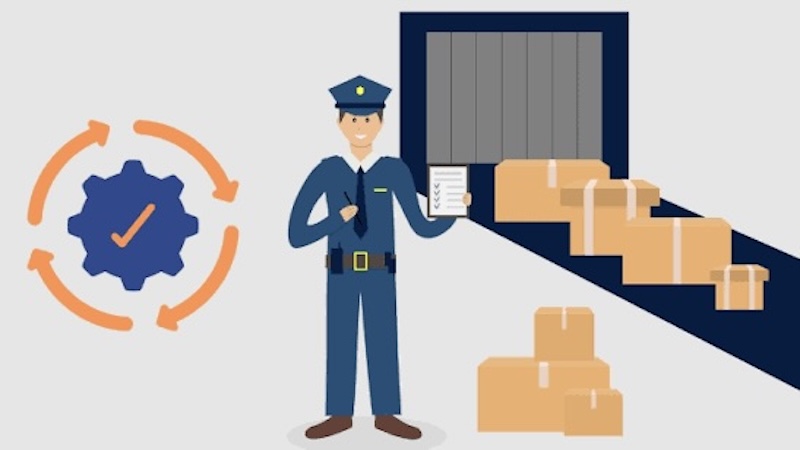
Before you argue about money, find out whose name goes on the customs declaration. That party is the importer of record, the business legally bringing the goods in, and it carries the declaration and the duty.
Two things people attach to that name do not actually travel with it. Who bears the risk if the goods are damaged is set by your contract and trade term, not by the declaration. Whether you can reclaim import VAT depends on owning the goods, holding the right tax registration, and keeping the evidence your tax authority asks for.
Settling who imports before the first order is the groundwork sourcing and quality control covers, and it costs a fraction of untangling the same question after a shipment has stopped.
Your shipping term shapes who controls the shipment, but the contract and the declaration decide whose name ends up as the importer. CIF against FOB decides who books and pays for the main carriage. FOB against EXW decides how much of the Chinese side you are taking on yourself.
A delivered price sounds like the problem going away, and it can quietly cost you. Under DDP shipping from China, the name on the declaration can be the supplier’s agent rather than your business. Settle that before you agree the price, because otherwise you cannot correct the declaration yourself and the paperwork you would need to reclaim anything lands with someone else. You are a spectator on your own shipment.
Customs Clearance Costs: What You Actually Pay
The bill has three parts, and only one of them is your factory price. Duty and import tax follow the classification, the value, the origin, and the destination’s own rules. The service fees follow your carrier, your broker, and the scope you agreed.
Duty follows the code, not the product name. That is why the factory’s HS code deserves more attention than another round on unit price. Wrong upward, you overpay quietly. Wrong downward, you pay later with interest.
The tax is worked out on more than your invoice, and how much more depends on where the goods land. Some markets build the freight to the border into the taxable value and some do not, so ask your destination broker which basis applies before you order. Either way, a cheap product on fast air freight is not always the cheap import your quote promised.
Then the market decides the rest. Start with US tariffs on Chinese imports if you sell into America. Britain has run its own tariff since Brexit, so UK import duty is a separate sum.
Europe looks like one market and bills like 27. EU import duty applies one common tariff at the border, then each member state adds its own VAT rate.
The third bill is the one nobody quotes you up front. Clearance, handling, storage, and document fees arrive from different desks: the agent, the carrier, the terminal, the warehouse.
Duty and tax are set by law, while storage and some carrier charges run on published rates, so the part worth arguing about is the agent’s own service fee. Ask for the fee list in writing before the goods move, because afterwards your only alternative is a warehouse charging rent on your own stock.
The Value Customs Uses Is Not Always Your Invoice Total
Customs does not accept a number just because it is printed on an invoice. It asks whether that number is what really changed hands, and whether anything else tied to the goods was paid somewhere else.
The money that moves outside the invoice is what causes the trouble. A mold you paid for last year. A design fee wired separately. Accessories the factory threw in free. Each one is ordinary business, and each one can change the value customs expects to see.
Declaring low is the cheapest way to buy an expensive problem, because the saving is small and it is your signature on the number. Customs can come back to it years later.
Documents, and the Last Check Before Dispatch
Customs does not inspect your product so much as read your paperwork and decide whether to believe it. Everything after that follows from what your papers say.
The invoice is the document that clears the shipment, and factories treat it as an afterthought. Knowing which invoice clears customs is the difference between a quote you agreed and a value you can defend. Vague descriptions, round numbers, and a price nobody can explain are what draw a second look.
Every document has to tell the same story. The invoice, the packing list, and the data your carrier files must agree on the goods, the value, the quantity, and the origin. When they disagree, customs believes none of them, and the shipping document mistakes that cause it are almost always small and almost always avoidable.
The last useful check happens before the carrier collects the goods. Once the shipment leaves China, every correction is slower, costlier, and far more visible. Ask the factory for the final paperwork as drafts, while it can still be changed:
The importer, the consignee, and the delivery address: three separate fields, not three copies of one name. The importer’s legal name and number have to match its registration.
The code and the description: confirmed from what the goods are made of and what they do, in plain words a stranger would recognize.
Permits, test reports, and labels: for anything regulated, in hand rather than promised.
The people who clear customs easily are boring, not lucky. Same papers, same descriptions, same code, every shipment. Customs, like everyone else, spends its attention on the interesting ones.
The Product Decides How Difficult Clearance Becomes
A shipment is difficult because of what is inside the box, not because it came from China. Buyers who cleared a pallet of storage bins last month expect the next order to behave identically, then meet a product with its own rules. Four groups cover most of what buyers ship:
Household goods: the whole fight is the code, the material, and the value. Boring, and boring is cheap.
Electronics: batteries, radios, and safety paperwork ride along, and the certificate has to describe the unit you actually shipped.
Food, cosmetics, and anything medical: check registration and permits before the goods travel, not after they land.
Some metal goods, solar panels, furniture, bicycles: these are where anti-dumping duties turn up. The rate depends on the product and the destination, and it can dwarf the normal duty.
Find out which of the four you are in before you order, because the clearance to plan for is the one your product needs.
Why Your Shipment Is Stuck, and Who Fixes It
Most shipments in customs are waiting for an answer, not sitting in trouble. The tracking page will not tell you which, so your first job is to work out which of three holds you are looking at:
Routine review: normal checks with nothing asked of you. Confirm with your broker or carrier that nothing is outstanding, then give it a few days.
Document mismatch: the invoice, the value, or the description does not fit. Send corrected papers immediately.
Compliance or payment hold: duty owed, a permit missing, a name wrong, an inspection due. This one needs somebody on the phone today.
Treating all three the same way is what turns a short delay into a long one. Patience fixes the first and makes the other two worse, while storage charges run in the background.
Responsibility then follows whoever controlled the error, not whoever is most annoyed.
| The Issue | Who Moves First | The Action |
|---|---|---|
| Invoice data wrong | Seller | Corrected papers today |
| Duty or fees unpaid | Importer or named payor | Confirm payment with the agent |
| Permit or test needed | Both | Provide the permit or test |
| Random inspection | Importer or broker | Confirm nothing is requested |
| Delivery details wrong | Whoever filed | Correct it with the carrier |
Stop asking when it will move, and start asking what is outstanding and who owns it. Get the hold reason in writing, because one clear answer is worth ten status checks. If nobody wrote down what the hold is for, nobody is working on it.
When the Courier Is Also Your Broker
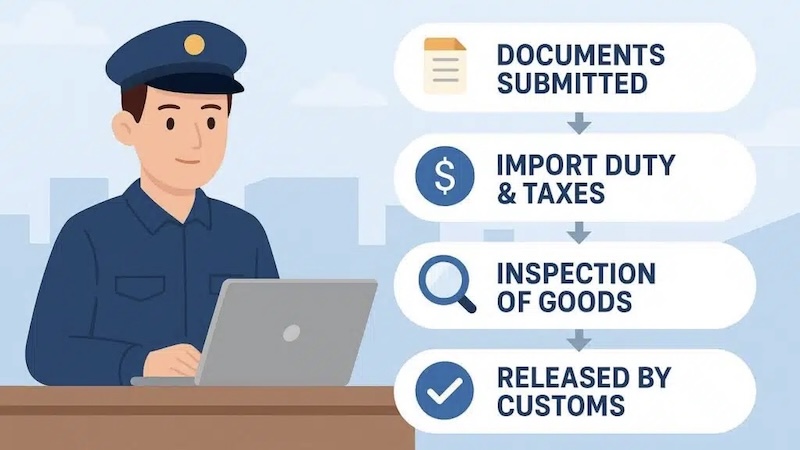
On an express parcel the courier files the customs declaration itself, which changes who you call. A freight shipment clears through a broker you appoint or your forwarder arranges, but a courier’s own clearance team holds the note that says what is missing. Ask to be routed to that team rather than settling for a delivery estimate.
The fee structure changes with it. Clearance and brokerage charges vary by courier, and when one pays the duty to customs for you it bills that back with an advance fee. On a low-value parcel that charge can look large next to the duty itself.
The requests behind a courier hold are the ones customs asks of anyone. A corrected invoice from the shipper, proof of what you paid, product detail, a tax number, or a certificate for regulated goods. What changes between carriers is the channel and the escalation path.
Those paths are carrier-specific, so the fix depends on whose label is on the box. A FedEx or UPS hold runs through one set of clearance contacts and fee names. A DHL shipment on hold runs through another, with its own tracking wording and support route.
FAQ
Q1: Is it normal for a factory to use one invoice for me and another for its export declaration?
Common, and not automatically safe: the two filings can differ in format and required fields, but the amount, quantity, currency, and description underneath have to reconcile. Check them against your purchase order, contract, and payment record first, then let your broker confirm how the true figures should be declared.
Q2: Can I change the delivery name once the goods are on the water?
Before arrival, yes, with the carrier’s agreement and amended papers. After arrival it becomes slow and expensive, which is why that name is worth ten minutes before the booking.
Q3: Can another importer’s problem hold my cargo when we share a container?
Yes, and it is the least fair thing in this business. If the whole container is held your pallets wait even when your papers are clean, so ask your forwarder whether the hold sits on your shipment or someone else’s.
Q4: What should I send when customs calls my product description too vague?
Plain words plus proof: what it is, what it is made of, what it does, and what else is in the box. “Accessories” and “samples” describe a shelf rather than a product, so add photos, the model number, and the payment record.
Q5: What are customs asking for when they want proof of what I paid?
The trail behind the invoice: your purchase order, your contract, and the bank transfer that actually left your account. If those three do not agree with the declared value, the invoice stops being evidence and starts being a question.
Q6: Why is my parcel still held after I paid the charges?
Payment takes a day to post, or a second requirement is still open behind it. Confirm with the clearance team that the balance shows cleared, then ask whether a document or inspection result is also outstanding.
Q7: Can I stop the daily port charges while customs decides?
Not by arguing with the port, because the free storage days run out whether or not the hold was your fault. Clearing the hold is not the same as stopping the meter, so ask when each charge started and what stops it.
Q8: What if customs sends the goods back or keeps them?
Ask for the formal reason in writing, then ask whether you can refile or appeal. Move quickly, because storage and disposal deadlines run whether or not you have decided.
Conclusion
Customs is less a wall you get past than a mirror showing what you declared. The buyers who never seem to have trouble are not better at customs. They were just finished before the goods left the factory floor.
Most of that is preventable before the goods leave the factory. We put the set together there and hand it to your destination broker complete, which is a large part of what sourcing and quality control actually means day to day.